



Can a Hotel Be Liable for a Slip and Fall Injury?


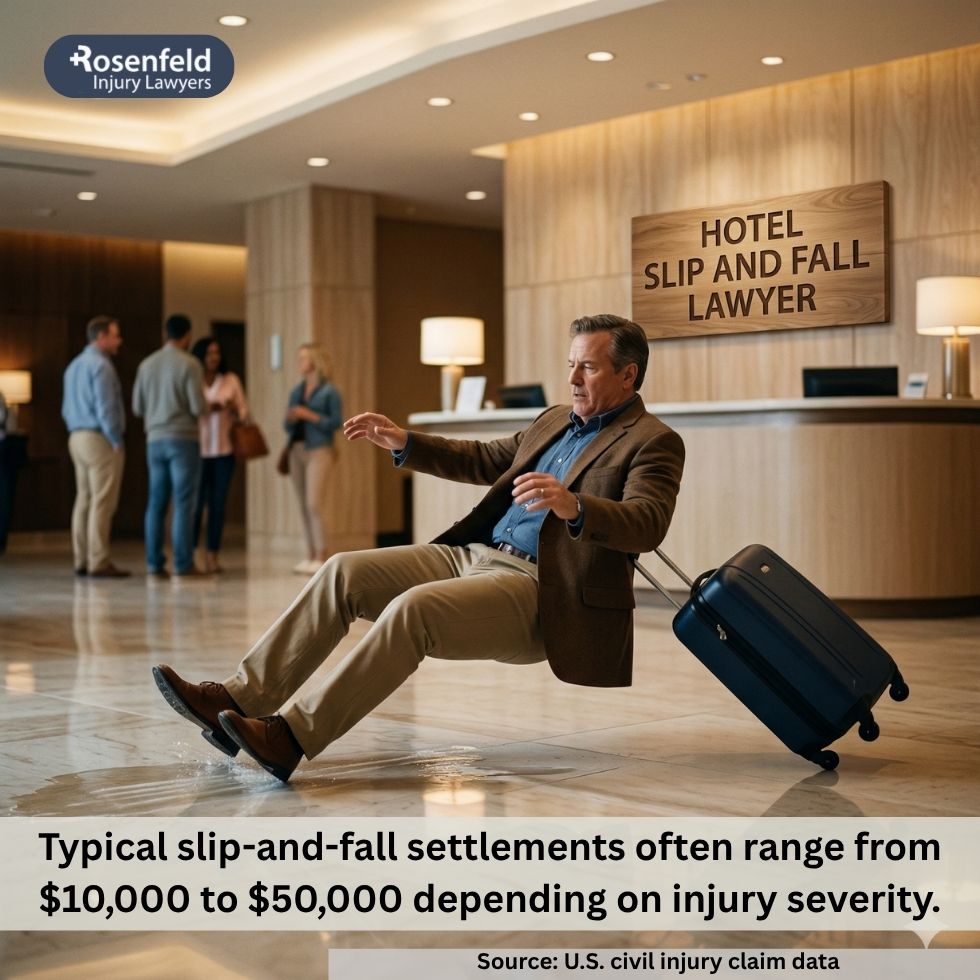
The primary responsibility of any hotel is to ensure visiting guests feel at home. However, slip-and-fall accidents can turn a comforting and pleasant stay into a painful ordeal
Accidents in hotels can happen anytime. You may slip on a wet lobby floor, trip over loose carpeting, or get an injury due to poor lighting. These safety hazards result from management’s inability to meet the required safety standards.
When you’re injured at a hotel, one question often comes to mind: Who is responsible for covering the costs of your injuries and other losses, and can you recover a hotel slip and fall settlement?
Understanding hotel slip and fall liability can mean the difference between absorbing thousands of dollars in medical bills yourself and recovering compensation from the party responsible.
This article breaks down the common causes of such accidents, how liability works, and what actions to take if you are hurt.
What Is Hotel Slip and Fall Liability?
Hotels have a legal and moral duty to keep their premises reasonably safe for guests. This responsibility falls under the area of law known as premises liability. Because paying guests are considered “invitees”, hotels owe them one of the highest standards of care recognized by law.
That duty requires that you periodically inspect the premises, correct known hazards within a reasonable period of time, and warn guests of hazards that cannot be immediately corrected. If a hotel fails to meet safety standards and someone is injured as a result of this failure, the hotel can be held financially liable.
Simply put, a hotel can absolutely be liable for a slip and fall injury. But liability isn’t automatic. You have to prove the hotel did something wrong or failed to meet the required safety standards.
For a hotel to feel guilty over slip and fall injuries, it should be proven guilty.
Common Causes of Slip and Fall Accidents
Slip and fall accidents can happen almost anywhere, including hotels, workplaces, parking lots, restaurants, and stores and retail businesses. Most of these accidents are caused by unsafe property conditions that create hazards for visitors, customers, or employees. Property owners can also be held liable for failing to make conditions safe.
Wet or Slippery Floors
Floors can become dangerously slippery due to spilled liquids, freshly mopped floors, leaking pipes or rainwater tracked indoors. These conditions are a much greater fall risk without proper warning signs or clean-up.
If you ever experience a wet-floor accident, seeking legal assistance is the best course of action.
Uneven Walkways and Flooring
Loose tiles, uneven pavement, cracked pavements or damaged flooring can easily cause a person to stumble and lose their balance. “Injuries from falls are often caused by poorly maintained walking surfaces.
Bad Lighting
Dark lighting in hallways, stairwells, parking lots or entryways reduces visibility. Trips and falls are often caused by poor visibility.
Cluttered Pathways
Objects left in walkways such as boxes, cords, merchandise or other items create tripping hazards.
Broken Stairs or Missing Handrails
Unsafe stairways may be damaged, have loose steps or lack handrails. The owner of the property is responsible for making sure that the stairs are safe and secure for visitors.
Weather-Related Hazards
Ice, snow, standing water, and slippery outdoor surfaces are among the key causes of slip and fall accidents, especially when property owners fail to remove hazards promptly.
Unsafe Workplace Conditions
Slip and fall accidents in workplaces can occur when the floor is wet, cables are exposed, maintenance is not proper or safety procedures are missing. These types of accidents can lead to serious injuries and workers compensation claims.
Can You Sue a Hotel for Falling?
One of the most common questions injured guests ask is simple: Can you sue a hotel for falling?
The answer to this question is a big yes, provided you can show the hotel’s negligence caused you an injury.
Filing a lawsuit isn’t about the fact that you fell. People slip for all kinds of reasons, and not every accident is someone else’s fault. A successful claim depends on demonstrating that the hotel created or failed to address a dangerous condition that a reasonable hotel should have handled wisely in such scenarios.
For example, if you trip over your own untied shoelace, the hotel is unlikely to be responsible. But if you slip in a puddle the staff knew about for hours, never cleaned up or marked with a warning sign, you probably have a good case.
Proving Hotel Negligence Injury Claims
How a slip and fall accident occurred is something you have to prove. Hotels are legally responsible to maintain safe conditions for guests, visitors, and customers. When they fail to address dangerous conditions, and someone gets hurt, the hotel may be held financially responsible for the injuries and related damages.
To successfully prove a hotel negligence injury claim, you generally must establish four key legal elements.
Duty of Care
Hotels have a legal duty to guests to provide a reasonably safe environment. This requirement applies to hotel rooms, lobbies, stairways, hallways, parking lots, pools, restaurants, lifts and walkways.
Hotels are expected to regularly inspect their premises, identify potential hazards and either fix dangerous conditions or properly warn. In most hotel injury claims, proving a duty of care is straightforward because registered guests and visitors are protected by law.
Examples of a hotel’s duty of care are:
- Clean up spills immediately.
- Repair broken flooring or stairs
- Keeping sufficient light
- Add handrails and safety features
- Clear walkways of ice, water or debris
- Known hazards are rectified in a timely fashion
Breach of Duty
Breach of duty is when the hotel does not fulfil its duty to keep the conditions safe. In other words, the hotel was careless or failed to use reasonable care to prevent injuries.
For example, a hotel could be held negligent if its employees knew there was a dangerous condition but failed to fix it. Negligence, also, if the hotel should have discovered the hazard by the use of routine inspections.
Typical examples of hotel negligence include:
- Slippery floors, no warning signs
- Inconsistent floors or loose carpet
- Broken handrails or dangerous stairs
- Insufficient lighting in hallways or parking areas
- Plumbing problems or ceiling leaks
- Failure to repair damaged walkways
- Inadequate security or maintenance procedures
Causation
It is not enough to show that a hazard existed. You must also prove that the hotel’s negligence directly caused your accident and injuries.
This means there must be a clear connection between the dangerous condition and the harm you suffered. For example, if you slipped on an unmarked wet floor and fractured your wrist, you must show that the unsafe floor caused the fall and resulting injury.
Insurance companies and hotel defense attorneys often try to dispute causation by arguing:
- The hazard was obvious and avoidable
- You were distracted or partially at fault
- Your injuries existed before the accident
- Something other than the hotel’s condition caused the fall
Medical records, accident reports, photographs, witness testimony, and expert analysis can help strengthen the connection between the accident and your injuries.
Damages
To receive compensation you must show that the accident has caused you actual damages or losses. These damages may be physical, emotional, or monetary.
Common damages in hotel negligence injury claims include:
- Rehabilitation and medical costs
- Loss of wages or reduced earning capacity
- Suffering and pain.
- Tortured emotionally
- Chronic injuries or permanent disability
- Future medical costs
The more evidence you have of your injuries and financial losses, the stronger your case may be. Keeping copies of medical records, receipts, treatment plans and proof of missed work can help strengthen your case.
What to Do After a Hotel Fall
The steps you take immediately after an accident can make or break your future hotel slip-and-fall lawsuit. If you’re physically able, try to do the following:
- Report the incident. Notify hotel management right away and ask them to create a written incident report. Request a copy for your records.
- Document everything. Take photos and videos of the hazard that caused your fall, the surrounding area, and your injuries. Capture the lack of warning signs or any contributing conditions.
- Gather witness information. Collect names and contact details of anyone who saw the fall.
- Seek medical attention. See a doctor promptly, even if you feel fine. Some injuries surface hours or days later, and medical records establish a link between the fall and your injuries.
- Preserve evidence. Keep the shoes and clothing you wore, along with all receipts, bills, and correspondence with the hotel.
- Avoid giving recorded statements. Be cautious about speaking with the hotel’s insurance company before consulting an attorney.
The Bottom Line
A hotel can be liable for a slip and fall injury when its negligence creates or fails to address a dangerous condition that harms a guest. Establishing hotel slip and fall liability requires proving the hotel owed you a duty, breached it, and caused your injuries and losses.
If you’ve been injured on hotel property, you need to act quickly. Photograph the scene, report the incident to the hotel management, seek medical treatment and contact an experienced personal injury attorney to protect your rights. With the right evidence and legal advice, you can hold a negligent hotel liable and recover the compensation you deserve.
For better guidance, take advice from the Chicago Slip and fall lawyer and book your free consultation today!
Frequently Asked Questions
Can a hotel be held liable if I fall in my own room?
Yes. A slip and fall in a hotel room can support a claim if the fall resulted from a hazard the hotel created or failed to fix, such as a leaking pipe, defective flooring, or a missing bathtub safety feature.
How long do I have to file a hotel slip and fall lawsuit?
The deadline depends on the timeline and severity of your case. It’s wise to consult an attorney quickly so you don’t miss the filing window.
What if I signed something at check-in waiving liability?
Waivers don’t automatically protect hotels from liability for their own negligence. Courts often refuse to enforce overly broad waivers, so don’t assume you have no case.
 Legally Reviewed By
Attorney Jonathan Rosenfeld
The information on this page has been legally reviewed by Attorney Jonathan Rosenfeld, founder and managing partner of Rosenfeld Injury Lawyers LLC, a Chicago-based personal injury law firm. With decades of experience representing individuals injured in slip and fall accidents and other premises liability cases throughout Chicago, Mr. Rosenfeld is dedicated to protecting the rights of injury victims and helping them pursue the maximum compensation available under the law. His extensive legal knowledge and commitment to client advocacy ensure that the information provided is accurate, reliable, and aligned with current legal standards.