
Experienced Attorneys. Proven Results.
Hire the Team That Knows How To Win and Maximize the Value of Your Case



A serious fall can leave victims with painful fractures that require surgery, rehabilitation, and months away from work. According to the National Floor Safety Institute (NFSI), fractures are involved in approximately 5% of all slip and fall cases, with wrists, ankles, and hips being among the most commonly affected bones. If you have suffered a broken bone because of hazardous conditions on someone else’s property, an experienced slip and fall broken bone lawyer Chicago residents trust can help you pursue compensation for medical bills, lost income, and long-term pain and suffering.
A broken bone slip and fall can instantly disrupt your life, especially when caused by unsafe property conditions. At Slip & Fall Injury Lawyers, we represent people who suffer bone fractures after slipping or tripping on dangerous conditions in Chicago homes, businesses, sidewalks, and public spaces. From icy walkways to wet floors, we work to hold negligent property owners accountable and recover full compensation.
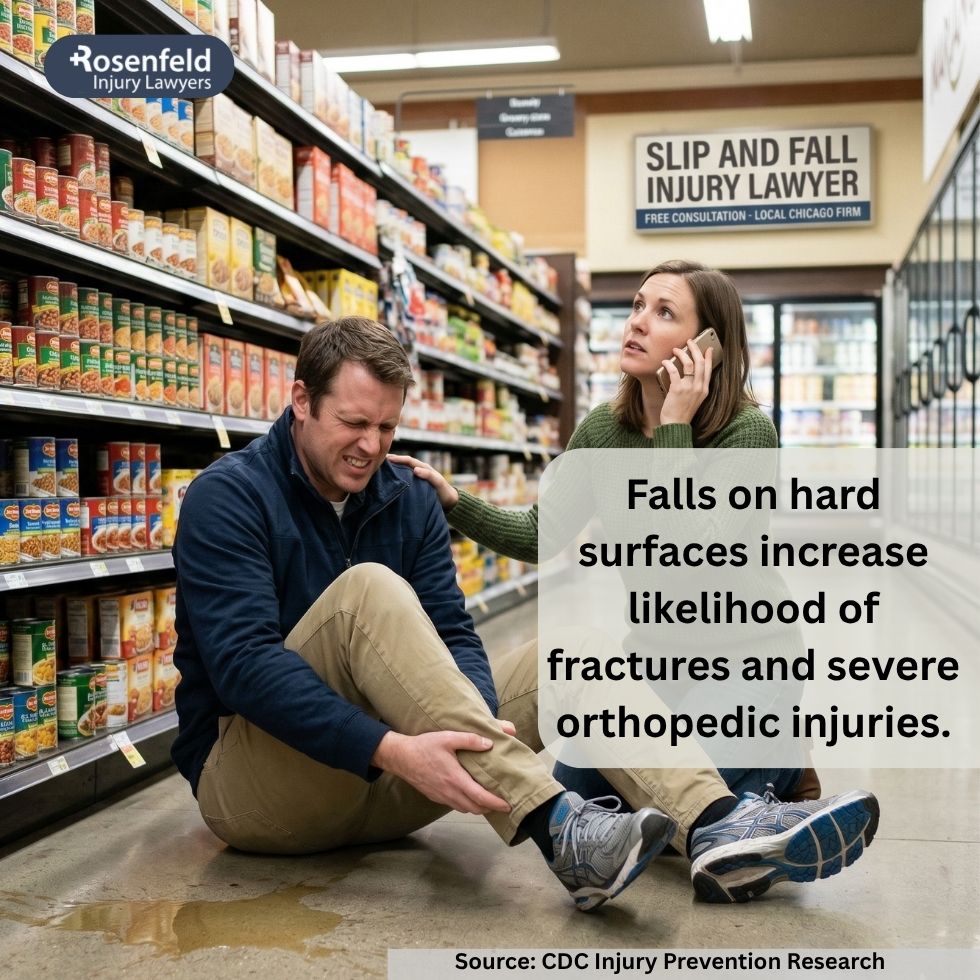
Our top-rated Chicago slip and fall injury lawyers have recovered more than $490 million for victims injured in slip and fall accidents. Recognized by the Million Dollar Advocates Forum, Super Lawyers, and the Illinois Trial Lawyers Association, our firm has built a reputation for delivering results in complex premises liability claims.
With over 5,000 clients nationwide served, we understand how devastating a serious fall injury can be. Whether you suffered broken bones, head trauma, or other injuries caused by dangerous property conditions, our experienced Chicago slip and fall attorneys are committed to fighting for the maximum compensation available. We offer a free consultation, and you pay nothing unless we win your case.
Fractures are among the most common and debilitating injuries caused by slip and fall accidents. Depending on the force of the fall and the part of the body impacted, victims may suffer anything from minor cracks to complex breaks requiring surgery and extensive rehabilitation.
Slip and fall accidents in Chicago can cause a wide range of fractures, such as:
Broken bones often occur when property owners fail to address dangerous conditions that create an unreasonable risk of falls. In Chicago, fractures from slip and fall accidents frequently result from hazards that could have been prevented through proper maintenance, repairs, or warning signs.
Common causes of fracture-inducing falls in Chicago include:

A sudden slip or trip can place tremendous force on the body, causing fractures that range from minor cracks to severe breaks requiring surgery and long-term rehabilitation. Certain bones are especially vulnerable during a fall, particularly when victims instinctively try to catch themselves or land awkwardly.
Our Chicago slip and fall lawyers regularly represent clients with serious broken-bone injuries and help them pursue compensation for their medical expenses and other losses. Slip and fall incidents in Chicago can result in a wide range of broken bone injuries, such as:
A broken bone can have consequences that extend far beyond the initial injury. Many victims continue to experience pain and physical limitations long after their fractures have healed. Serious fractures may lead to chronic pain, arthritis, nerve damage, reduced mobility, and a diminished quality of life. Some people require canes, walkers, or home modifications to adapt to permanent disabilities. In severe cases, fracture injuries can affect a person’s ability to return to work or participate in activities they once enjoyed. Big law firms Chicago often consider these long-term effects of slip and fall fractures.
Common long-term complications include:
The treatment required for a fracture depends on the type and severity of the injury. Some broken bones heal with casts and splints, while others require surgery and extensive rehabilitation. Seeking prompt medical care is essential both for your health and for documenting your injury claim.
Treatment may include:
Depending on the circumstances, victims of slip and fall accidents can recover:
In Chicago, slip and fall verdicts and settlements for broken bone cases range widely—from as little as $5,750 to as much as $2 million. According to VerdictSearch data, the median recovery is around $214,751, while the average is $431,657.
Case value depends on several factors: the type and severity of the fracture, whether surgery was required, the length of recovery, and the long-term impact on your mobility and ability to work. Liability disputes, the presence of clear evidence (like surveillance footage), and whether the owner was aware of the hazard can also significantly influence the outcome.
While walking near a construction site in Chicago, Michael slipped on black ice that had formed after snow was improperly plowed, shattering his ankle. He required three surgeries, developed an infection, and was left with lasting mobility limits.
Edna, a nurse in La Grange Park, fell on ice outside her condo due to a known drainage problem. She broke her femur, underwent three surgeries, and faced over $330,000 in medical bills and lost income.
Constance, a retired nurse, slipped on ice in a River Forest CVS parking lot while trying to access a sidewalk blocked by snow piles. She fractured her left wrist, required three surgeries due to complications with bone healing, and had a pre‑existing wrist condition.
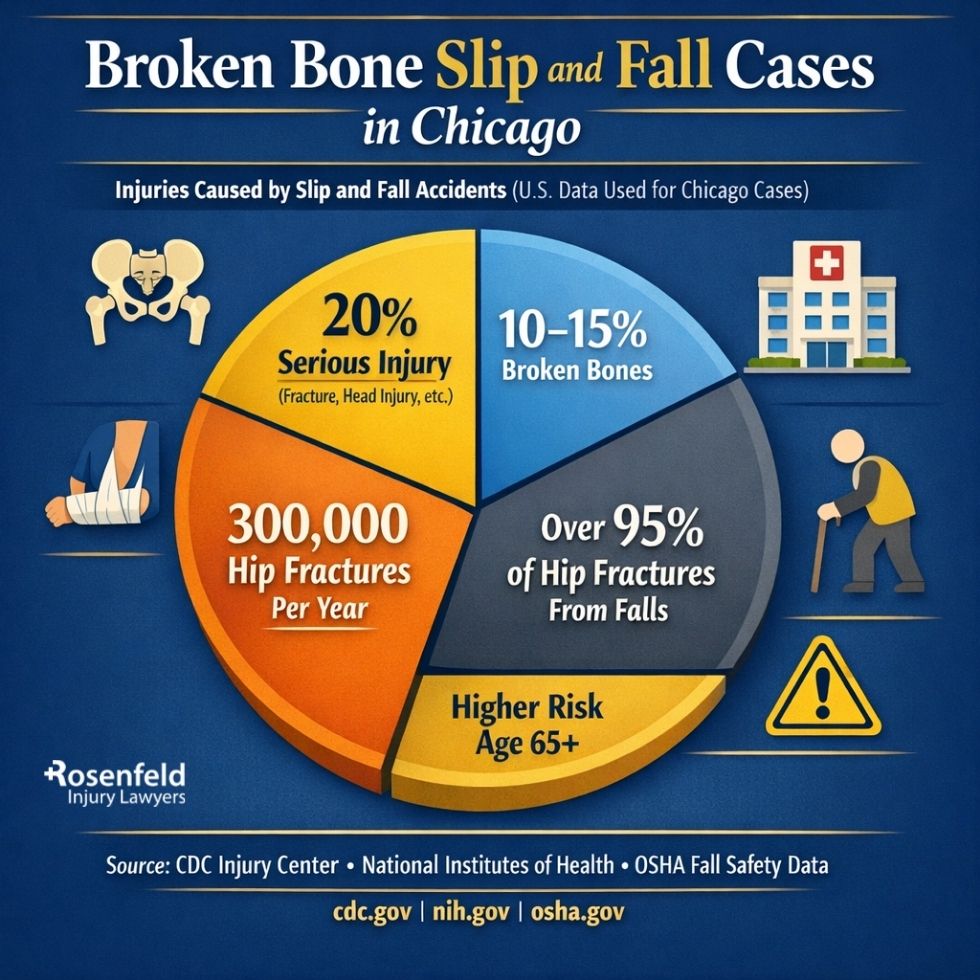
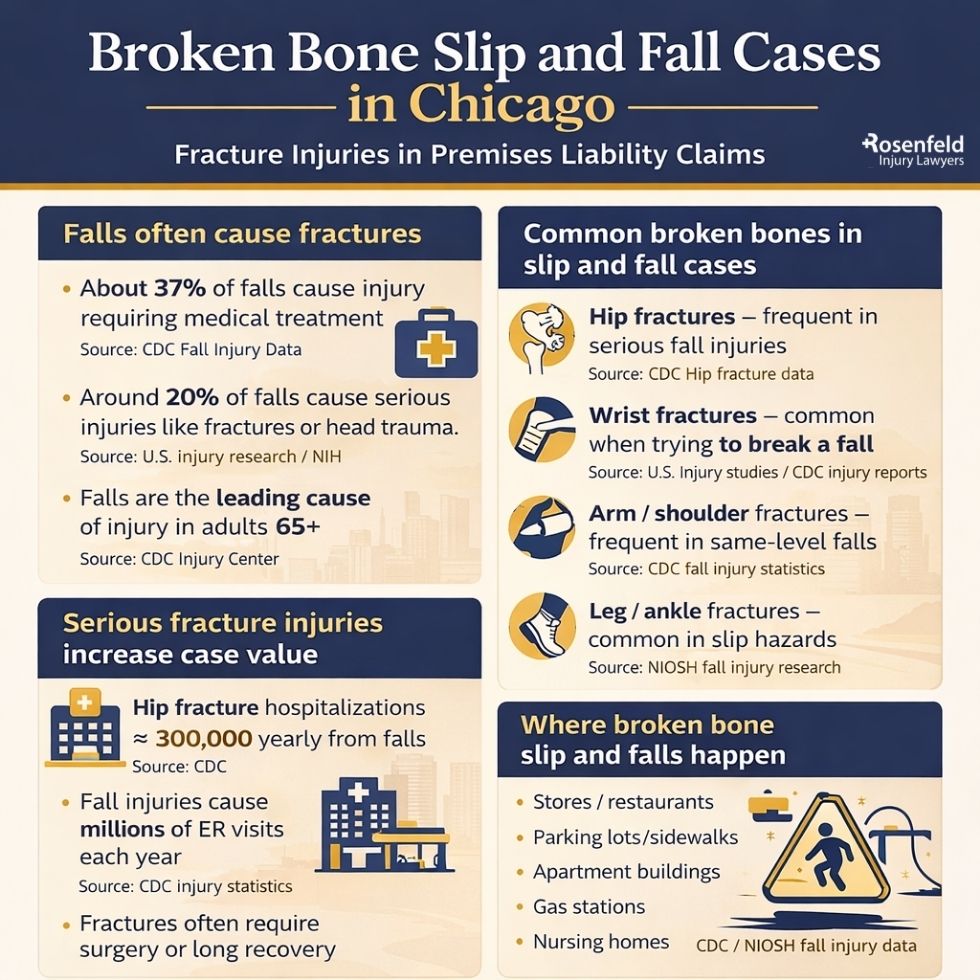
Broken bones are one of the most common outcomes of slips and falls. More than 95% of hip fractures are caused by falls, and one in five fall-related injuries results in a fracture. While older adults face the highest fracture risk, we’ve seen clients of all ages suffer wrist, ankle, shoulder, and spinal fractures after preventable falls. These injuries often require surgery, lengthy rehabilitation, and can lead to permanent mobility loss.
Fracture‑causing falls can happen anywhere in the city, but some places pose a higher risk because of foot traffic, weather exposure, or poor maintenance. Common locations include:
Most fracture‑related slip and fall cases in Chicago fall under the Illinois Premises Liability Act (740 ILCS 130/). This law requires property owners and occupiers to keep their premises reasonably safe for people who are lawfully there, such as customers, tenants, or other invited guests.
For winter‑related falls, the Chicago Municipal Code § 10‑8‑180 sets rules for snow and ice removal on sidewalks in front of homes and businesses. Failing to follow these rules can support a negligence claim.
Illinois case law reinforces these duties. In LaFever v. Kemlite Co., 185 Ill. 2d 380 (1998), the Illinois Supreme Court held that an owner could be liable when a worker slipped on accumulated debris, emphasizing the duty to protect lawful visitors from known hazards on the property.
Under 735 ILCS 5/13-202, you generally have two years from the date of your injury to file a personal injury lawsuit in Illinois, including fracture‑related slip and fall claims.
Multiple parties may share responsibility for a fracture‑causing fall, depending on where and how it happened. Potential defendants include:
Property owners and insurers often push back against fracture claims by arguing:
We counter these defenses with surveillance footage, maintenance logs, weather reports, and medical evidence to show exactly how the fall happened and the true impact of your injuries.
Illinois follows a modified comparative negligence system under 735 ILCS 5/2-1116. This means you may still recover compensation even if you were partially responsible for your accident.
For example, if you are found to be 20% at fault, your compensation will be reduced by 20%. However, if you are more than 50% responsible for the fall, you cannot recover damages.
Insurance companies often try to shift blame onto victims by claiming:
Our Chicago slip and fall lawyers aggressively challenge these defenses and work to maximize the compensation available to injured victims.
Taking the right steps after your fall can make a major difference in your case:
A serious fracture can change your life — and proving your claim takes more than just telling your side of the story. Our role is to:
By handling every step of the legal process, we give you the time and space to focus on recovery while we fight for the compensation you deserve.
We work on a contingency fee basis, which means you pay nothing upfront. We only get paid if we recover compensation for you.
Yes. Even if a preexisting condition made your fracture more likely, they can still be held liable if their negligence caused your fall.
You may still have a claim against the City of Chicago, the CTA, or another public entity. Per 745 ILCS 10, these cases have shorter deadlines and special notice requirements, so contact an attorney immediately.
Under Illinois law, most slip and fall injury claims must be filed within two years of the accident. However, claims involving government entities may have shorter deadlines. Speaking with a Chicago slip and fall attorney as soon as possible can help protect your right to compensation.
Victims of slip and fall fractures may be entitled to compensation for medical expenses, lost wages, future treatment costs, rehabilitation, pain and suffering, and diminished quality of life. The value of your claim will depend on the severity of your injuries and their long-term impact.
Key evidence includes photographs of the hazardous condition, surveillance footage, accident reports, witness statements, medical records, and proof of lost income. A slip and fall broken bone lawyer in Chicago can help gather and preserve the evidence needed to build a strong claim.
Yes. Illinois follows a modified comparative negligence rule, which means you can still recover damages as long as you were less than 51% responsible for the accident. However, your compensation may be reduced based on your percentage of fault.
Our Chicago slip and fall lawyers have recovered millions for clients with serious fracture injuries caused by unsafe property conditions. We offer free consultations and work on a contingency fee—you pay nothing unless we win for you. Contact Slip & Fall Injury Lawyers to get started. Let us fight for the compensation you deserve so you can focus on healing.
 Legally Reviewed By
Attorney Jonathan Rosenfeld
The information on this page has been legally reviewed by Attorney Jonathan Rosenfeld, founder and managing partner of Rosenfeld Injury Lawyers LLC, a Chicago-based personal injury law firm. With decades of experience representing individuals injured in slip and fall accidents and other premises liability cases throughout Chicago, Mr. Rosenfeld is dedicated to protecting the rights of injury victims and helping them pursue the maximum compensation available under the law. His extensive legal knowledge and commitment to client advocacy ensure that the information provided is accurate, reliable, and aligned with current legal standards.