Experienced Attorneys. Proven Results.
Hire the Team That Knows How To Win and Maximize the Value of Your Case



If you experience a slip and fall in a grocery store, the store may be responsible if it created the hazard or failed to address it in time. Our Chicago grocery store slip and fall lawyer team has recovered $1.2 million for a shopper injured by an ignored spill. We can review your accident and explain your legal options.
Call 312-800-1534 for a free 24/7 case review. You pay no attorney fees unless we win.
Grocery stores must take reasonable steps to keep shopping areas safe. Spills, leaking coolers, wet floors, and other hazards can cause shoppers to fall.
Our attorneys investigate grocery store slip and fall cases by reviewing incident reports, surveillance footage, cleaning records, and witness accounts. Whether your store fall happened at Jewel-Osco, Mariano’s, Aldi, or another retailer, we can help you understand your legal options.
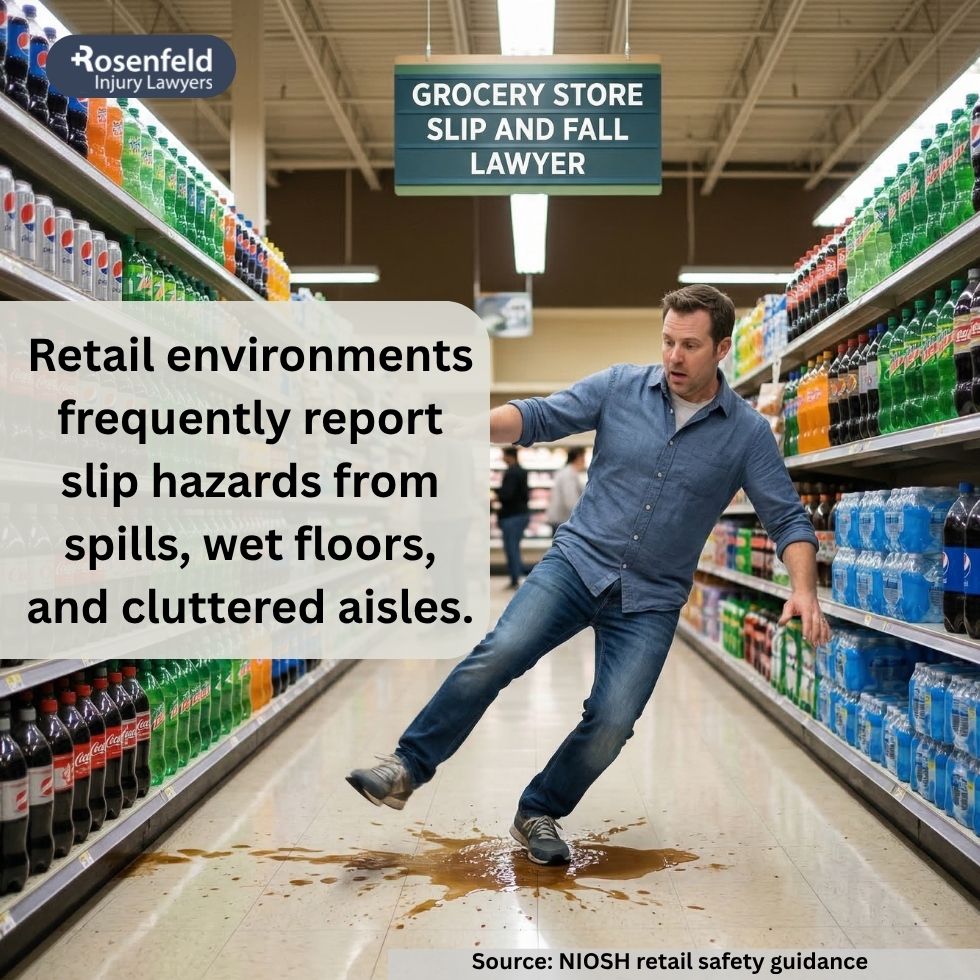
Our attorneys have recovered compensation for shoppers injured in Chicago grocery stores.
Deborah slipped on a food spill at a North Side grocery store. The case resulted in a $1.2 million settlement.
Richard fell near a leaking freezer at a Mariano’s in the South Loop. Our firm secured an $835,100 settlement.
Patricia slipped on unsalted ice outside a West Side Aldi. Her case resulted in a $295,000 settlement.
Emily Rzepniewski suffered an L5-S1 herniated disc after falling at a Jewel store. The settlement included $450,000 from Jewel and $150,000 from the shopping center owner.
Compensation may cover medical expenses, lost income, and pain and suffering. Learn more about grocery store slip and fall settlements.
Slip and fall accidents in Chicago grocery stores are often caused by poor maintenance and unsafe conditions that could have been prevented. Common hazards include:
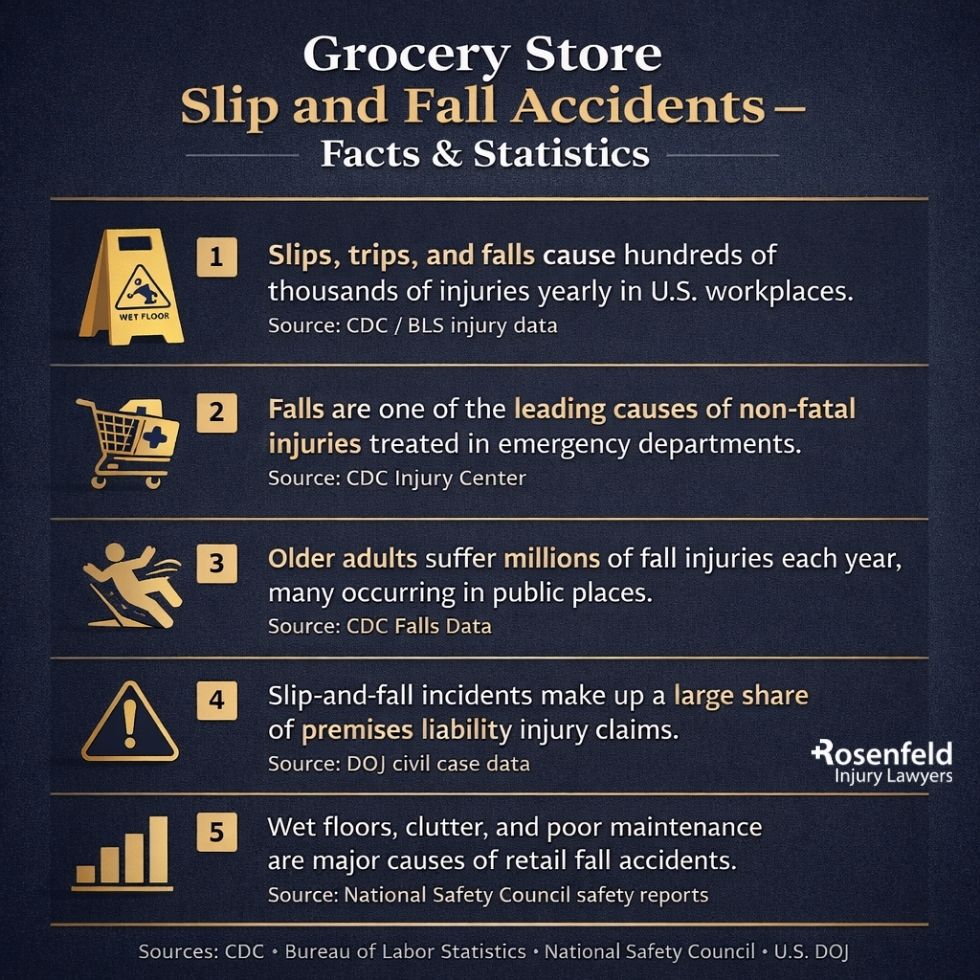
Grocery store falls often happen when spills, leaks, or other hazards are not addressed promptly. According to the National Floor Safety Institute (NFSI), slip and fall accidents account for over 1 million emergency room visits each year, representing the leading cause of hospital room visits at 12%. Common causes include:
These hazards can occur at stores such as Jewel-Osco, Mariano’s, Whole Foods, Aldi, Trader Joe’s, and Walmart.
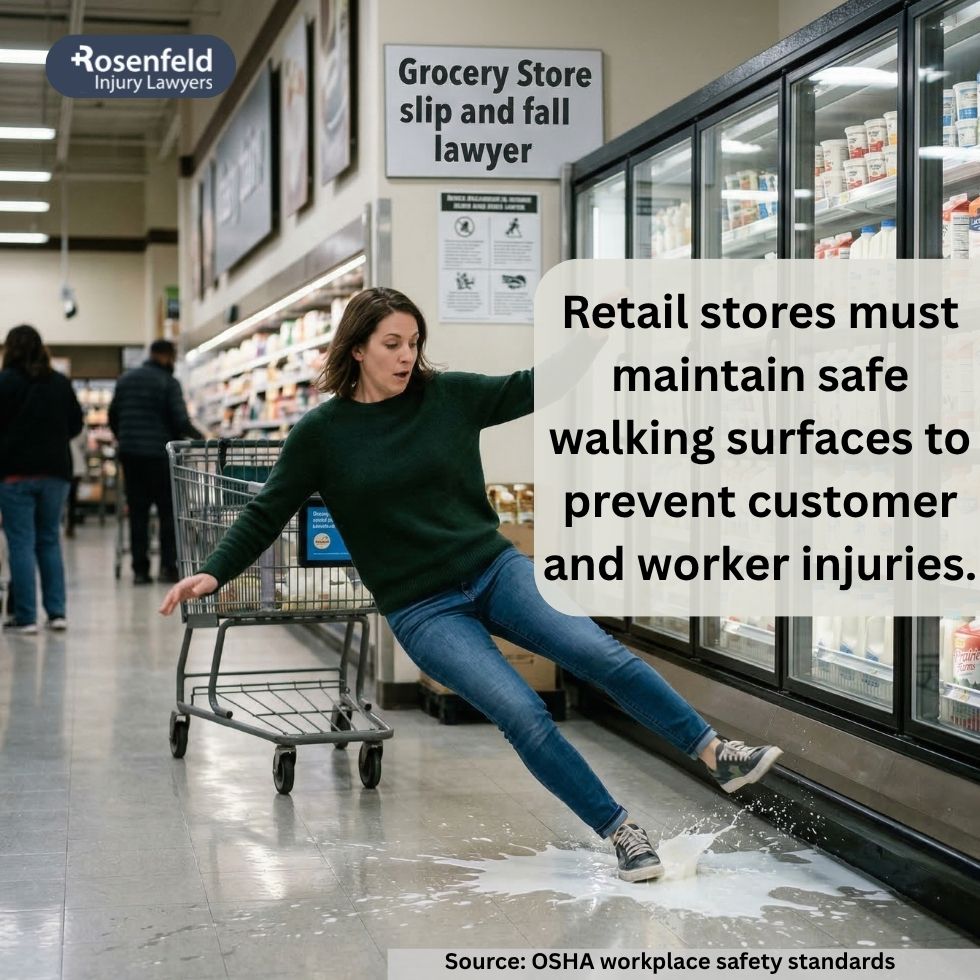
Victims of grocery store slip and fall accidents in Chicago may be entitled to significant compensation through a personal injury claim. Recoverable damages often include emergency room treatment, follow-up visits, and any ongoing physical therapy or rehabilitation.
If your injuries kept you from working, you can seek current and future lost income. Pain, suffering, emotional distress, and loss of enjoyment of life are also considered. In more severe cases, compensation may cover permanent disability or out-of-pocket expenses for in-home care or mobility assistance.
Based on Law.com‘s VerdictSearch, the average payout for a slip and fall at a grocery store is approximately $179,682, with a median settlement of $73,713. These figures reflect a wide range of outcomes, depending on several factors, including:
Emily Rzepniewski, 19, slipped on water inside a Jewel grocery store in Chicago and later required surgery for a herniated disc at L5-S1. A leaking roof allegedly caused the water, and her attorneys presented evidence of stained ceiling tiles.
She sued both Jewel and the shopping center’s property owner. The defense argued the water came from a flower stand and pointed to a later car accident as the cause of her injury. Ultimately, the parties settled for $600,000—$450,000 from Jewel and $150,000 from the property owner.
Rhonda Hodges Lee, 53, slipped on a spill in the baking aisle at Ultra Foods in Forest Park. She claimed the warning sign was too far from the spill and that cleanup was incomplete. Lee suffered neck and back injuries, along with a torn shoulder and A.C. joint separation.
The defense argued the spill was cleaned and the sign was placed correctly. A jury found Ultra Foods 90% at fault and awarded $73,713.90, later reduced to $66,342.81 due to Lee’s 10% fault.
Romanita Vega, 42, fell into a puddle near a cooler inside a My Fit Foods store in Chicago. She alleged that water was leaking from refrigeration equipment and pooling under a floor mat. Vega sustained an L5-S1 herniation and underwent physical therapy and two epidural injections.
She reported significant recovery but still sought damages for pain and medical costs. The defense claimed there was no dangerous condition and disputed the need for any treatment. A jury awarded $24,092, covering past medical bills and pain and suffering.
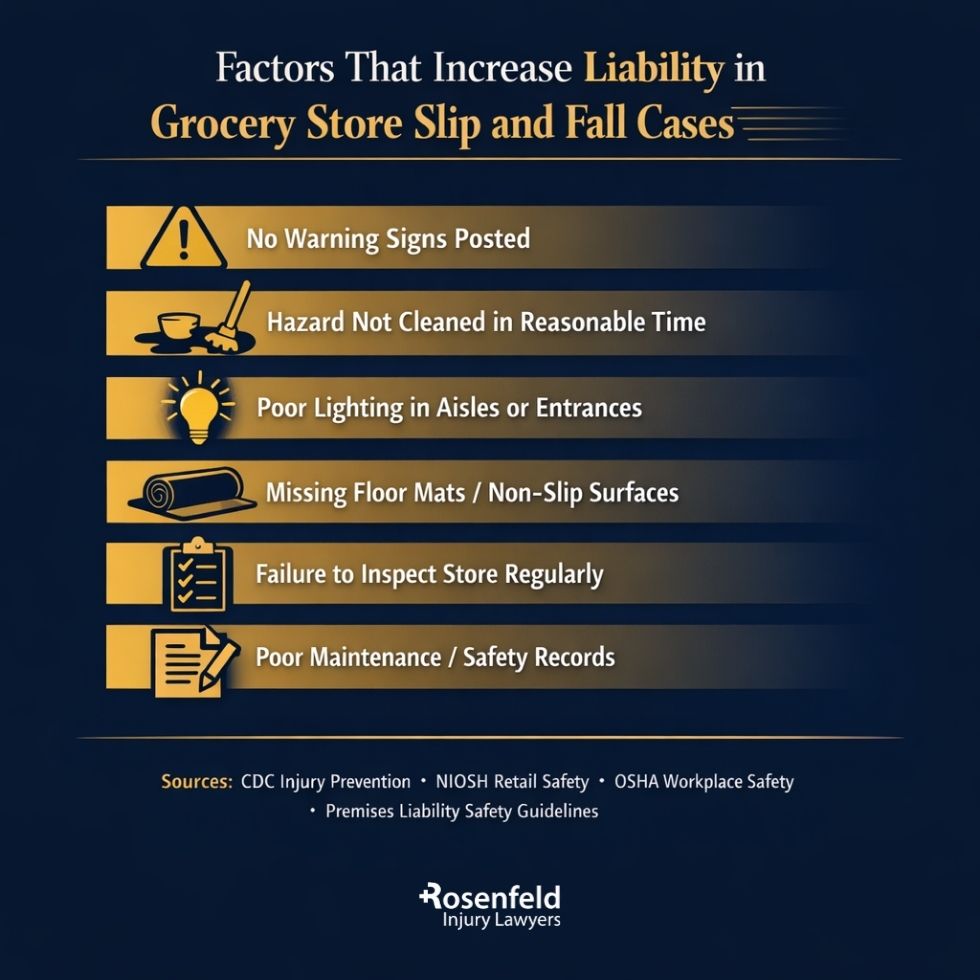
Yes. You may be able to sue a grocery store in Illinois if its negligence caused your fall and injuries. Under the Illinois Premises Liability Act (740 ILCS 130/), stores must use reasonable care to maintain safe premises for customers.
To establish a claim, you generally need to show that:
For example, a store may be responsible if employees ignored a spill, failed to address a leaking freezer, or did not inspect an area often enough to discover a hazard.
Responsibility may also extend beyond the grocery store. Depending on who controlled and maintained the area, a shopping center owner, landlord, or cleaning contractor may share liability.
Falls in parking lots, entrances, and outdoor walkways may also support a claim. Chicago Municipal Code § 10-8-180 addresses snow and ice removal from certain sidewalks bordering properties. You can review the Chicago Municipal Code for the applicable requirements.
The specific facts matter. An attorney can review the location, maintenance responsibilities, inspection records, and available evidence to identify potentially liable parties.
If a grocery store is legally responsible for your fall, its liability insurance may cover your eligible damages. The store’s claims department or insurance company will usually handle the claim.
You may need to use your own health insurance to pay for medical treatment while the claim is pending. Whether another party must reimburse those costs depends on the insurance arrangements and outcome of your case.
An insurance adjuster may contact you soon after the accident. Be careful about giving a recorded statement or accepting a settlement before understanding your injuries and potential losses. An early call may come before you understand the full extent of your injuries or have gathered all the evidence. Avoid giving a recorded statement until you have had an opportunity to understand your rights.
A grocery store injury lawyer can review the circumstances, identify the responsible parties, and handle communications with insurers.
A fall on a hard grocery store floor can cause injuries that require surgery, rehabilitation, or ongoing care. Common injuries include:
Some injuries require extended treatment and can affect a person’s ability to work or manage daily activities. Compensation may include medical expenses, lost income, and pain and suffering.
Taking immediate action and involving a personal injury attorney in Chicago at an early stage can make a big difference in your personal injury claim. Report the slip and fall accident to your personal attorney. Ask for an incident report and get its copy. First, report the fall accident to a store manager right away and ask for an incident report—get a copy if possible. Take clear photos of a wet floor, a cluttered aisle, and the surrounding area. If anyone saw your fall, get their names and contact information. Save the shoes and clothing you wore, as they may show the impact or help dispute defense arguments.
Seek medical attention immediately, even if you feel fine. Some fall injuries don’t show up right away.
A skilled Chicago slip and fall attorney plays a critical role in holding grocery stores accountable after a fall accident. At Slip & Fall Injury Lawyers, we act fast to secure surveillance footage before it’s deleted and review cleaning logs, employee training records, and hazard response protocols. We investigate how the fall happened and whether it was due to negligence.
Our team also handles negotiations with the insurance company, whether you were injured at a national chain or a neighborhood grocer. If the slip and fall settlement offer is unfair, we’re prepared to take the case to court and fight for fair compensation.
The actions you take after a grocery store accident can significantly affect your ability to recover compensation. To protect your claim, avoid these common mistakes:
Working with an experienced Chicago slip and fall attorney early in the process can help preserve important evidence and improve your chances of obtaining the compensation you deserve.
If you slipped and fell in a grocery store, take these steps to protect your health and potential claim. The steps you take after a grocery store fall can help protect your health and your potential claim.
Be careful about what you do after the accident. Avoid giving recorded statements to insurance representatives, signing documents without understanding them, or posting details about the fall on social media. Do not accept a quick settlement before you understand the extent of your injuries and losses.
We work on a contingency fee basis, meaning you pay no upfront fees. Our fee comes only if we help you recover compensation.
Yes. Grocery stores are responsible for keeping parking lots and outdoor walkways reasonably safe. If you fall due to ice, snow, or uneven surfaces, the store owner may be liable, especially if they failed to remove hazards or post proper warnings.
Even if another shopper caused the hazard, the grocery store can still be held liable if staff knew—or should have known—about it and failed to clean it up in a reasonable time.
Yes. Under Illinois Comparative Negligence Law (735 ILCS 5/2-1116), you can still recover damages if you’re partly at fault, as long as you’re not more than 50% responsible. Your compensation may be reduced based on your share of the blame.
Most grocery stores replace surveillance footage within days or weeks. This evidence can be critical, so it is important to contact a Chicago slip and fall grocery store lawyer as soon as possible to preserve video recordings and other evidence.
You should report the accident to store management and ask for an incident report. You should take photographs of the hazard, gather witness information, seek medical attention, and speak with a Chicago slip and fall attorney before speaking with insurance representatives.
To succeed in a slip and fall lawsuit, you must show that the store had a duty to keep the premises reasonably safe and that it breached that duty by allowing a hazardous condition to exist. You’ll also need to prove that this breach directly caused your fall, and that you suffered actual damages—such as medical bills, lost income, or ongoing pain and suffering—as a result.
If you were injured in a slip and fall in a Chicago grocery store, don’t wait to get legal help. At Slip & Fall Injury Lawyers, we offer a free consultation to review your case and explain your options. We work on a contingency fee basis, so you won’t pay anything unless we win your case.
Let our experienced personal injury attorneys fight for the fair compensation you deserve. Contact our grocery store slip and fall lawyer in Chicago as soon as possible.
A grocery store or its insurer may argue that you were not paying attention, the hazard was obvious, or employees had already placed warning signs. They may also claim the dangerous condition appeared moments before your fall.
These arguments do not automatically prevent you from pursuing compensation. Under Illinois comparative negligence law (735 ILCS 5/2-1116), you may recover damages if you are 50% or less responsible for the accident. Your compensation is reduced by your percentage of fault. If you are more than 50% responsible, you generally cannot recover damages.
Evidence such as surveillance footage, inspection records, cleaning logs, and witness statements can help challenge the store’s version of events.
Under 735 ILCS 5/13-202, you generally have two years from the date of a grocery store fall to file a personal injury lawsuit in Illinois.
Missing this deadline may prevent you from recovering compensation. Some circumstances can affect the filing period, so speak with an attorney about the deadline that applies to your case.
Slip & Fall Injury Lawyers represents people injured in grocery stores throughout Chicago and Northern Illinois. Our firm has recovered more than $500 million for injured clients and has experience handling claims involving major supermarket chains and local grocery stores.
We can help by:
Our Chicago grocery store slip and fall lawyers understand that stores and insurers may dispute responsibility or argue that a hazard appeared too recently to address. We investigate those claims and work to establish what happened.
We handle cases on a contingency fee basis. You pay no attorney fees unless we recover compensation for you.
 Legally Reviewed By
Attorney Jonathan Rosenfeld
The information on this page has been legally reviewed by Attorney Jonathan Rosenfeld, founder and managing partner of Rosenfeld Injury Lawyers LLC, a Chicago-based personal injury law firm. With decades of experience representing individuals injured in slip and fall accidents and other premises liability cases throughout Chicago, Mr. Rosenfeld is dedicated to protecting the rights of injury victims and helping them pursue the maximum compensation available under the law. His extensive legal knowledge and commitment to client advocacy ensure that the information provided is accurate, reliable, and aligned with current legal standards.
Full Biography | LinkedIn |Avvo | Justia |Super Lawyers
We work on a contingency fee basis. You pay no upfront attorney fees, and our fee is collected only if we recover compensation for you.
You may still have a claim. A grocery store can be responsible if it knew or reasonably should have discovered the hazard and failed to address it within a reasonable time.
There is no single retention period for every grocery store. Footage may be overwritten or deleted under the store’s retention practices. An attorney can send a preservation request promptly to help protect relevant recordings.
The amount depends on factors such as your injuries, medical expenses, lost income, recovery time, and evidence of the store’s negligence. You can read more about grocery store slip and fall settlements and the factors that may affect compensation.
Yes. You may be able to bring a claim against a grocery chain if its negligence caused your injuries. The same legal principles apply to national chains and local stores. The evidence and circumstances of the specific accident determine whether the store may be liable.
A pre-existing condition does not automatically prevent you from pursuing a claim. You may still seek compensation if the fall aggravated or worsened an existing injury. Medical records and expert opinions may help establish how the accident affected your condition.
If you were injured in a Chicago grocery store, Slip & Fall Injury Lawyers can review your situation and explain your legal options. We offer a free case review and are available 24/7.
Our Chicago grocery store slip and fall lawyers work on a contingency fee basis. You pay no attorney fees unless we recover compensation for you.
Call 312-800-1534 or submit our contact form for a free case review. Our team is available 24/7.