
Experienced Attorneys. Proven Results.
Hire the Team That Knows How To Win and Maximize the Value of Your Case



Slip and fall settlements without surgery can vary significantly depending on the severity of your injuries, the available insurance coverage, the strength of the liability evidence, and how the injury affects your daily life. While there is no standard settlement amount, many non-surgical claims resolve in the five-figure range, although every case depends on its own facts and circumstances.
Slip & Fall Injury Lawyers has recovered substantial compensation for clients injured because of negligent property owners. If you were injured on someone else’s property in Chicago, our attorneys are prepared to evaluate your claim during a free consultation. Even when surgery is not required, you may still recover compensation for medical expenses, lost wages, pain and suffering, and other documented losses.
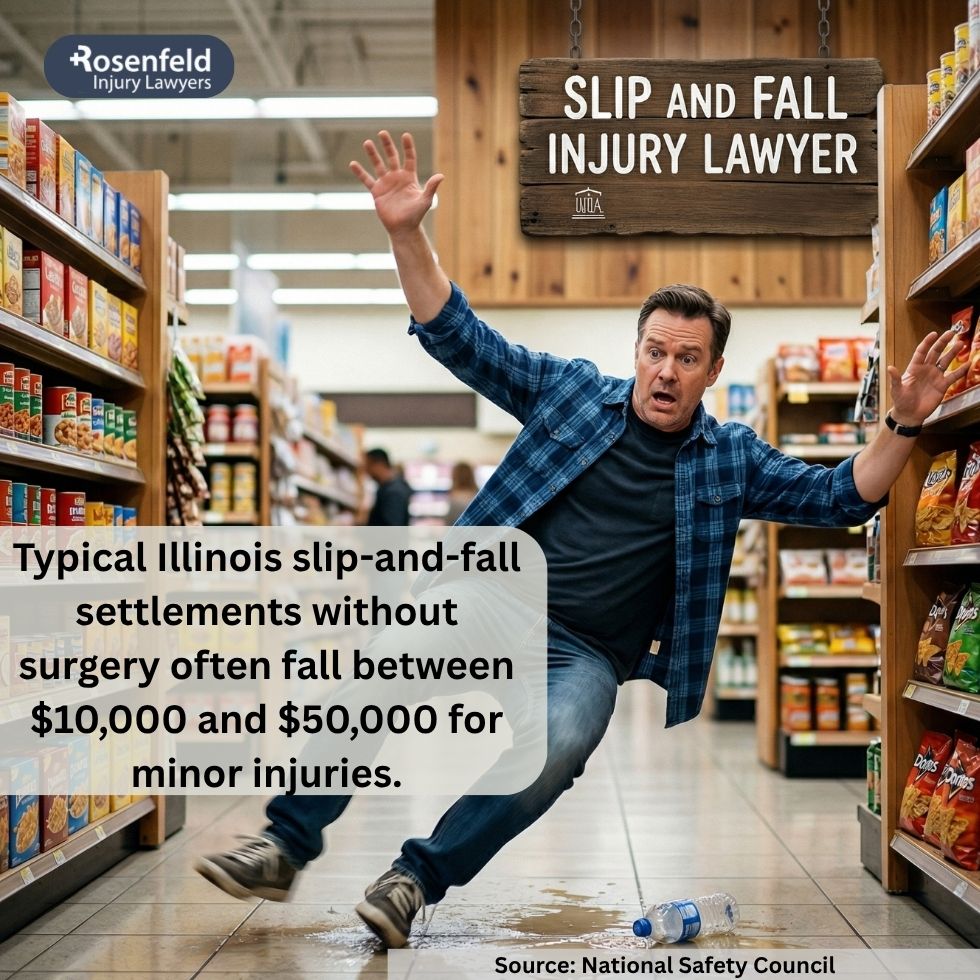
$1,500,000: Lupe was in his 70s when he fell down a flight of stairs in a Pilsen neighborhood apartment building. We proved that the property owner failed to update the railings and stair tread, violating building codes.
$835,100: Brenda fell down a stairwell in a Lakeview apartment building. She suffered injuries that did not require surgery and recovered compensation for her medical treatment, rehabilitation, and other damages.
Although some slip and fall accidents cause catastrophic injuries, many injuries improve with conservative medical treatment instead of surgery.
Injuries that often heal without surgery include:
Even when surgery is unnecessary, these injuries can result in substantial medical bills, missed work, ongoing pain, rehabilitation expenses, and reduced quality of life.
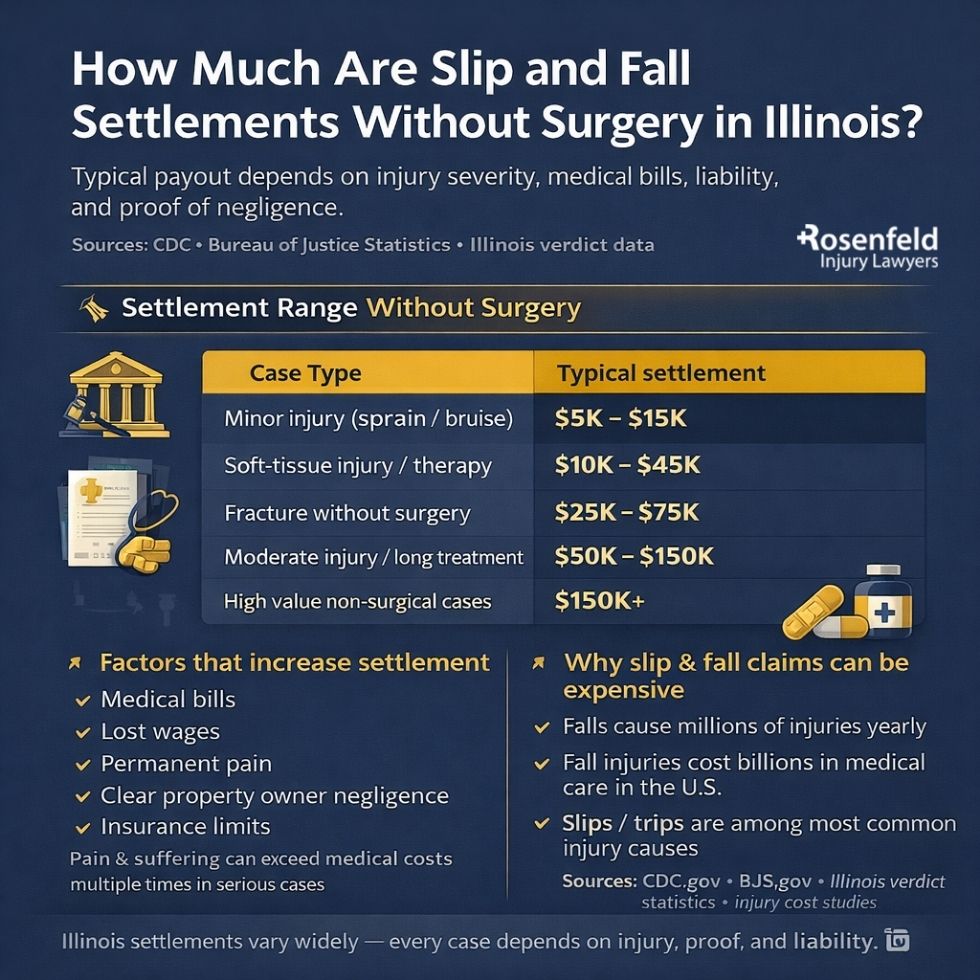
| Injury | Typical Treatment | Typical Settlement Range |
| Soft tissues sprain or strain | Physical therapy medication | $10,000–$35,000 |
| Whiplash | Therapy, chiropractic care, medication | $15,000–$45,000 |
| Minor fracture without surgery | Cast, brace, follow-up care | $20,000–$75,000 |
| Concussion | Observation, neurological care | $20,000–$80,000 |
These ranges are estimates only. Every claim is different and depends on factors such as liability, available insurance coverage, medical documentation, lost income, and the long-term impact of the injury.
If your accident resulted in a disc or back injury, learn more about our back injury settlements.
Several factors determine the value of non-surgical slip and fall claims. Insurance companies and juries evaluate the circumstances surrounding the accident, the extent of the injuries, and the financial losses suffered by the injured person before determining an appropriate settlement amount.
The most important factors include:
Whether you have experienced legal representation protecting your interests, hire an experienced personal injury attorney.
You can use our personal injury settlement calculator to estimate the potential value of your claim. Keep in mind that online calculators cannot account for liability disputes, future medical care, insurance policy limits, or the unique facts of your case. Speaking with an attorney provides the most accurate evaluation.
Falls that typically lead to non-surgical injuries include:
Slip and fall accidents can also occur in large retail stores such as Walmart where hazards like spilled liquids, merchandise left in walkways, or poorly maintained flooring may create dangerous conditions for customers.
Property owners, businesses, landlords, and maintenance companies have a legal responsibility to address known hazards or provide adequate warnings when dangerous conditions cannot be corrected immediately.
Recovering compensation after a slip and fall accident involves much more than submitting an insurance claim. Our attorneys investigate the accident, preserve evidence, identify every potentially liable party, and negotiate aggressively with insurance companies to pursue fair compensation.
Our legal services include:
Unlike insurance companies, our goal is to recover compensation that reflects the full extent of your documented losses rather than accepting a quick settlement.
If your injuries required surgery, learn more about our settlements that require surgeryand how they compare to non-surgical claims.
Lilija Komskiene, a home health aide, slipped and fell in the parking lot of her apartment complex after the parking lot had been plowed, but the adjacent sidewalk remained covered with snow and ice. She suffered a fractured ankle and dizziness following the accident. The claim resolved with a settlement of $65,000 after evidence showed the property owner failed to maintain reasonably safe walking conditions.
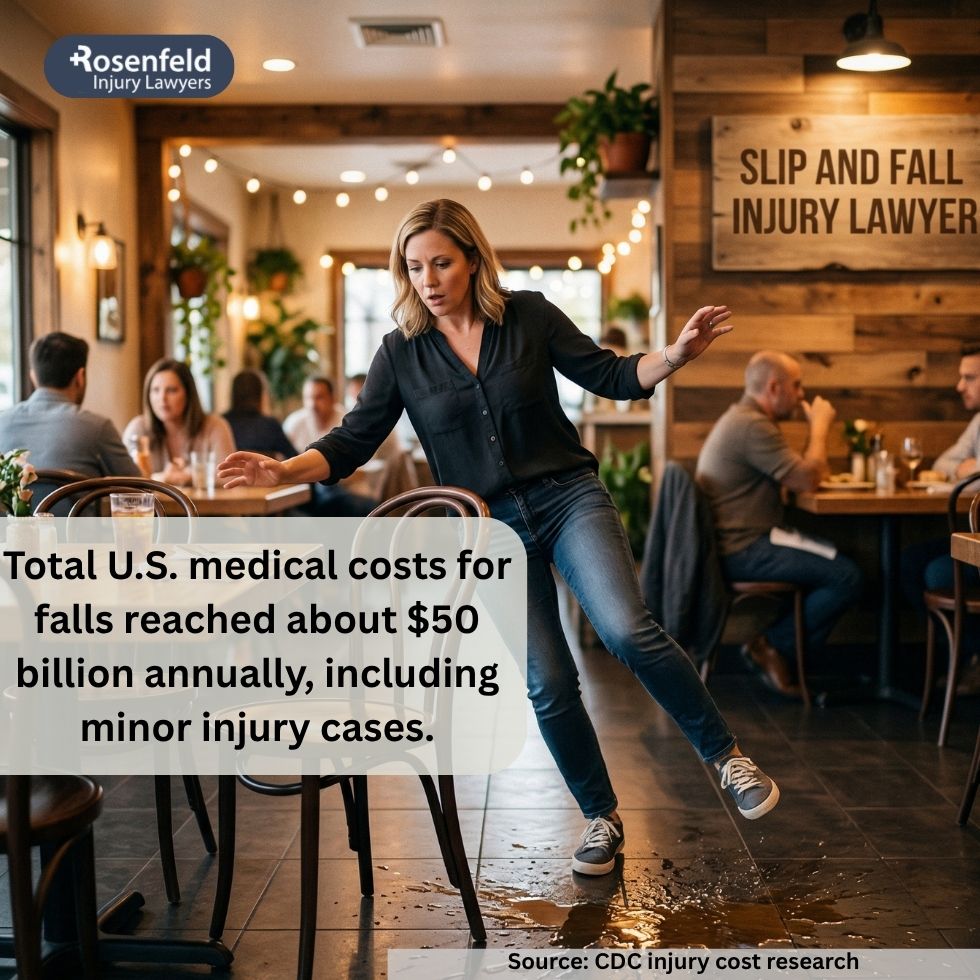
Gerald Scalzo, a 72-year-old retired man, slipped on an icy walkway at his apartment complex in Bridgeview, Illinois around midnight. Unable to stand because of the dangerous ice accumulation, he remained on the ground for approximately 30 minutes before help arrived. He sustained frostbite to his hands and required occupational therapy.
His claim settled for $24,155.25 based on the specific facts of the case, including the nature of his injuries, liability evidence, and available insurance coverage.
Every slip and fall case is unique. Past settlements illustrate how claims may be resolved but do not guarantee the outcome of any future case.
Even if your injuries do not require surgery, the steps you take immediately after a slip and fall accident can significantly affect your ability to recover compensation. Prompt medical treatment and strong documentation often play an important role in establishing both liability and the value of your claim.
For more than 25 years, our attorneys have represented injured clients throughout the Chicago area and have recovered more than $490 million in settlements and verdicts for over 5,000 clients
Our firm is recognized by Super Lawyers, maintains a perfect AVVO rating, and has earned an A+ Better Business Bureau rating.
We prepare every case as though it may proceed to trial, which strengthens our ability to negotiate with insurance companies that refuse to make fair settlement offers.
You pay no attorney’s fees unless we recover compensation for you because we handle cases on a contingency fee basis.
You may receive a variety of damages in slip and fall settlements without surgery, which include:
The damages available in any claim depend on the evidence supporting your losses, the severity of your injuries, and the applicable insurance coverage.
In most cases, compensation for physical injuries is not taxable under IRC Section 104(a)(2). However, certain portions of a settlement may be taxable. For example, punitive damages and compensation awarded solely for emotional distress that is not connected to a physical injury may be subject to federal income tax.
Because every settlement is different, you should discuss potential tax consequences with your attorney or tax professional before accepting a settlement.
A fair settlement depends on the specific facts of your case rather than a fixed average amount. Insurance companies evaluate factors such as the severity of your injuries, medical treatment, liability evidence, lost income, pain and suffering, and available insurance coverage.
Even if surgery is not required, injuries that significantly affect your ability to work or perform everyday activities may justify substantial compensation.
Claims that require surgery often have higher values because of increased medical costs and longer recovery periods. Learn more about settlements that require surgery.
To recover compensation, you generally must prove the following four legal elements:
– Duty of Care: Property owners had a legal responsibility to maintain reasonably safe premises for lawful visitors.
– Breach of Duty: They failed to repair or warn about a dangerous condition. This may include failing to remove snow or ice or maintain adequate lighting where required under local ordinances, including Chicago Municipal Code Sections (4-4-310 & 10-8-180).
– Causation: The dangerous condition directly caused your injuries.
– Damages: You suffered measurable losses such as medical expenses, lost wages, or pain and suffering.
Yes. Strong evidence often plays a critical role in establishing negligence and maximizing the value of your claim. Premises liability cases frequently depend on proving that the property owner knew, or should have known, about the dangerous condition before the accident occurred.
As discussed in Reed v. Galaxy Holdings, a property owner is not automatically responsible for every fall. Liability depends on the specific facts and available evidence.
Helpful evidence may include:
– Photos of the accident scene
– Video footage
– Witness statements
– Maintenance and inspection records
– Incident reports
– Medical records
– Employment records documenting lost income
– Expert testimony when appropriate
Our attorneys help clients preserve evidence before it is lost or destroyed and work with qualified experts when additional analysis is needed.
A settlement is intended to compensate you for documented losses related to your accident, but there is no guarantee that every expense will be fully reimbursed.
The amount you recover may be affected by insurance policy limits, comparative fault, disputed liability, available evidence, and medical liens. An attorney can evaluate these issues and explain what compensation may be available under your circumstances.
Insurance coverage often influences the maximum amount available to resolve a claim. Commercial liability policies frequently provide higher coverage limits than many homeowner policies, although every case is different.
Even when significant insurance coverage exists, insurers may dispute liability, question the severity of your injuries, or challenge the value of your damages during settlement negotiations.
Many non-surgical slip and fall claims resolve within several months to one year, although every case follows its own timeline.
Factors affecting settlement timing include:
– Ongoing medical treatment
– Liability disputes
– The amount of available evidence
– Insurance negotiations
– Whether litigation becomes necessary
In most cases, accepting the first offer is not recommended without understanding the full value of your claim.
Initial settlement offers may not account for future medical treatment, lost earning capacity, ongoing rehabilitation, or pain and suffering. An attorney can review any offer and advise whether additional negotiation may be appropriate.
Most claims resolve through negotiated settlements before trial. However, our attorneys prepare every case as though it may proceed to court, which often strengthens settlement negotiations.
Most Chicago slip and fall attorneys, including our firm, work on a contingency fee basis.
You pay attorney’s fees only if compensation is successfully recovered on your behalf.
Illinois generally allows two years to file a personal injury lawsuit under 735 ILCS 5/13-202.
Certain exceptions may extend or shorten this deadline depending on the facts of your case. Because important evidence can disappear over time, it is advisable to speak with an attorney as soon as possible after an accident.
Recovering compensation after a slip and fall accident can be challenging, even when your injuries do not require surgery. Insurance companies often attempt to minimize non-surgical injury claims despite the significant medical expenses, lost income, and long-term effects these injuries can cause.
At Slip & Fall Injury Lawyers, our Chicago attorneys carefully evaluate every aspect of your claim, gather evidence, negotiate with insurance companies, and prepare cases for trial whenever a fair settlement cannot be reached.
Whether you suffered a sprain, fracture, concussion, back injury, or another injury that did not require surgery, we can explain your legal options and pursue compensation for your documented losses.
Contact our Chicago slip and fall lawyers today for a free consultation. Because we work on a contingency fee basis, you pay no attorney’s fees unless we recover compensation on your behalf.

Legally Reviewed By
Attorney Jonathan Rosenfeld
The information on this page has been legally reviewed by Attorney Jonathan Rosenfeld, founder and managing partner of Rosenfeld Injury Lawyers LLC, a Chicago-based personal injury law firm. With decades of experience representing individuals injured in slip and fall accidents and other premises liability cases throughout Chicago, Mr. Rosenfeld is dedicated to protecting the rights of injury victims and helping them pursue the maximum compensation available under the law. His extensive legal knowledge and commitment to client advocacy ensure that the information provided is accurate, reliable, and aligned with current legal standards.