
Experienced Attorneys. Proven Results.
Hire the Team That Knows How To Win and Maximize the Value of Your Case



Chicago winters can turn sidewalks, parking lots, and store entrances into dangerous places. If you suffered a snow and ice slip and fall in Chicago, you may have a claim when a property owner created an unnatural ice hazard or made existing conditions worse.
Our snow and ice injury lawyers investigate negligent snow removal, poor drainage, and other preventable hazards. In one Chicago case involving improper snow plowing, a jury awarded $2 million. Contact Slip & Fall Injury Lawyers for a free case review. You pay no attorney fees unless we recover compensation for you.
A slip and fall on ice lawyer in Chicago can review how the hazard formed and who may be responsible. Call 312-800-1534 for a free case review.
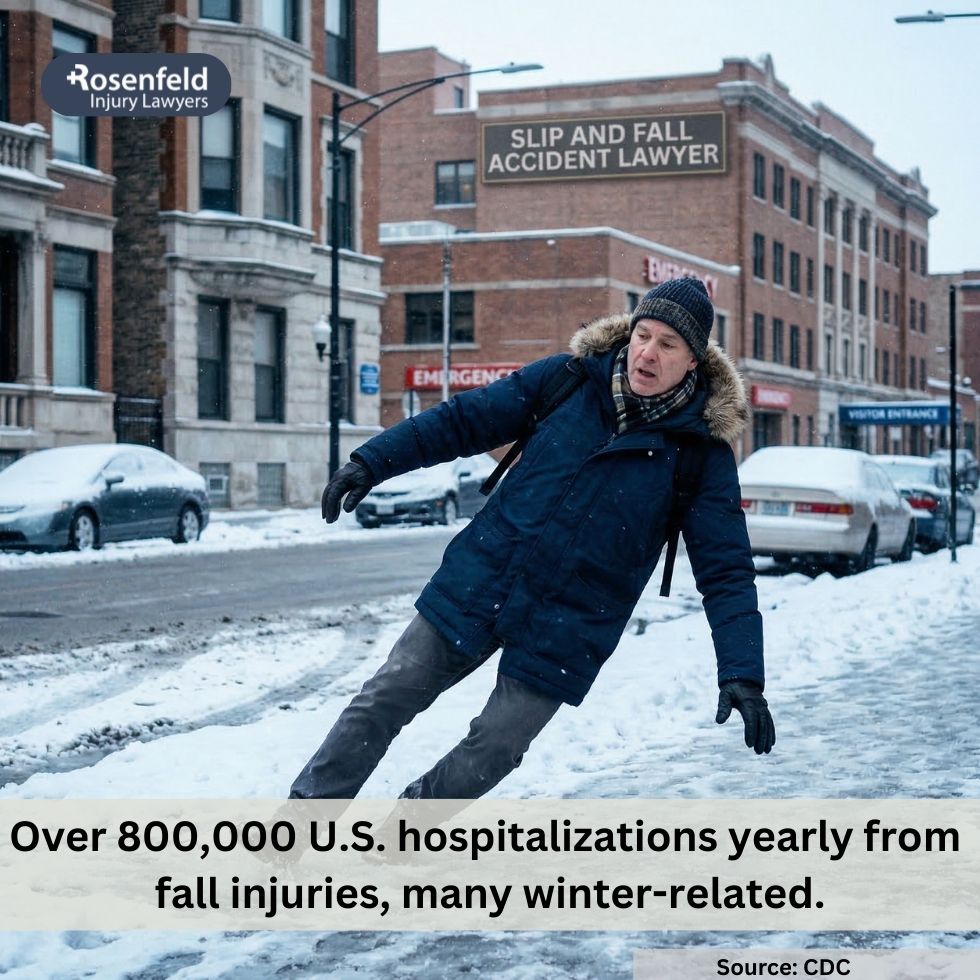
The value of slip and fall on ice settlements depends on injury severity, medical costs, lost income, and evidence of negligence. Some cases settle; others proceed to trial. There is no reliable average payout that applies to every Chicago claim.
Past results illustrate how different these cases can be:
Amtrak conductor William Poole slipped on ice inside a locomotive’s compressor room in 2003. His injuries included hip, leg, and back damage. The jury awarded $2.5 million for disability, pain and suffering, medical expenses, and lost earnings.
Michael Berk slipped on black ice outside Pepper Construction in Chicago in 2012. He alleged that improper plowing caused meltwater to drain onto the sidewalk and refreeze. The jury awarded $2 million for medical costs, pain and suffering, disfigurement, and loss of a normal life.
A 27-year-old woman fractured her pelvis after falling on an icy church walkway. The case alleged that the church failed to salt the area despite freezing temperatures. The reported $2 million settlement reflected the seriousness of her injuries and rehabilitation needs.
Depending on the circumstances, compensation may include medical expenses, lost wages, and pain and suffering.
These examples do not predict the value of another slip and fall on ice lawsuit. Each claim depends on its facts, available evidence, and applicable law. For more examples of case outcomes, see our slip and fall settlements page.
Weather conditions often play a crucial role in a slip and fall on ice case. Historical weather reports can show when snow fell, temperatures dropped, or freezing rain occurred, helping establish how long hazardous conditions existed before the accident.
These records may also reveal whether a property owner had enough time to clear walkways or apply salt. Combined with witness statements and photographs, weather data can strengthen a claim by demonstrating that dangerous conditions were foreseeable and preventable. An experienced Chicago slip and fall on ice lawyer can use this evidence to prove negligence and pursue fair compensation.
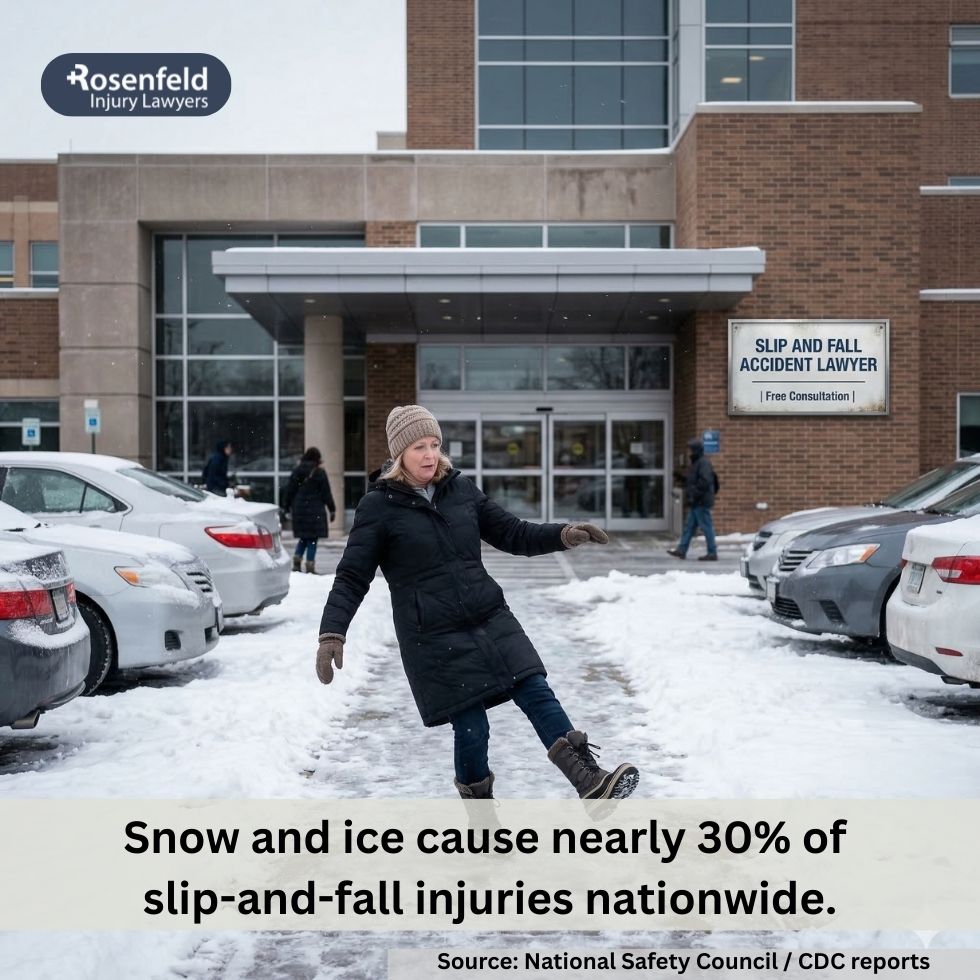
You may be able to sue after a slip and fall on ice in Chicago if a property owner or another responsible party created an unnatural hazard or made icy conditions worse. Illinois generally does not impose liability for snow or ice that accumulates naturally from winter weather.
However, exceptions may apply. Examples include water from broken gutters or downspouts that freezes on a walkway, snow piles that melt and refreeze, careless plowing or shoveling, and sloped or cracked pavement that directs water into pedestrian areas.
Snow tracked indoors and snow compacted by ordinary foot traffic generally fall under natural accumulation, although the specific circumstances still matter.
The Illinois Snow and Ice Removal Act (745 ILCS 75/) generally protects residential property owners who make good-faith efforts to remove snow and ice. It does not provide the same protection to businesses.
In Hornacek v. 5th Ave. Property Management (case decision), the court considered whether a property manager could be liable after voluntarily undertaking snow removal but performing it negligently.
Whether you can sue depends on how the ice formed, who controlled the area, and what steps were taken to address the hazard. An ice fall injury lawyer Illinois residents can consult can review those details.
Responsibility for a slip and fall on icy sidewalk or in another winter hazard area depends on who controlled the property and how the ice formed.
A store or business may be responsible for dangerous conditions at customer entrances, walkways, and parking areas. A landlord or property manager may have duties under a lease or maintenance agreement. A snow removal contractor may also share responsibility if careless plowing or salting created a hazard.
A slip and fall on ice in parking lot may involve the property owner, manager, or contractor responsible for maintenance. Chicago sidewalk snow removal requirements may also apply to certain properties. The specific ordinance and its application should be confirmed by counsel before publication. The Chicago snow removal ordinance may also impose sidewalk-clearing duties on certain property owners. Counsel should confirm the applicable code section and its scope.
Falls can occur near CTA stations, downtown office entrances, residential sidewalks on the South and West Sides, and industrial areas near Pulaski Road or O’Hare. Ice can also make building steps dangerous, and falls on icy stairs may raise similar questions about who controlled and maintained the area.
Take these steps after a slip and fall on ice to protect your health and preserve evidence:
Weather reports can help establish when snow or freezing rain occurred and how long icy conditions may have existed. These records, along with photographs and video, can help show whether a hazard was foreseeable and whether the responsible party had time to address it.
Keep records of your medical bills, lost wages, and other expenses.
Illinois follows a modified comparative fault rule under 735 ILCS 5/2-1116. Your compensation may be reduced by your share of fault. You generally cannot recover damages if you are found more than 50% responsible for the accident.
suffer head injuries, concussions, or back and spinal injuries. Severe injuries may require surgery, rehabilitation, and ongoing care.
These accidents can lead to serious back injuries and broken bones, including fractures that require surgery or rehabilitation.
In most Illinois personal injury cases, you have two years from the date of the accident to file a lawsuit under 735 ILCS 5/13-202. Claims involving the City of Chicago may have a shorter deadline. Speak with an attorney promptly to confirm which deadline applies.
You may be able to sue the City of Chicago after a snow or ice fall, but claims against local governments involve additional legal requirements. Governmental immunity rules may limit when the City can be held responsible for injuries involving public property.
A claim involving a public sidewalk or snowplow-created ice may require evidence that the City’s conduct caused an unnatural or otherwise actionable hazard. Snow pushed into piles by plows can melt and refreeze, potentially creating dangerous conditions.
Claims against local government entities may also have a shorter filing deadline than ordinary personal injury claims. The applicable deadline and immunity rules depend on the circumstances. Have an attorney review the facts promptly.
Slip & Fall Injury Lawyers represents people injured in winter slip and fall accidents in Chicago. Our team investigates how the hazard formed and who may be responsible.
If your fall involved another type of property hazard, you can learn more about your legal options with our Chicago slip and fall lawyer.
You may have a claim if the store or another responsible party created an unnatural ice hazard or made the condition worse. The circumstances, maintenance practices, and evidence will matter.
It depends on where you fell and how the snow accumulated. Illinois generally protects against claims involving natural accumulation, but negligent removal or conditions made worse by the property owner may support a claim.
Responsibility may depend on your lease, who controlled the sidewalk, and who undertook snow removal. A landlord or property manager may be responsible in some circumstances.
Possibly. A claim may exist if the black ice formed because of poor drainage, runoff, or negligent snow removal rather than natural weather conditions.
Yes. The Illinois Snow and Ice Removal Act provides certain protections to residential property owners who make good-faith snow removal efforts. Those protections do not apply in the same way to commercial property owners.
If you were hurt in a snow and ice slip and fall in Chicago, contact Slip & Fall Injury Lawyers for a free case review. Our team can explain your options and assess whether another party may be responsible.
Available 24/7. No attorney fees unless we win.
Call 312-800-1534 or fill out our contact form to get started.
 Legally Reviewed By
Attorney Jonathan Rosenfeld
The information on this page has been legally reviewed by Attorney Jonathan Rosenfeld, founder and managing partner of Rosenfeld Injury Lawyers LLC, a Chicago-based personal injury law firm. With decades of experience representing individuals injured in slip and fall accidents and other premises liability cases throughout Chicago, Mr. Rosenfeld is dedicated to protecting the rights of injury victims and helping them pursue the maximum compensation available under the law. His extensive legal knowledge and commitment to client advocacy ensure that the information provided is accurate, reliable, and aligned with current legal standards.