



5 Common Causes of Ladder Accidents in Construction Sites


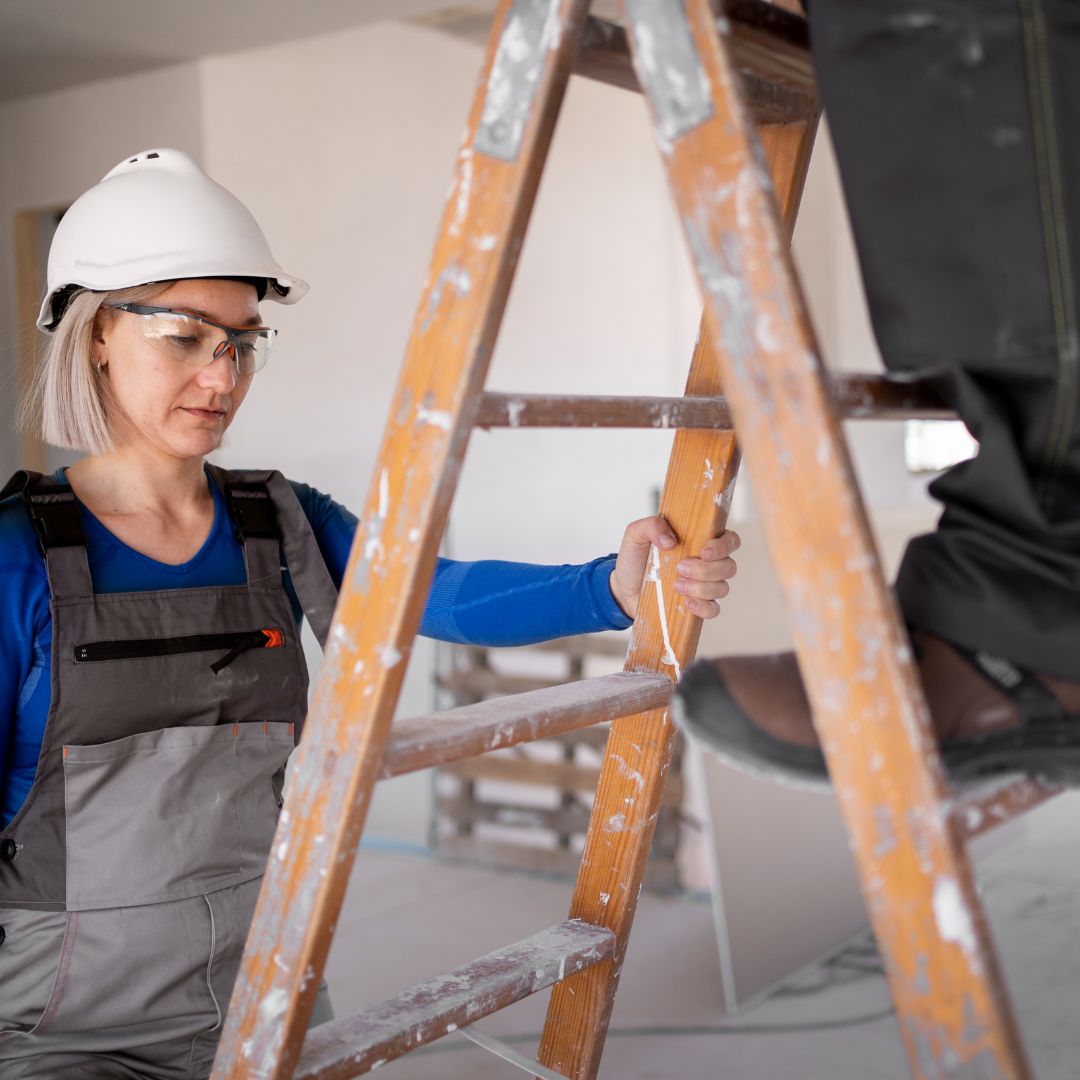
If you were hurt in a ladder fall at work, you deserve a straight answer about why it happened and what you can do. Both come down to the cause.
Roofing and ladder fall accidents and other construction ladder incidents almost always trace to one of five preventable failures, and identifying which one caused your fall matters more than it seems. It tells you how the fall could have been prevented, and it shapes whether you have a ladder fall injury claim.
The 5 Common Causes of Ladder Accidents on Construction Sites
Safety researchers keep pointing to the same five causes.
1. The Wrong Ladder Angle
This is the big one. Roughly 40% of ladder-fall injuries trace to an extension ladder set at the wrong angle and sliding out. The fix is simple: the base should sit one foot from the wall for every four feet of height, about a 75-degree lean.
2. Using the Wrong Ladder
Grabbing whatever ladder is closest invites trouble. One that’s too short tempts overreaching, and one with too low a weight rating can buckle under a worker plus tools. The wrong size or rating often causes structural failure.
3. Defective or Uninspected Ladders
A ladder with a cracked rung, bent rail, worn foot, or broken lock invites a fall. OSHA expects ladders to be inspected before use. On a busy site that step gets skipped, and a damaged ladder stays in use until it fails.
4. Improper Use
Even a sound ladder is dangerous when used carelessly. Workers fall from overreaching, carrying tools instead of keeping three points of contact, or standing on the top rung.
5. Lack of Training
Most mistakes above share one root problem: workers were never properly trained. Many firms lack the resources to teach safe ladder use, so crews figure it out alone. Without training, the other four causes become far more likely.
Who Is Liable for a Construction Ladder Accident?
Here’s what a lot of injured workers don’t realize. Your employer isn’t always the only party on the hook, and workers’ comp isn’t the end of it.
Comp covers medical bills and part of your lost wages regardless of fault, but it’s limited and bars you from suing your employer. What it doesn’t touch is a third party whose negligence contributed to your fall, which is often where the real recovery lives.
Depending on what failed, the third party might be the ladder manufacturer, a contractor responsible for an unsafe site, or the property owner. A claim against any of them is separate from workers’ comp.
Filing a Ladder Fall Injury Claim
A ladder fall injury claim against a negligent third party can recover more than comp allows. That covers full lost income, future medical care, and pain and suffering. Proving it means showing the party owed you a duty and caused your injury.
Evidence makes or breaks these cases. The ladder itself, photos, inspection records, and medical records all matter, and some disappears fast once work resumes. Illinois also limits your filing time to two years, so acting early protects both the evidence and your deadline.
What to Do After a Ladder Accident on a Construction Site
The steps you take early can shape your claim.
- Get medical care right away, even if you feel okay. Head and back injuries often show up later, and records tie them to the fall.
- Report the accident to your supervisor and make sure it’s documented in writing.
- Photograph everything: the ladder, where it was set up, the area, and your injuries.
- Preserve the ladder if you can, or note its make and condition. A defect could be central to your case.
- Get witness information from coworkers who saw the fall.
- Talk to a lawyer before giving a recorded statement to an insurer.
The Bottom Line
Ladder accidents on construction sites usually come down to one of five preventable failures: a bad angle, the wrong ladder, a defect, misuse, or missing training.
Each points to how the fall could have been stopped, and often to who should answer for it. If a third party’s negligence played a role, a ladder fall injury claim can recover far more than workers’ comp alone. Don’t assume a comp check is your only option.
If you were hurt in a ladder fall at a Chicago construction site, an experienced ladder fall injury lawyer at Slip & Fall Injury Lawyers can help identify every liable party and pursue the full compensation you deserve. We’ll identify every party who may owe you and pursue full compensation. The consultation is free, you pay nothing unless we win, and we’re available 24/7. Call 312-800-1534.
Frequently Asked Questions
You generally can’t sue your employer if you’re covered by workers’ comp. But you may be able to sue a third party whose negligence contributed, like a ladder manufacturer, a contractor, or the property owner.
Setting an extension ladder at the wrong angle is the leading cause, behind roughly 40% of ladder-fall injuries. The base slides out when the ladder is too shallow, which is why the one-foot-per-four-feet rule matters.
Yes. Workers’ comp and a third-party injury claim can run at the same time. Comp covers medical bills and partial wages regardless of fault, while a third-party ladder fall injury claim can pursue fuller damages like pain and suffering.
Head and brain injuries are the most serious, accounting for nearly half of fatal ladder-fall injuries. Workers also frequently suffer broken bones, back injuries, and arm and leg fractures.
For a personal injury claim, you generally have two years from the date of the accident. Workers’ comp has its own separate deadlines, so talk to a lawyer soon to protect every option.
 Legally Reviewed By
Attorney Jonathan Rosenfeld
The information on this page has been legally reviewed by Attorney Jonathan Rosenfeld, founder and managing partner of Rosenfeld Injury Lawyers LLC, a Chicago-based personal injury law firm. With decades of experience representing individuals injured in slip and fall accidents and other premises liability cases throughout Chicago, Mr. Rosenfeld is dedicated to protecting the rights of injury victims and helping them pursue the maximum compensation available under the law. His extensive legal knowledge and commitment to client advocacy ensure that the information provided is accurate, reliable, and aligned with current legal standards.