



Can You Sue a Snow Removal Company After Slipping on Ice in Chicago?


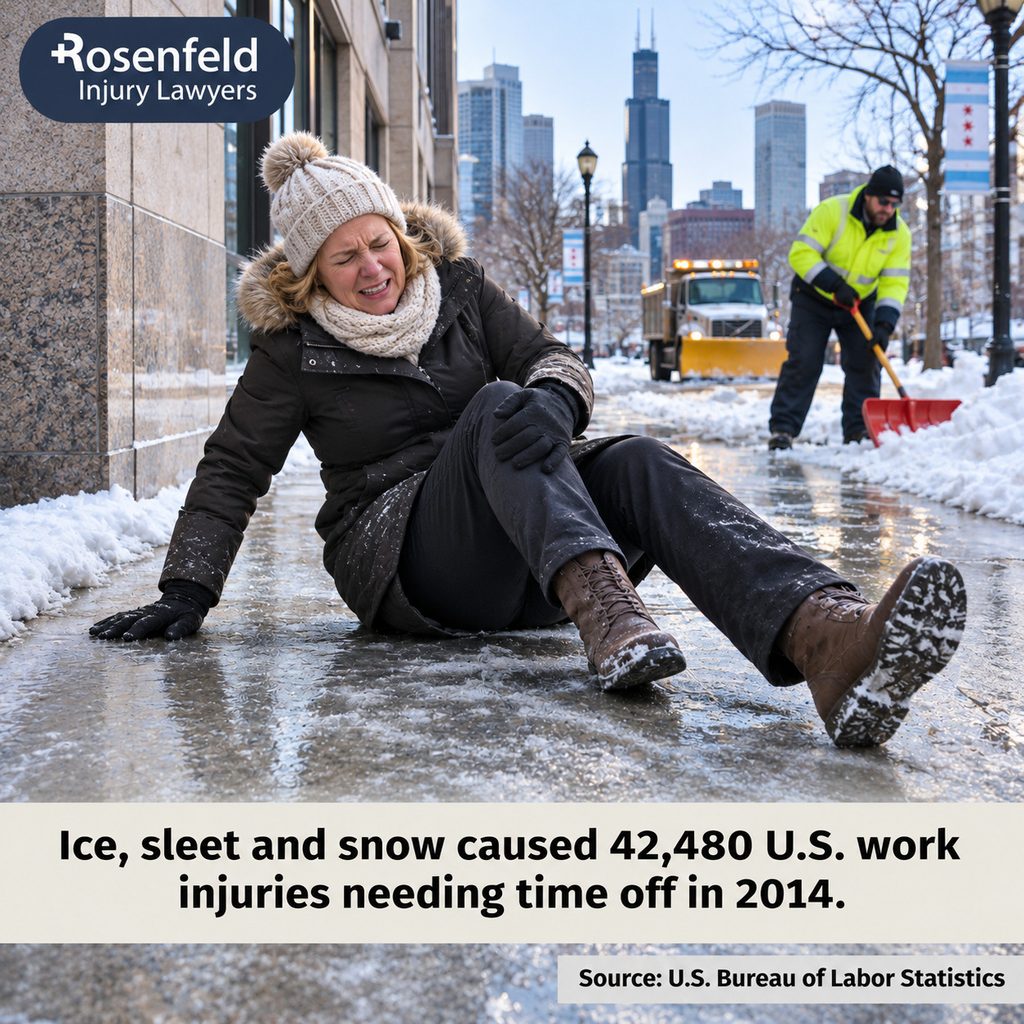
Sometimes, yes. Can you sue a snow removal company for a slip and fall? You can when the contractor’s negligence, such as a missed visit, poor salting, or piled snow that melts and refreezes, created or left the hazard. The contract, the weather, and the timing usually decide the outcome.
Who Was Responsible for the Ice?
Responsibility often runs through several parties at once: the property owner, a property manager, and the contractor. A contractor’s duty generally comes from what it agreed to do, so the service contract matters as much as the weather.
If the contract covered your walkway and the company did not use reasonable care, it can be a defendant. The owner may also share blame if it failed to supervise the work or ignored known problems.
Does Illinois Protect Property Owners From Ice Claims?
Partly. At common law, an owner has no duty to remove natural accumulations of snow and ice, though a duty can arise for unnatural accumulations. The Snow and Ice Removal Act, 745 ILCS 75, adds limited immunity for residential owners whose removal efforts are negligent.
The Illinois Supreme Court narrowed that protection in Murphy-Hylton v. Lieberman Management Services, decided in 2016. It held the immunity does not cover ice that forms because of a defect or poor maintenance rather than snow removal efforts.
What Is an Unnatural Accumulation?
It is ice created or worsened by human action or a property defect. Examples include meltwater from piled snow draining across a path and refreezing, or a downspout that dumps water onto a walkway. Our page on snow and ice slip and fall cases in Chicago explains why this distinction shapes many claims.
Does Chicago Add Its Own Rules?
Yes. Chicago ordinances require owners to clear walkways, and the city code sets rules for snow and ice removal on sidewalks. A violation can strengthen a claim because it shows a breach of a safety standard. Our overview of Chicago premises liability law explains how those local rules fit into a claim.
What Do You Have to Prove Against a Contractor?
You generally need to show four things:
- The contractor owed a duty, usually through its contract.
- It breached that duty, such as skipping a visit or leaving a slick walkway.
- That breach caused your fall.
- You suffered real losses, like medical bills and lost wages.
Contractors often answer that the snow was natural, the walkway was outside their scope, or you should have seen the ice. A claim built on documents rather than memory holds up best. Our page on common defenses in slip and fall casesexplains how those arguments are raised.
What Evidence Helps Most?
The strongest proof comes from records that exist only for a short time.
- Photographs of the ice, the surrounding drainage, and your footwear.
- The service contract and any work orders.
- Service logs, timestamps, and GPS records showing when crews visited.
- Weather data for the hours before the fall.
- Witness names and any complaints made earlier.
Ask the owner and contractor to preserve these records in writing. A lawyer can send a preservation letter so nothing gets deleted.
What If It Was Natural Ice?
A claim can still exist. If the contractor undertook to clear the walkway and did so carelessly, the work itself can be the problem. But the case is harder, and defenses based on natural accumulation will come up.
Also note the deadline. Private defendants generally allow two years under 735 ILCS 5/13-202, while claims against a government body carry a shorter window.
What Should You Do in the First 48 Hours?
- Get medical care and follow your doctor’s instructions.
- Photograph the spot, your shoes, and any piled snow or drainage.
- Report the fall to the property owner or manager in writing.
- Note who plowed or salted, and when, if you know.
- Keep your boots and clothing as they were.
If you are still asking, can you sue a snow removal company for a slip and fall, the quickest step is to have someone review your facts. Slip & Fall Injury Lawyers offers free consultations, and we will help you work out who may be responsible. Tell us what happened and we will take it from there.
How Do Contract Terms Affect the Claim?
Snow contracts vary widely. Some require service after a set snowfall, others cover plowing only, and many exclude salting unless requested. Indemnity clauses can shift responsibility between the owner and the contractor, which affects who defends the claim and who pays.
Why Does Scope Matter So Much?
If the contract covered the lot but not the walkway where you fell, the contractor may argue it owed you no duty there. If it covered both and crews skipped visits, that supports your claim. Answering can you can sue a snow removal company for a slip and fall with a yes means reading the contract, not guessing from the trucks seen there that day.
Remember that the owner often keeps its own duty regardless of the contract. Slip & Fall Injury Lawyers can request the agreement and work orders before the parties argue about them.
Frequently Asked Questions
Yes. Illinois lets you name every party that may have contributed to the hazard.
Plowing does not end the question. Refreezing, poor salting, or runoff from piled snow can still create liability.
A missing sign alone does not decide it, but it can be evidence about what the owner knew.
The same principles apply. Who controlled and maintained the sidewalk matters most.
Yes, if you were no more than 50% at fault under 735 ILCS 5/2-1116. Your award shrinks by your share.
Not automatically. A lawyer can request it through a demand or, if a lawsuit is filed, through discovery.
That can help the contractor, so timing records and weather data become important to the claim.