
Experienced Attorneys. Proven Results.
Hire the Team That Knows How To Win and Maximize the Value of Your Case



Dental injury settlements from a slip and fall can vary widely depending on the severity of the damage, the treatment required, and the cost of future dental care.
A slip and fall can leave you with chipped or broken teeth, damaged crowns, tooth loss, or injuries requiring implants and other extensive procedures. In Chicago, these costs may form a significant part of a personal injury claim.
The value of a dental injury settlement may include current dental bills, future treatment costs, pain and suffering, and other losses caused by the fall. Knowing what factors affect these damages can help you understand how a settlement is calculated and what compensation you may be entitled to pursue.
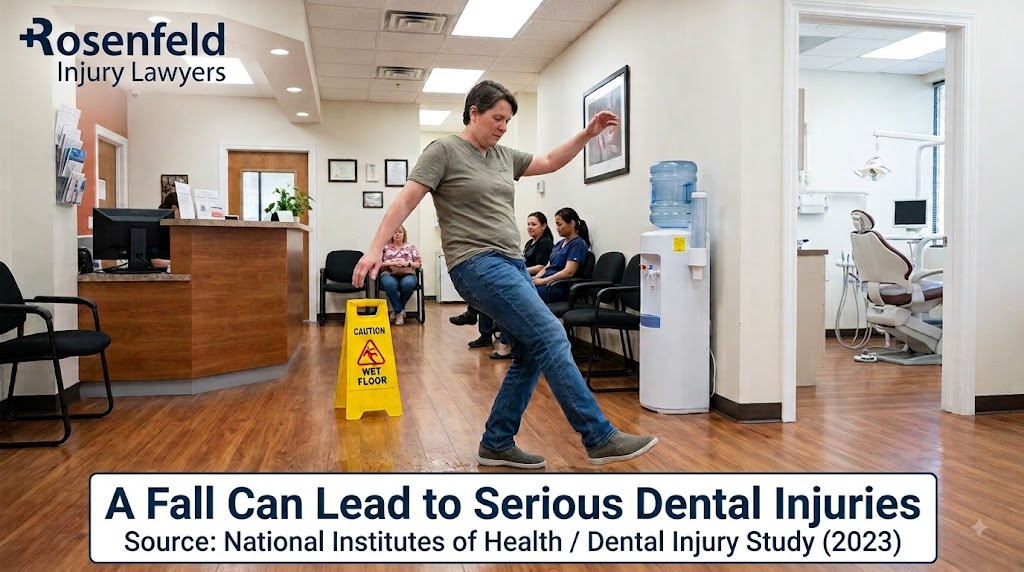
Dental trauma claims settle differently than a routine bruise or sprain because the treatment seldom ends when the swelling goes down.
According to Law.com VerdictSearch, in Cook County premises liability cases involving facial and dental trauma, the typical outcomes range from the low five figures for a chipped tooth to well into six figures when implants, crowns, or jaw surgery are involved.
How a case falls on that spectrum depends on a few common factors: how many teeth, if the nerve or bone was affected, if the injury is visible when you talk or smile, and if an insurer disputes that the fall caused the damage.
Our slip and fall settlement calculator can give you a rough starting range based on your medical bills and lost income.
Every dental case is different. A broken tooth settlement for a minor chip repaired with a single filling sits at the low end of this cluster since treatment ends in one office visit.
A knocked-out tooth claim involving a single implant settles high and is far more expensive than a filling or a crown alone, before future replacement is even factored in.
Cases involving multiple missing or damaged teeth, or a dental trauma settlement, typically produce the largest recoveries in this category given the surgery, the recovery time, and the lasting functional impact.
The exact figures for each tier depend on documented treatment costs, the strength of liability evidence, and reported outcomes in comparable Cook County premises liability cases.
A dental implant is not a permanent solution. The crown on the top needs replacement every 10 to 15 years, and the implant itself may need future maintenance, bone grafting, or replacement decades down the line. Health insurance will often not cover implants at all, considering it a cosmetic or elective procedure, not a medical necessity.
A fair settlement accounts for future dental treatment costs, not just the bill from the emergency dentist. For a claimant in their 30s or 40s, that math can add hundreds of thousands of dollars to a case that looks modest on paper.
Illinois recognizes disfigurement and loss of normal life as damages separate from ordinary pain and suffering, and a visible dental injury often qualifies. Under the Illinois Pattern Jury Instructions (disfigurement, loss of normal life), a jury can compensate a claimant for how an injury changed their appearance, speech, or confidence, even after the physical healing is complete.
This element works alongside broader disability compensation claims when the injury limits daily function.
Fractured jaw, which often requires plates, screws, or wiring the jaw shut for weeks. A jaw fracture claim based on this kind of injury must document not only the surgery but also the months of soft-food diets, missed work and speech difficulty that follow.
Softer tissue damage around the jaw joint is just as real. A fall that jars the head can strain or dislocate the temporomandibular joint (TMJ), leading to clicking, locking, or chronic pain when chewing or talking.
These injuries are frequently paired with brain and head injuries when the same fall caused a blow to the head, and both should be documented together rather than treated as separate, smaller claims.
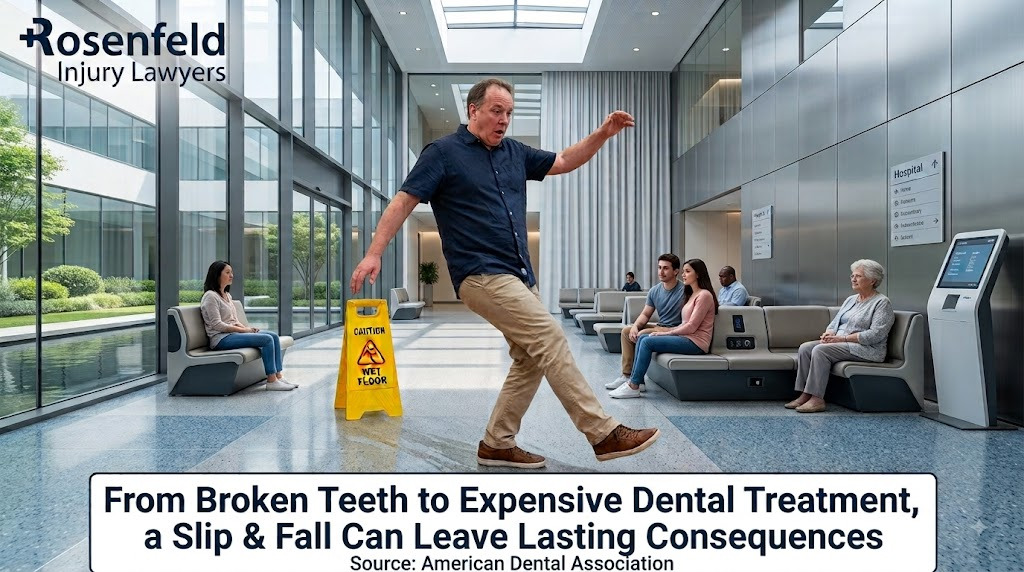
Insurance adjusters routinely argue that a claimant’s existing dental work, prior decay, or old fillings explain the damage rather than the fall itself. Property owners in Cook County owe visitors a duty of reasonable care under the Illinois Premises Liability Act, and a claim generally has two years from the date of the fall to be filed in the Circuit Court of Cook County under the state’s statute of limitations.
If your dental insurance paid part of the bill, that payment does not disappear from the case; it typically comes back as a lien, similar to how lost wages in a slip and fall claim are recovered and then reconciled with any wage-replacement benefits already received.
The first hour after a fall matters for a knocked-out tooth. General guidance from dental professionals, including resources published by the American Dental Association, notes that a tooth handled and treated quickly may sometimes be saved:
If a fall in Chicago left you with dental damage, get a free case review from our team. We’ll walk through what your dental injury settlement should account for, today’s treatment, and everything it’s likely to cost down the road.
A single chipped or fractured tooth typically settles between $5,000 and $50,000 in Chicago, depending on whether it needs a filling, crown, or root canal.
Implants and crowns typically need replacement every 10 to 15 years, and a settlement that only covers today’s procedure leaves you paying for decades of future dental work yourself.
Yes. A completed repair doesn’t erase the claim. You can still recover the cost of the filling or crown, any pain and inconvenience during treatment, and the cost of redoing that repair when it eventually wears out or fails.
Insurance payments usually come back as a lien against your settlement, similar to how health insurance or workers’ comp liens are handled, and your attorney negotiates that lien separately from your total recovery.
You should see a dentist as soon as possible, ideally within the first hour. A tooth that’s kept moist and treated quickly has a better chance of being saved.

Legally Reviewed By
Attorney Jonathan Rosenfeld
The information on this page has been legally reviewed by Attorney Jonathan Rosenfeld, founder and managing partner of Rosenfeld Injury Lawyers LLC, a Chicago-based personal injury law firm. With decades of experience representing individuals injured in slip and fall accidents and other premises liability cases throughout Chicago, Mr. Rosenfeld is dedicated to protecting the rights of injury victims and helping them pursue the maximum compensation available under the law. His extensive legal knowledge and commitment to client advocacy ensure that the information provided is accurate, reliable, and aligned with current legal standards.