
Experienced Attorneys. Proven Results.
Hire the Team That Knows How To Win and Maximize the Value of Your Case



If you were injured after slipping, tripping, or falling at an amusement park, working with an experienced amusement park slip and fall lawyer in Chicago can make a significant difference in your claim.
Amusement parks have a legal responsibility to keep walkways, ride exits, waiting areas, and other public spaces reasonably safe for visitors. When hazardous conditions such as wet surfaces, uneven pavement, poor lighting, or inadequate maintenance cause an injury, you may be entitled to compensation.
Our Chicago amusement park slip and fall lawyers help injured visitors determine exactly what caused their accident and who may be legally responsible. Whether your injuries resulted from a dangerous property condition or negligence by the amusement park, we investigate every detail to build a strong premises liability claim and pursue the compensation you deserve.
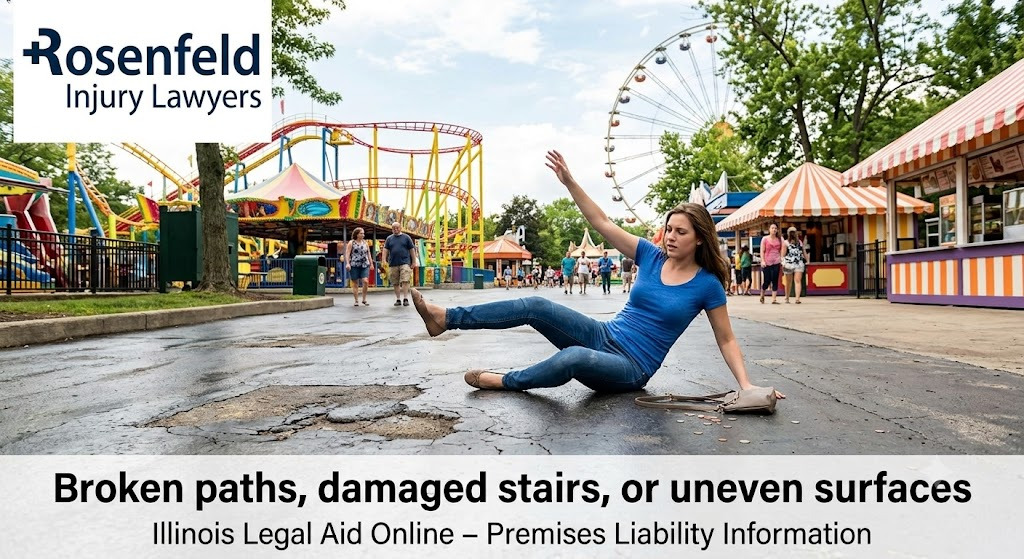
Most park injuries never involve a ride at all. A theme park slip and fall usually happens on the ground: a slick midway path, a puddle near a concession stand, a wet walkway by the restroom, or a cracked section of pavement near the entrance gate.
Loose gravel, a torn rubber mat, spilled soda nobody mopped up are considered the settings for most park injury claims.
Seasonal parks and traveling carnivals add another layer of risk. Temporary staff, rushed setup schedules, and inconsistent seasonal staffing and inspection routines mean walkways and platforms do not always get the same attention a year-round property would give them. A carnival injury claim often traces back to exactly this kind of gap.
This distinction is the single most important thing to understand before filing a claim. In Illinois, rides and mechanical attractions are regulated under the Amusement Ride and Attraction Safety Act (430 ILCS 85). That law requires inspection and permitting through the Illinois Department of Labor’s Carnival-Amusement Safety Division, and it governs mechanical failures, harness defects, and operator error on the ride itself.
A fall on a ride platform, a boarding ramp, or an exit stair connected to a ride can sometimes fall under this statute. But a slip on a wet walkway, a trip in a gift shop, or a fall in a parking area is not a ride-safety issue. Those cases are handled as ordinary premises liability claims under Illinois premises liability law, specifically the Premises Liability Act (740 ILCS 130). Many firms blur this line. Getting it right from the start affects who you notify, what records you request, and how the claim is framed.
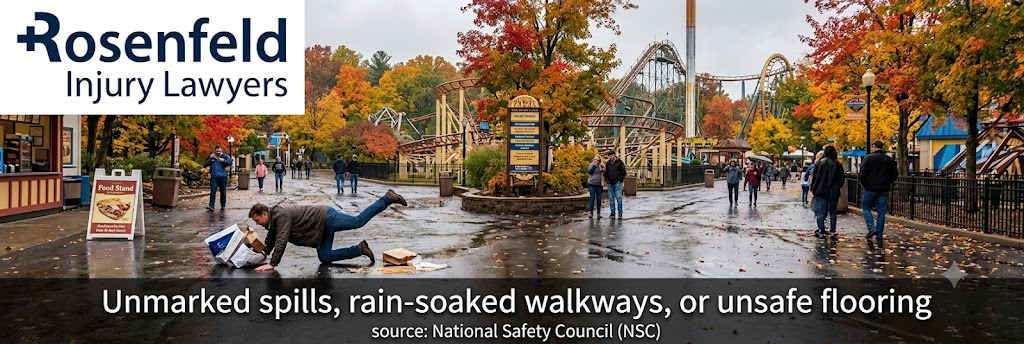
Liability usually comes down to park operator negligence: did the property know about a hazard, and did it fail to fix or warn about it in time? Common causes include:
These same principles apply to our wet floor slip and fall claims, where notice and reasonable maintenance are the deciding factors. A park is still a commercial property. It owes visitors the same basic duty of care as a store or restaurant.
Water parks and splash pads deserve their own attention because most non-ride falls happen right here. Wave pools, slide run-outs, and pool decks stay constantly wet, and standing water collects faster than staff can respond.
A water park injury claim often centers on deck surfaces without proper slip-resistant coating, missing warning signs near slide exits, or overcrowded splash pads where puddles go unnoticed for hours.
These claims share a lot in common with our swimming pool slip and fall claims, since both involve wet decking, drainage design, and a property’s duty to inspect high-traffic wet areas regularly. If your fall happened on a pool deck, at a slide exit, or near a splash pad, the same evidence-gathering approach applies: photos of the wet surface, incident reports, and maintenance logs.
Many visitors assume the waiver printed on their admission ticket ends any chance of a lawsuit. That is not generally true in Illinois. Exculpatory clauses on tickets are read narrowly by Illinois courts, and they typically cannot shield a property from liability for its own negligence.
A waiver might limit certain assumed risks tied to a ride’s normal operation, but it rarely excuses a property for failing to clean a spill or warn about a known hazard. Every waiver is different, and the honest answer requires a case-specific review rather than a blanket promise either way.
Park injuries disproportionately involve children, and Illinois law accounts for that. Under 735 ILCS 5/13-211, the standard filing deadline pauses, or tolls, until a minor turns 18, giving families more time than adults typically get to pursue a claim. That does not mean waiting is a good strategy.
Evidence like surveillance footage, maintenance logs, and witness memory fades quickly. Reporting the incident and documenting the scene while the details are fresh still matters, even with extra time on the calendar.
Case value depends on the severity of the injury, the strength of the liability evidence, and whether the fall involved a ride-safety violation or ordinary premises negligence. Medical costs, lost income, and pain and suffering all factor into the total. Our slip and fall settlement calculator can give you a starting estimate based on details specific to your situation, though a full case review is the only way to get an accurate figure.
Within city limits, most park-related injuries happen at attractions like Navy Pier, seasonal Chicago Park District events, and neighborhood street festivals or carnivals. Regional theme parks sit well outside Chicago proper, and a case tied to one of those locations may need to be filed in a different county than the Circuit Court of Cook County. If you are not sure where your case belongs, that is exactly the kind of question worth asking before you file anything.
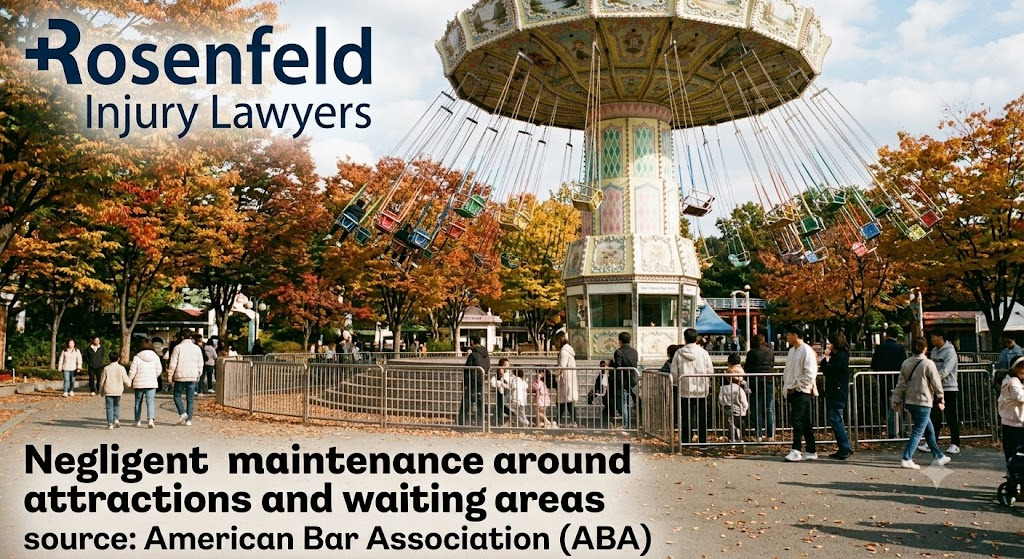
If you were hurt at an amusement park, water park, or seasonal carnival in the Chicago area, the details of where and how you fell matter more than most people realize. An amusement park injury lawyer can help sort out whether ride-safety law or ordinary premises liability applies, gather the right evidence, and deal with the property’s insurer on your behalf.
Reach out for a free consultation to talk through what happened and what your options look like.
Yes. If the park knew or should have known about a hazard like a wet walkway or missing sign and failed to address it, you may have a premises liability claim under Illinois law. Ride-related injuries follow a separate statutory framework.
No. The Amusement Ride and Attraction Safety Act governs mechanical rides and attractions themselves. A fall on a walkway, midway path, or restroom floor is generally handled as ordinary premises liability, not a ride-safety violation.
Not automatically. Illinois courts read exculpatory clauses narrowly, and a waiver typically cannot excuse a property for its own negligence. A case-specific review is the only way to know how your particular waiver may apply.
Illinois law tolls the filing deadline for minors until they turn 18. Even so, documenting the incident, gathering witness information, and reporting the fall promptly helps preserve evidence while it is still fresh.
Adults generally have two years from the date of the injury under Illinois’s statute of limitations. Claims involving minors are tolled until age 18, though acting sooner helps protect available evidence.

Legally Reviewed By
Attorney Jonathan Rosenfeld
The information on this page has been legally reviewed by Attorney Jonathan Rosenfeld, founder and managing partner of Rosenfeld Injury Lawyers LLC, a Chicago-based personal injury law firm. With decades of experience representing individuals injured in slip and fall accidents and other premises liability cases throughout Chicago, Mr. Rosenfeld is dedicated to protecting the rights of injury victims and helping them pursue the maximum compensation available under the law. His extensive legal knowledge and commitment to client advocacy ensure that the information provided is accurate, reliable, and aligned with current legal standards.