

When a Cleaning Company (Not the Restaurant) Is Liable for Your Fall


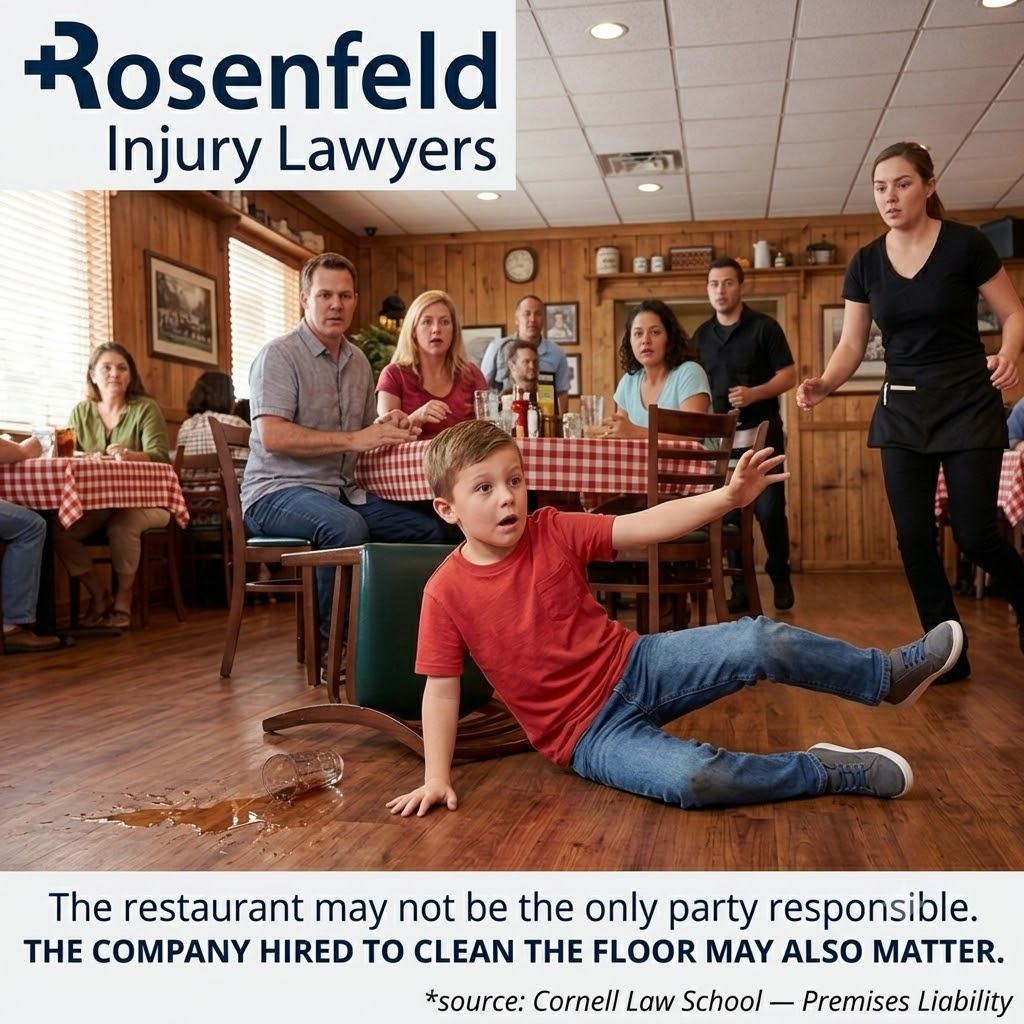
You slipped in a restaurant, but the restaurant may not be the only party at fault. Many Chicago restaurants hire outside crews to mop floors, empty grease traps, and handle spills, and a restaurant cleaning company liability lawsuit can arise when that outside crew’s work created the hazard. Determining who controlled the area, created the hazard, or had a duty to address it can help identify which parties may be responsible for your injuries.
If you were hurt this way, understanding how liability shifts between a restaurant and its cleaning vendor is the first step toward building a strong claim. Contact us for a free consultation to discuss your options.
Why a Restaurant Cleaning Company Liability Lawsuit Differs From a Standard Claim
A typical restaurant slip and fall claim points to the restaurant owner or manager. But when a hired cleaning service leaves a floor wet, uses the wrong cleaning agent, or skips a scheduled cleaning window, the analysis shifts. A restaurant cleaning company liability lawsuit asks who controlled the area and whether that party failed to act with reasonable care.
Illinois premises liability claims can depend on who controlled the area, created the hazardous condition, knew or should have known about it, and had a duty to address the risk. A cleaning vendor may share responsibility when its actions or inaction contributed to the fall.
How Third-Party Cleaning Contracts Affect Liability
Restaurants often sign service agreements with janitorial or floor-care companies that spell out cleaning schedules, safety protocols, and even indemnification terms. These contracts matter in a restaurant cleaning company liability lawsuit because they help establish which party was responsible for a given task at the time of your fall.
If the contract required the cleaning company to post warning signs, use slip-resistant products, or complete work before opening hours, and it failed to do so, that failure may provide evidence supporting a claim against the vendor. Maintenance logs, work orders, and employee schedules from the cleaning company often become central pieces of evidence.
Common Hazards Caused by Cleaning Company Negligence
Cleaning-related falls tend to follow familiar patterns. Common causes include:
- Wet or freshly mopped floors left without warning signs or barriers
- Residue from improper cleaning chemicals or excess soap
- Buffing or waxing that leaves floors slick
- Snow, ice, or slush tracked in and left unaddressed near entrances during winter weather
- Equipment, hoses, or buckets left in walkways
Each of these hazards may support a claim against a restaurant cleaning company when the cleaning crew’s own actions or inaction contributed to the risk.
Proving a Restaurant Cleaning Company Liability Lawsuit
To hold a cleaning company accountable, your claim generally needs to show four things: the company owed a duty of care, it breached that duty, the breach caused your fall, and you suffered real damages. Evidence that helps prove this includes surveillance footage, the service contract between the restaurant and vendor, cleaning logs, and witness statements from staff or other patrons.
Timing also matters. If the cleaning crew had just finished mopping minutes before your fall and left no signage, that gap between the hazard and the warning can be powerful evidence of negligence.
Can the Restaurant Still Be Held Responsible?
Yes. Hiring a cleaning company does not automatically remove a restaurant’s own duty to keep its premises reasonably safe for guests. A restaurant that knew about a hazard and failed to act, even one created by a vendor, may share liability alongside the cleaning company. In many cases, injured guests pursue both parties at once while the evidence sorts out how much responsibility each one carries.
What Damages Can You Recover?
Depending on your injuries, a claim tied to a restaurant cleaning company liability lawsuit may allow you to recover medical expenses, lost wages, and compensation for pain and suffering. Settlement value depends heavily on the severity of your injuries and the strength of the evidence against the responsible party or parties.
Steps to Take After a Fall Linked to a Cleaning Company
- Seek medical care right away, even for minor pain
- Ask restaurant staff who was cleaning the area and when
- Photograph the floor, any signage or lack of it, and your injuries
- Get contact information from witnesses
- Before giving a recorded statement to an insurer, consider speaking with an attorney about how the statement could affect your claim.
Talk to a Chicago Slip and Fall Attorney
Sorting out whether a restaurant, a cleaning company, or both are responsible for your fall takes careful investigation. At Slip & Fall Injury Lawyers, we review contracts, maintenance records, and surveillance footage to identify every liable party. Contact us today for a free consultation to discuss your case.
Frequently Asked Questions
It depends on who controlled the area and caused the hazard. An attorney can review contracts, logs, and evidence to help identify the responsible party.
In some situations, both parties may share responsibility. Each case depends on the specific facts and evidence involved.
Yes, this distinction can affect who you pursue for compensation. It often requires reviewing service agreements and maintenance records.
A posted sign does not automatically prevent liability. Placement, timing, and visibility of the sign all factor into the analysis.
Illinois has a general filing deadline for injury claims. Speaking with an attorney promptly helps protect your rights and preserve evidence.
Legally Reviewed By
Attorney Jonathan Rosenfeld
The information on this page has been legally reviewed by Attorney Jonathan Rosenfeld, founder and managing partner of Rosenfeld Injury Lawyers LLC, a Chicago-based personal injury law firm. With decades of experience representing individuals injured in slip and fall accidents and other premises liability cases throughout Chicago, Mr. Rosenfeld is dedicated to protecting the rights of injury victims and helping them pursue the maximum compensation available under the law. His extensive legal knowledge and commitment to client advocacy ensure that the information provided is accurate, reliable, and aligned with current legal standards.