


Coffee Shop Slip and Fall Claims: What Makes Them Different


Coffee shop slip and fall claims differ from typical store falls because the hazards usually come from customer-facing self-serve areas, not employee-restocked aisles, and the injury often combines a fall with a hot liquid burn. These two factors change what evidence matters and who ends up responsible.
What Makes These Falls Different From a Typical Store Fall?
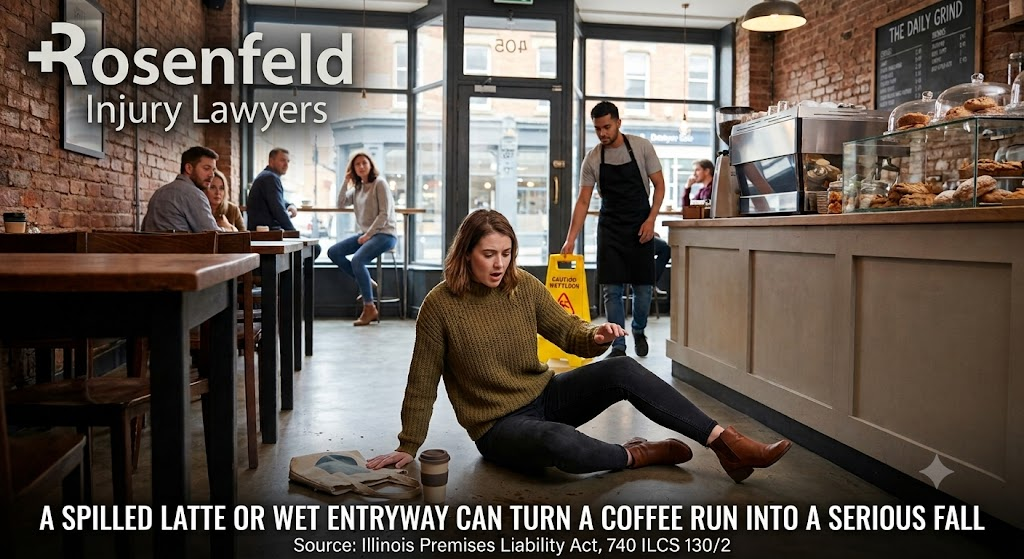
Most retail slip and falls happen because a hazard sat unaddressed somewhere an employee should have caught it. Coffee shop falls are closer to how falls at restaurants and other food service businesses typically get evaluated, since both involve customer-facing service areas rather than simple aisle displays. Coffee shop falls more often start at a station customers manage themselves.
Cream, sugar, lid, and napkin counters get used constantly throughout the day. Spills happen there often, and nobody is specifically assigned to watch that spot the way a stocked aisle gets periodic checks. That shifts the practical question from “how long did an employee ignore this” to “how often does this area get checked at all.”
The espresso machine and brewing equipment stay behind the counter, out of customer reach. The actual risk zone sits in front of it, at the station customers walk up to on their own. That difference shapes where an investigation needs to focus from the start.
Who Is Responsible for a Spill at a Self-Serve Station?
The coffee shop is still responsible for maintaining the self-serve area, even though customers use it directly. A business can’t hand off its duty of care just because patrons handle the cream and sugar.
Responsibility usually comes down to whether staff had a reasonable system for checking and cleaning the area, and whether they followed it. A shop with no routine inspection schedule for a high-traffic station is in a weaker position than one that can show regular checks.
This is the same notice principle that applies in any wet floor slip and fall case. The question is still whether the business knew, or reasonably should have known, about the hazard with enough time to address it before someone got hurt.
Does Hot Liquid Change the Nature of the Claim?
Yes. A coffee shop fall can involve a scald burn on top of the physical impact of hitting the floor, which means the claim often covers two distinct injuries from one incident.
A burn from spilled coffee adds its own medical documentation, healing timeline, and sometimes lasting effects like scarring. Treating this as a single, simple fall claim can undervalue what actually happened. Both injuries deserve their own attention when building the case.
Burns also tend to be easy to overlook in the moment. Adrenaline from the fall can mask how serious a scald is until hours later, which is another reason prompt medical evaluation matters here.
Does It Matter if the Coffee Shop Is Independent or a Franchise?
It can. Independent coffee shops typically carry the same kind of commercial liability insurance as any retail business, so a claim runs through that insurance, not the owner’s personal finances.
Franchise locations add another layer. The person who owns and operates the specific shop and the corporate brand behind the name can be separate legal entities, which affects who the claim is actually filed against. This distinction is worth sorting out early rather than assuming either party automatically carries the responsibility.
Either way, business size says little about whether a claim is legitimate. A small storefront with a line out the door still owes customers the same basic duty of care as a large retailer.
What Evidence Matters Most in a Coffee Shop Fall Case?
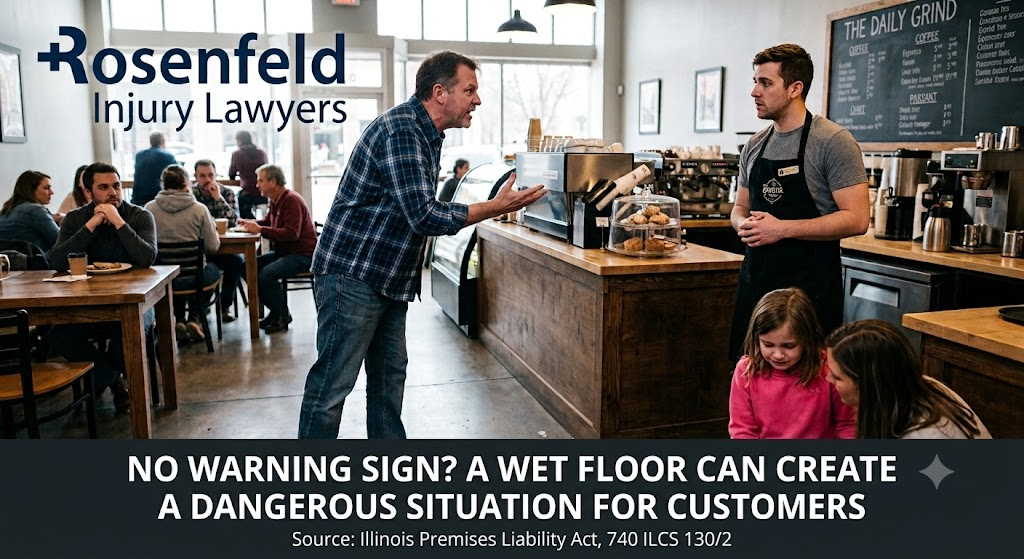
Surveillance footage of the self-serve area, cleaning and inspection logs, and witness accounts from other customers in line tend to carry the most weight. Coffee shops are often small enough that a handful of people nearby likely saw what happened.
Tight floor space works against a shop here. Close tables, narrow aisles, and a line that backs up toward the condiment station mean less distance and less time between a spill happening and someone walking into it. That proximity can strengthen a pattern argument, especially during a predictable rush period when staff attention is split across the counter.
How evidence like this translates into case value varies widely, and typical slip-and-fall settlement amounts depend heavily on injury severity, liability strength, and how well the hazard was documented.
What This Means If You Were Hurt at a Coffee Shop
A coffee shop fall is not automatically a smaller or less legitimate claim just because the business itself is small. Self-serve stations, combined fall and burn injuries, and ownership structure all shape how the case should actually be built, and each deserves its own look before assuming what the claim is worth.
Frequently Asked Questions:
Yes. Independent shops typically carry commercial liability insurance, so the claim is handled through that coverage, not personally.
Yes. A burn is a separate injury from the fall itself and should be documented and valued separately.
It depends on ownership structure. The local operator and the corporate franchisor can be separate, distinct legal parties.
The business is still responsible for maintaining that area, even though customers use it directly.
As soon as possible, especially with a possible burn, since adrenaline can mask how serious it actually is.
At Slip & Fall Injury Lawyers, we treat coffee shop falls as their own category, with attention to the self-serve setup, the ownership structure, and whether a burn injury is part of what happened. Contact us to talk through what happened and your options.

Legally Reviewed By
Attorney Jonathan Rosenfeld
The information on this page has been legally reviewed by Attorney Jonathan Rosenfeld, founder and managing partner of Rosenfeld Injury Lawyers LLC, a Chicago-based personal injury law firm. With decades of experience representing individuals injured in slip and fall accidents and other premises liability cases throughout Chicago, Mr. Rosenfeld is dedicated to protecting the rights of injury victims and helping them pursue the maximum compensation available under the law. His extensive legal knowledge and commitment to client advocacy ensure that the information provided is accurate, reliable, and aligned with current legal standards.