



Does a Church’s Nonprofit Status Protect It From an Injury Lawsuit?


A common assumption trips people up after a fall at a church, community center, or other nonprofit property. Because the organization is a nonprofit, some people assume it can’t be sued the same way a store or business can. That assumption is largely outdated, and understanding how a nonprofit liability insurance injury claim actually works matters if you were hurt on nonprofit property.
Where This Assumption Comes From
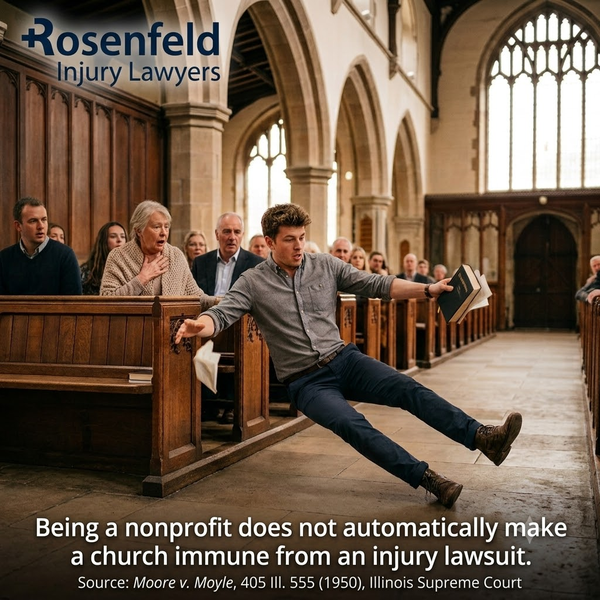
The idea that charities are shielded from lawsuits traces back to an old legal concept called charitable immunity. Historically, many states protected nonprofit and religious organizations from certain lawsuits on the theory that allowing claims would drain funds meant for the organization’s charitable mission, and some early state courts embraced this reasoning broadly.
Illinois has abolished that doctrine, as have most other states. Nonprofit organizations, including churches, generally face the same premises liability standard as any other property owner. If a nonprofit fails to maintain safe conditions and someone is injured as a result, the organization can be held accountable like a private business, regardless of its charitable purpose.
What This Actually Means for a Fall on Nonprofit Property
People often ask, Can you sue a church for a slip and fall? Under current Illinois law, the answer is generally yes, using the same basic premises liability framework that applies anywhere else. The organization must have owed a duty of care, failed to meet it, and that failure must have caused the injury.
A nonprofit liability insurance injury claim follows the same evidentiary path as any other premises liability case: showing the organization knew or should have known about a hazard and failed to address it within a reasonable amount of time.
Why Liability Insurance Still Matters Even Without Immunity
Because charitable immunity no longer shields Illinois nonprofits from liability, insurance plays a central role in how these claims are resolved. Most churches and nonprofit organizations carry general liability insurance specifically because they can be sued like any other property owner, not because of some special legal exception.
This is where a nonprofit liability insurance injury claim becomes practical rather than purely legal. The organization’s insurance policy, not the organization’s charitable status, typically determines how a claim is evaluated and negotiated.
A Narrow Exception Worth Knowing About
While the organization itself is not shielded from liability, Illinois law does provide narrower protection for individual volunteers in certain roles. Under the Illinois Volunteer Director Liability Act, volunteer directors of nonprofit organizations can have some personal immunity from liability. However, this protection generally does not extend to willful or wanton conduct.
This distinction matters because it protects individual volunteers serving in specific governance roles, not the organization as a whole, and it does not shield the nonprofit from a standard premises liability claim.
What This Means If You Were Hurt at a Nonprofit Property
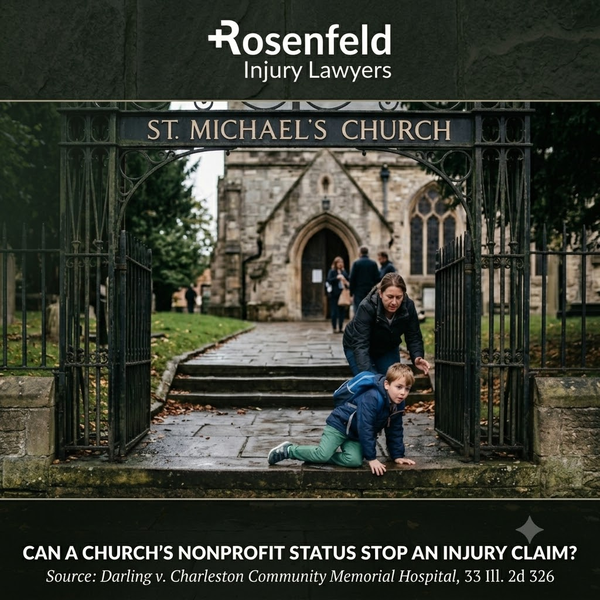
If your fall happened at a church or other nonprofit facility, the organization’s charitable status should not stop you from pursuing a legitimate claim. The real questions are the same ones that apply anywhere else: was there a hazard, did the organization know or should have known about it, and did that failure cause your injury? At Slip & Fall Injury Lawyers, we approach these cases the same way we would any other premises liability claim, focused on the facts rather than any assumption about what a nonprofit’s status might mean.
Frequently Asked Questions
Generally, yes. Illinois has abolished charitable immunity, and churches are held to standard premises liability rules.
Usually, yes. Most churches and nonprofits carry liability insurance specifically to cover claims like this.
Rarely, for volunteer directors acting in good faith, though this protection does not extend to willful misconduct.
It can, in narrow circumstances involving specific government-funded services, though it typically does not apply to general premises claims.
Yes. Duty of care, notice, and causation still apply the same way they would with any other property owner.
Bottom Line
A church or nonprofit’s charitable mission does not place it outside the reach of Illinois premises liability law. Understanding how a nonprofit liability insurance injury claim actually works starts with recognizing that charitable status alone no longer offers the protection many people assume it does.
If you were hurt on nonprofit or church property, Slip & Fall Injury Lawyers can help you understand your options. Reach out to talk through what happened.

Legally Reviewed By
Attorney Jonathan Rosenfeld
The information on this page has been legally reviewed by Attorney Jonathan Rosenfeld, founder and managing partner of Rosenfeld Injury Lawyers LLC, a Chicago-based personal injury law firm. With decades of experience representing individuals injured in slip and fall accidents and other premises liability cases throughout Chicago, Mr. Rosenfeld is dedicated to protecting the rights of injury victims and helping them pursue the maximum compensation available under the law. His extensive legal knowledge and commitment to client advocacy ensure that the information provided is accurate, reliable, and aligned with current legal standards.