



Grocery Store Accident Claims: Evidence You Need


The single best piece of evidence in a grocery store fall is often gone within days. Surveillance footage that shows how long a spill sat on the floor is exactly what proves the store was negligent.
It’s also what the store’s system erases on a routine loop unless someone moves to save it. A grocery store surveillance footage claim can rise or fall on whether that video still exists when your lawyer comes looking.
This is the evidence you need, and how to protect it.
Why Surveillance Footage Matters So Much
In almost every grocery store, the central question is the same. Did the store know, or should it have known, about the hazard and failed to deal with it? Footage answers that question better than anything else.
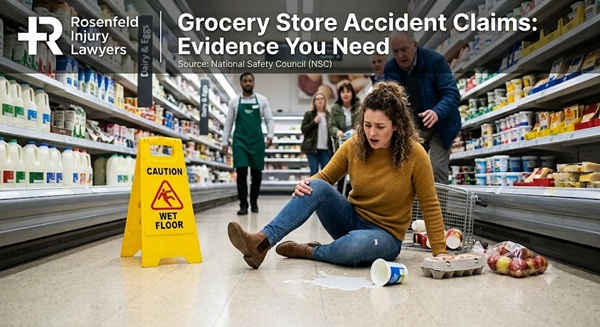
A camera can show how long a spill, dropped grape, or leak sat on the floor before you stepped in it. It can show employees walking past without cleaning it up, or the absence of any wet floor sign.
That timeline is the heart of a grocery store surveillance footage claim. It turns “the floor was wet” into “the store had twenty minutes to fix this and didn’t.”
The Footage Disappears Fast
Here’s the problem. Most grocery store systems record over old footage automatically, often within days to a few weeks. Some keep it longer, many don’t. Once it’s overwritten, it’s gone for good, and so is your best proof.
Stores aren’t required to preserve that video on their own. Unless someone formally asks them to keep it, the loop keeps running. That’s why the most important early step in a grocery store surveillance footage claim is a preservation request. This written demand, usually sent by a lawyer, legally obligates the store to hold the footage instead of erasing it.
What to Do at the Scene
You can’t pull the store’s video yourself. But what you do right after the fall protects the rest of your evidence and strengthens any future request for that footage.
- Call a lawyer quickly, so a preservation request goes out before the footage is gone.
- Report the fall to a manager and ask for a written incident report, plus a copy.
- Photograph the hazard and the area before it’s cleaned up, including any missing warning signs.
- Note the time and location precisely, since that’s what a preservation request will point to.
- Ask whether cameras cover the area. You don’t need the footage now, just confirmation it exists.
- Get witness names from anyone who saw the fall or the hazard.
- Keep your shoes and clothing unwashed if they carry residue.
The Other Evidence That Supports Your Claim
Footage is powerful, but it rarely stands alone. A strong grocery store accident claim weaves together several kinds of proof.
The store’s incident report creates an official record that the fall happened. Cleaning and inspection logs show whether staff were checking the aisles, and how often. Maintenance records can reveal a recurring leak or known problem.
Witness statements corroborate what the video shows, and your medical records tie your injury, even a broken bone, directly to the fall. Photos fill in what cameras might miss: the substance on the floor, the lack of a sign, the lighting.
Together, these build the same story from several angles, far harder for an insurer to dispute than any single piece.
How Illinois Law Fits In
As a grocery store customer, you’re owed a duty of reasonable care. The store has to inspect for hazards, clean them up, and warn you about what it can’t fix right away. Proving it failed comes back to notice, and in a grocery store, surveillance footage claims that’s where the video and logs do their work.
Illinois also applies modified comparative negligence, so the store may argue you share blame, that you weren’t watching, or moved carelessly. Your evidence pushes back on that. Keep in mind you generally have two years from the fall to file. But the footage question is far more urgent than that deadline suggests.
Don’t Wait to Protect the Video
The hard truth of a grocery store surveillance footage claim is that the clock starts the moment you fall. Every day that passes is a day the store may overwrite the one recording that proves your case. The sooner a preservation request goes out, the better your odds of holding the store accountable.
If you were hurt at a Chicago grocery store, reaching out quickly can be the difference between footage saved and footage lost. Slip & Fall Injury Lawyers can send that preservation request, gather the rest of your evidence, and handle the store’s insurer. The call is free, there’s no fee unless we win, and someone is available 24/7 at 312-800-1534.
Frequently Asked Questions:
It varies, but many systems record over old footage within a few days to a few weeks. Some stores keep it longer, but there’s no guarantee. Because it can vanish quickly, it’s important to request preservation as soon as possible after a fall.
Usually not directly. Stores rarely hand over video on request, and they’re not required to preserve it unless formally asked. A lawyer can send a preservation letter and, if needed, demand the footage through the legal process.
You may still have a case. An incident report, cleaning logs, witness statements, photos, and your medical records can all help prove the hazard existed, even without the video.
It’s powerful, but rarely the whole case. Footage showing how long a hazard sat there is strong evidence of notice. But it works best alongside an incident report, inspection logs, witnesses, and medical records.
As soon as you can. Because surveillance footage can be overwritten within days, an early call lets a lawyer send a preservation request before that key evidence disappears.
 Legally Reviewed By
Attorney Jonathan Rosenfeld
The information on this page has been legally reviewed by Attorney Jonathan Rosenfeld, founder and managing partner of Rosenfeld Injury Lawyers LLC, a Chicago-based personal injury law firm. With decades of experience representing individuals injured in slip and fall accidents and other premises liability cases throughout Chicago, Mr. Rosenfeld is dedicated to protecting the rights of injury victims and helping them pursue the maximum compensation available under the law. His extensive legal knowledge and commitment to client advocacy ensure that the information provided is accurate, reliable, and aligned with current legal standards.