



How Do Cook County Juries Decide Slip and Fall Cases?


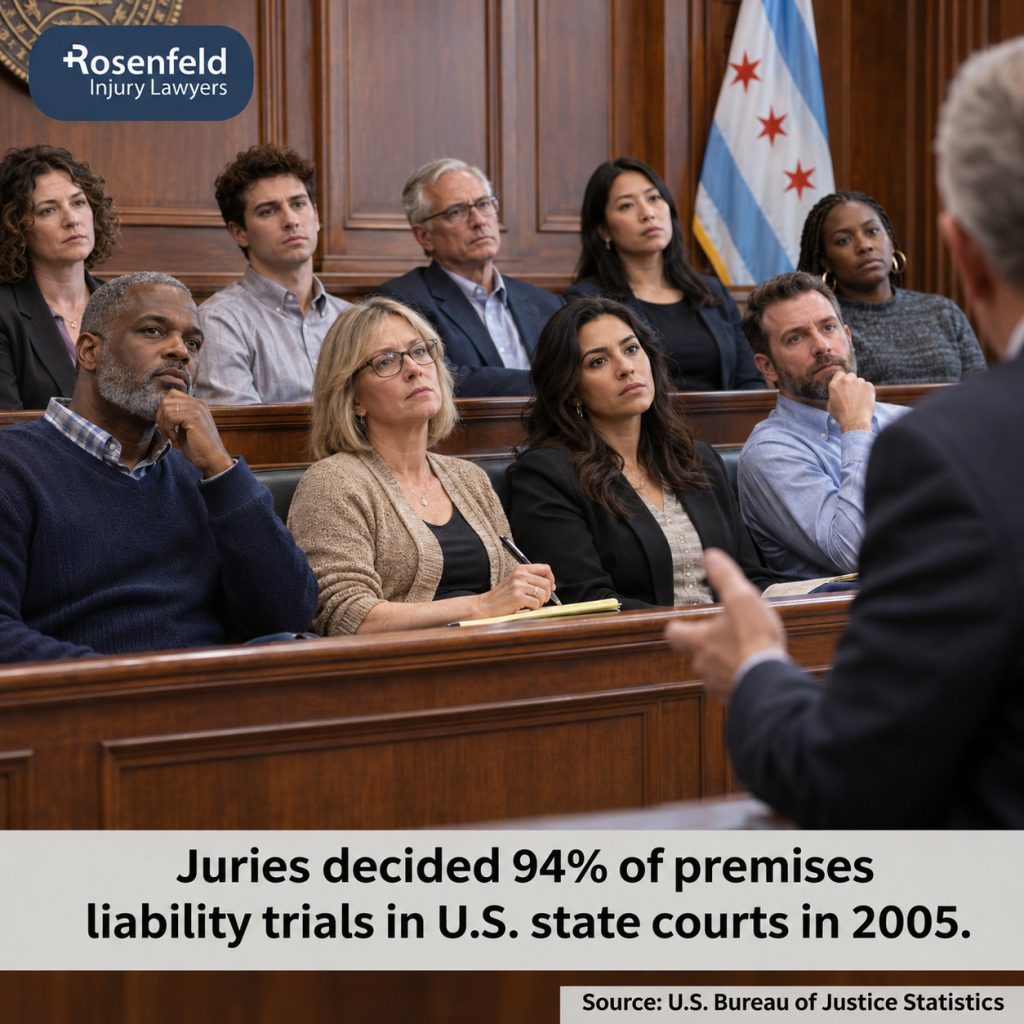
Understanding how juries decide slip and fall cases starts with one question: did the evidence prove each required part of the claim? Jurors weigh whether a dangerous condition existed, whether the owner knew or should have known about it, whether reasonable care was used, whether the hazard caused the injuries, and how the injured person acted. The result depends on the evidence and Illinois personal injury law, and no outcome is guaranteed.
What Must Be Proven in an Illinois Slip-and-Fall Case?
The plaintiff generally must show that the defendant owed a duty of reasonable care, a hazard existed, the duty was breached, the breach caused the fall, and injuries resulted. Under the Illinois Premises Liability Act, property owners and occupiers owe lawful visitors reasonable care under the circumstances. Falling on someone else’s property does not, by itself, prove negligence. The plaintiff bears the burden of proof and must meet the preponderance of the evidence standard.
How Do Juries Decide Whether a Property Owner Was Negligent?
To judge property owner negligence, jurors ask whether the owner acted reasonably under the circumstances, not simply whether someone fell. In a premises liability case, they may consider whether the hazard could have been spotted, whether a reasonable inspection took place, and how long the condition existed. They may also look at whether it was repaired, removed, or marked with a warning. Reasonable precautions depend on the facts, so no single practice applies to every case.
Why Does Actual or Constructive Notice Matter?
Notice asks whether the owner knew, or should reasonably have known, about the hazard before the fall. Actual notice means the owner or employees knew, such as through an incident report. Constructive notice means the condition lasted long enough that reasonable care would have revealed it. Inspection logs and employee reports can support either. No fixed amount of time proves constructive notice in every case, so jurors look at the full circumstances.
What Evidence Do Cook County Juries Consider?
Jurors weigh the admitted evidence at trial, not just the injured person’s story. Possible evidence includes photographic evidence of the accident scene, maintenance and cleaning records, employee communications, and sometimes expert testimony. Each item may help show the property’s condition, the timeline, or causation. Availability and admissibility vary by case. Acting promptly can help preserve evidence, as these steps after a slip-and-fall explain.
How Do Witnesses and Surveillance Footage Affect a Decision?
Witness testimony can explain what happened before and after the fall. When it exists, surveillance footage may show the hazard, the walking surface, the timing, and the injured person’s actions. Footage may miss part of the event, and witnesses may disagree, so jurors judge credibility and weigh everything together.
How Do Medical Records Affect a Slip-and-Fall Verdict?
Medical records help jurors understand the injuries and connect them to the fall. Diagnoses, imaging reports, treatment plans, and rehabilitation notes build a timeline of care. Along with medical expenses, lost wages, and notes on ongoing symptoms, this injury documentation shows how the fall affected daily life. Large bills alone do not set the final award. Common slip-and-fall injuries need this documentation.
Can the Injured Person Be Partly Responsible for the Fall?
Illinois follows a modified comparative negligence rule, which means an injured person’s share of responsibility can affect their ability to recover compensation. Under 735 ILCS 5/2-1116, a plaintiff cannot recover damages if their contributory fault exceeds 50%. If their share of fault is 50% or less, they may still receive compensation, but the award is reduced by their percentage of responsibility. Jurors may examine factors such as whether the hazard was visible, whether warning signs were present or ignored, and whether the injured person acted reasonably under the circumstances.
How Do Juries Decide How Much Compensation to Award?
Liability and damages are separate questions, and jurors consider damages only if the required elements are proven. Legally recoverable damages supported by the evidence may include medical expenses, lost income, reduced earning capacity, pain and suffering, and loss of normal life. Not every category fits every case. Compensation also depends on the injuries, the law, and any fault assigned to the plaintiff, so no amount can be promised.
What Happens During a Cook County Slip-and-Fall Trial?
A civil trial follows set stages, and juries decide slip-and-fall cases based on the judge’s instructions and the admitted evidence. In Cook County court, jury selection comes first, then opening statements, which are not evidence. The plaintiff presents evidence, the defendant may respond, and cross-examination tests the witnesses. After closing arguments, the judge reads jury instructions, and the jury begins deliberations. Timing varies, and many claims end in settlement negotiations instead of a verdict.
How Can a Slip-and-Fall Lawyer Prepare a Case for a Jury?
A lawyer may investigate the fall, gather proof, and present it clearly, though no result is guaranteed. Possible tasks include preserving evidence, obtaining records, preparing witnesses, reviewing medical documentation, and answering comparative fault arguments. Slip & Fall Injury Lawyers represents injured people in Chicago and across Illinois. These are examples, not promised steps.
Frequently Asked Questions
You must prove duty, a dangerous condition, breach, causation, and injury by a preponderance of the evidence, the civil standard.
Jurors weigh notice, inspections, repairs, warnings, and evidence to decide whether the owner used reasonable care, following the judge’s instructions.
Yes, if your fault is 50% or less, but your damages will be reduced by that percentage. If your fault is above 50%, recovery is barred.
It varies, but photos, footage, witness testimony, maintenance records, and medical records often help show the hazard, notice, and injuries.
No. Many cases settle before trial, and some judges decide them, so a jury verdict is never guaranteed.
Conclusion
Knowing how juries decide slip and fall cases highlights why strong evidence, clear documentation, and timely action matter when pursuing a claim. If you were injured in a fall in Cook County, understanding your legal options can help you make informed decisions about what to do next. Slip & Fall Injury Lawyers can review the circumstances surrounding your accident, explain the relevant legal considerations, and help you understand the steps involved in pursuing compensation. Request a free consultation to discuss your case and learn how you may move forward.