



How Do I Choose the Right Slip and Fall Lawyer in Chicago? 9 Things to Check


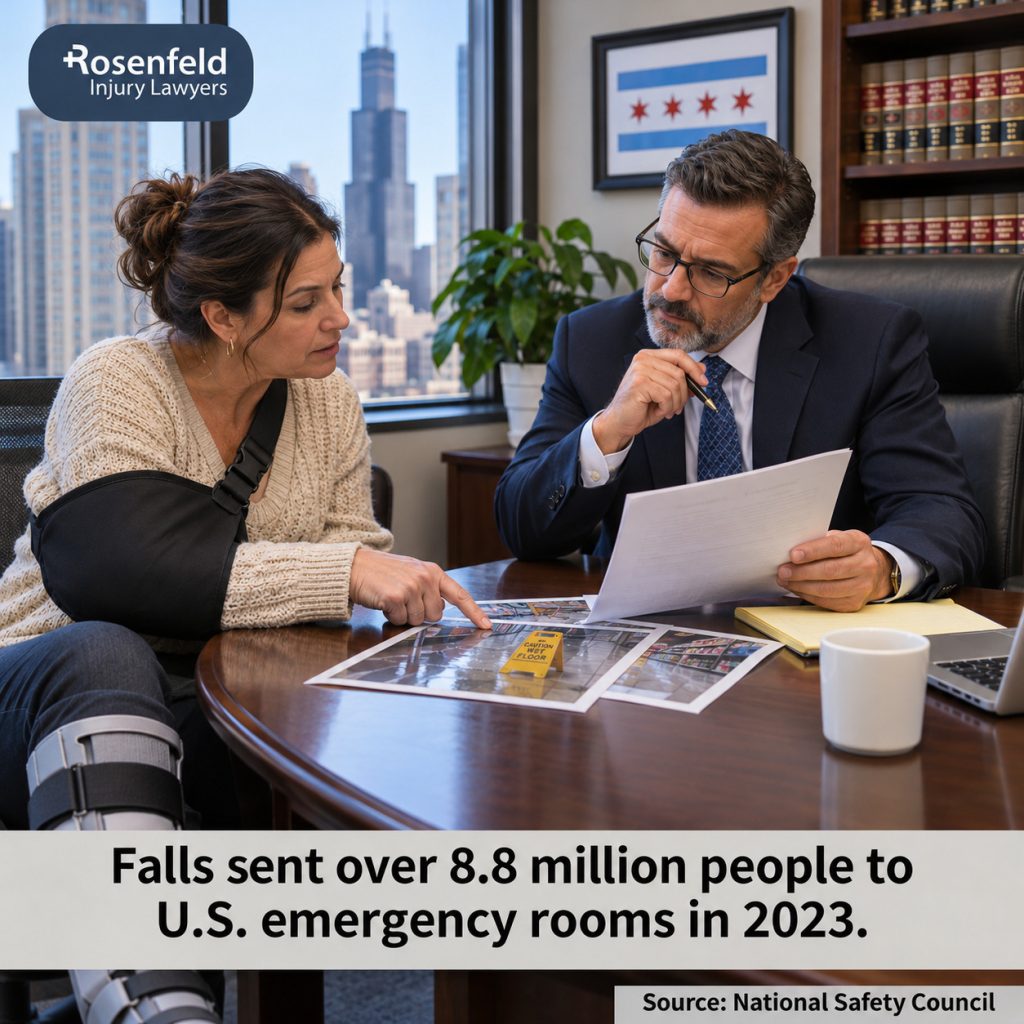
The short answer on how to choose a slip and fall lawyer in Chicago: pick a firm that handles premises liability cases regularly, moves fast on evidence, explains Illinois deadlines plainly, and puts fee terms in writing. You get one shot at a strong claim, so run these nine checks before you sign anything.
What Does a Strong Fall-Case Track Record Look Like?
A good fit has handled falls like yours, tried cases when insurers refused to pay fairly, and can describe past work in specifics.
1. Do They Focus on Premises Liability?
Slip and fall claims run on Illinois premises liability law, which asks what the owner knew and when. Ask how many fall cases the attorney has handled in Cook County. A firm that mostly handles car crashes may still try, but it could be learning the doctrine on your claim. Defense lawyers repeat the same moves in fall cases, such as arguing the hazard was open and obvious or that the owner had no time to fix it. Your lawyer should know those moves cold.
2. Are They Ready to Go to Trial?
Insurers notice which firms file suit and which only negotiate. Ask when the attorney last took a fall case to a courtroom, and who would try yours. That readiness often shapes how seriously an adjuster treats your demand. Ask, too, what the firm does when a low first offer arrives.
3. Can They Explain Past Results in Detail?
Headline totals tell you little. Ask what the injury was, what hazard caused it, and what made liability hard to prove. Every case differs, so no past result predicts yours, and a lawyer who hints otherwise deserves a second question.
How Should a Lawyer Protect Your Evidence and Deadlines?
Falls get decided by evidence that disappears quickly, so a lawyer’s first moves matter as much as courtroom skill.
4. What Happens in the First Week?
Surveillance systems can record over footage within days. Ask whether the firm sends preservation letters right away, and how it secures incident reports, maintenance logs, and cleaning records. Conditions like ice, spills, and loose carpeting also change within hours, so ask how soon an investigator would photograph the scene. A strong answer sounds like a checklist, not a pep talk.
5. Do They Know Illinois Deadlines and Fault Rules?
Most Illinois fall lawsuits must be filed within two years under 735 ILCS 5/13-202. Claims against local government can carry a one-year deadline under 745 ILCS 10/8-101, plus earlier notice rules. You can also recover if you are no more than 50% at fault under 735 ILCS 5/2-1116, though your award shrinks by your share.
Your lawyer should explain all three without notes. Our guides on Illinois slip and fall law and common defenses in slip and fall cases show what a good answer covers.
6. Who Actually Handles Your Case?
Ask who answers your calls, who attends depositions, and how often you will get updates. Larger firms may pass files between staff members. Neither setup is wrong, but you should know the answer before you sign. Written updates on a set schedule are a good sign. Ask who covers your file if the lead attorney is in trial that week.
What Should the Fee and the First Meeting Tell You?
Money terms and communication style are the parts of how to choose a slip and fall lawyer in Chicago that people regret most, so get them on paper.
7. Is the Fee Structure in Writing?
Personal injury firms usually work on a contingency fee, meaning you owe attorney fees only if the case recovers money. Ask for the agreement in writing, and ask how case costs such as medical records and outside consultants are handled if there is no recovery. Slip & Fall Injury Lawyers offers free consultations and works on a contingency basis, so you can compare terms side by side.
8. Do They Pressure You or Inform You?
A first meeting should leave you better informed even if you hire no one. Be wary of anyone who rushes you to sign, promises a number, or skips the weak spots in your claim. A useful lawyer tells you where your case is thin.
9. Do They Know Chicago and Cook County?
Local knowledge counts. Chicago’s snow and ice removal rules, CTA stations, and Cook County Circuit Court habits all affect how a fall claim plays out. Our overview of Chicago premises liability law explains the legal framework behind these cases. Also ask whether the lawyer has handled claims against the city, since those follow different rules.
What Is a Practical Next Step?
Knowing how to choose a slip and fall lawyer in Chicago comes down to asking specific questions and weighing specific answers. Take this list into every call, write down each answer and every promise, and compare the notes the same day. If you would like to hear how we answer them, book a free consultation with our Chicago team.
Frequently Asked Questions
As soon as you can after getting medical care, video can be overwritten, witnesses forget details, and most Illinois fall claims carry a two-year filing deadline, with shorter windows against government.
Many personal injury firms work on a contingency fee, so you pay attorney fees only if money is recovered. Confirm in writing how case costs are handled.
Bring medical records, photos of the hazard, witness names, incident reports, and any insurer letters. Bring your questions too, using the nine checks above, so nothing gets missed.
Yes, if you were no more than 50% at fault under 735 ILCS 5/2-1116. Your compensation drops by your percentage of fault.
Yes. A free consultation costs nothing, and hearing two or three answers to the same questions shows who explains things clearly and who dodges.
Shorter rules apply under the Tort Immunity Act, typically one year, and notice requirements can come sooner. Ask each lawyer how they handle government claims.