



Is a Grocery Store Liable If You Slip and Fall in Chicago?


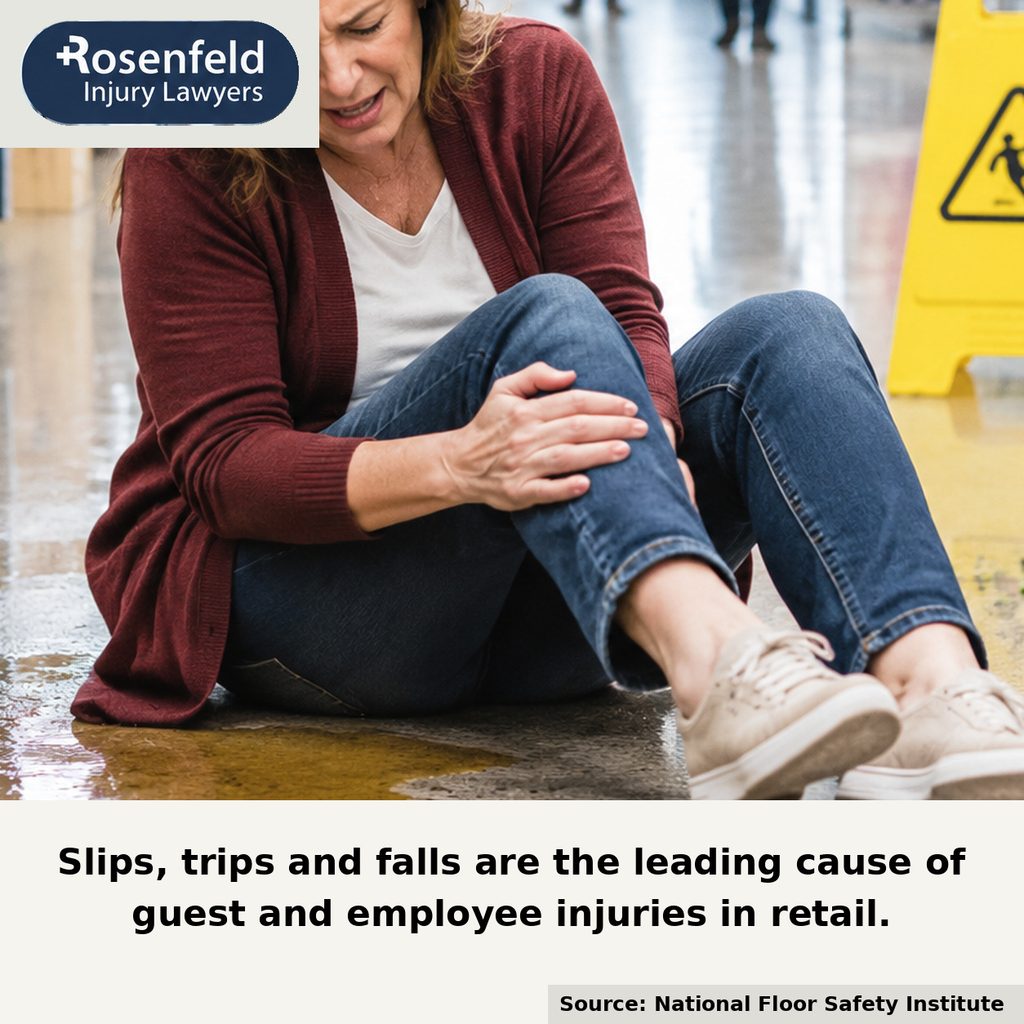
Spilled juice, a leaking freezer, a wet entrance mat: grocery stores are full of ordinary hazards. Grocery store slip and fall liability in Illinois depends on whether the store created the hazard, knew about it, or should have found it before you were hurt. A fall alone is not enough to hold a market responsible.
Is a Grocery Store Automatically Responsible When a Customer Falls?
No. A store owes customers reasonable care, but Illinois law does not make it an insurer of every shopper’s safety.
The Illinois Supreme Court said so in Olinger v. Great Atlantic & Pacific Tea Co. (1961), a leading case on store falls. The question is whether the store acted reasonably, given the kind of hazard and how long it existed. Customers who prove only that they fell on a wet or cluttered floor often lose, because a fall alone does not show fault. Customers who show how the hazard got there, or that the store should have seen it, are in a much stronger position.
What Are the Three Ways to Prove a Store Is Liable?
Illinois courts look for one of three routes to show that a store breached its duty.
- The store or its employees created the hazard. A worker mops without a warning sign, or stocks boxes in an aisle.
- The store knew about it. An employee saw the spill, or a customer reported it, and nothing was done.
- The store should have known. The substance was there long enough that reasonable inspection would have revealed it. Courts call this constructive notice.
Our page on grocery store fall cases explains how these routes arise in practice. Because grocery store slip and fall liability depends on one of these three, the details of timing and staffing become central evidence.
What Hazards Commonly Cause Grocery Store Falls?
Most grocery falls come from liquids, produce, and obstacles that stores can anticipate in a self-service setting.
- Spilled drinks, leaking containers, and melted ice from displays
- Dropped produce such as grapes or lettuce leaves
- Water from freezer or refrigerated case leaks
- Boxes, pallets, and carts left in aisles during restocking
- Curled or wet entrance mats
- Wet floors without warning signs after cleaning
Stores can anticipate many of these risks, which is why their inspection routines matter. Entrance water deserves a caution. Illinois courts have often treated water tracked in on customers’ shoes as a natural accumulation, which can weaken claims unless the store allowed a larger hazard, such as a flooded entry with no mats or warnings.
What Questions Decide a Grocery Store Fall Case?
Courts deciding grocery store slip and fall liability keep returning to a handful of practical questions about the store’s conduct.
- How recently had employees inspected or swept that aisle?
- Did the store have an inspection policy, and did staff follow it?
- Were employees nearby or assigned to the area?
- Was there a warning sign, cone, or mat, and was it visible?
- Had other customers or workers reported the same hazard?
The answers often sit in the store’s own records. That is why requesting preservation of video and inspection logs early can shape what you are able to prove.
Can Someone Other Than the Store Share the Blame?
Yes. A cleaning contractor, a vendor stocking shelves, or a landlord that controls the building may share responsibility.
A store may hire outside cleaners, and a vendor may stock coolers on its own schedule. Contracts and work logs can show who was supposed to inspect or clean. Illinois also reduces recovery by your share of fault and bars it if you are more than 50% at fault. Defendants may argue you were distracted by your phone or a display. Evidence about the layout and the hazard’s visibility helps respond.
What Compensation Can an Injured Shopper Seek?
An Illinois personal injury claim may seek compensation for medical treatment, lost income, and the pain and limits an injury causes. What is recoverable depends on the evidence, the injuries, and any share of fault assigned to you. Records matter: treatment notes, bills, employer statements, and a short record of how the injury affects daily life. A lawyer can explain which losses fit your situation without promising any result.
What Should You Do After Falling in a Grocery Store?
Report it, document it, and preserve what the store may later overwrite, such as video and inspection records.
- Tell a manager and ask for an incident report; keep a copy if given
- Photograph the hazard, the floor, signs, and the surrounding aisle
- Get names and contact details of witnesses
- Seek medical care and keep records
- Ask in writing that surveillance video be preserved
- Keep your shoes and avoid recorded insurer statements
Think a Store Ignored a Hazard?
Details like the time of the fall and the store’s inspection practices can make or break a claim. Even small details, such as the aisle number and the time on your receipt, can help establish the timeline. You can read about grocery store settlements, or request a free consultation with Slip & Fall Injury Lawyers to review your situation.
What Do People Ask About Grocery Store Falls?
Usually you must show the store created it, knew about it, or had constructive notice. Without one of these, the claim is difficult. Video, logs, and witness accounts often supply that proof.
It can. An employee near a hazard may support an argument that the store knew of it or should have discovered it. Staffing and assignments can be examined later.
Not always. Courts consider whether the warning was adequate and visible, and whether you were still reasonably able to avoid the hazard. A sign placed after the fall, or hidden behind a display, may not help the store.
Different rules apply, including natural accumulation rules for ice. Ownership and control matter.
Illinois generally allows two years for personal injury claims, so understanding grocery store slip and fall liability early helps you protect your rights.