



Is the Landlord or Tenant Liable for a Fall in an Illinois Rental Property?


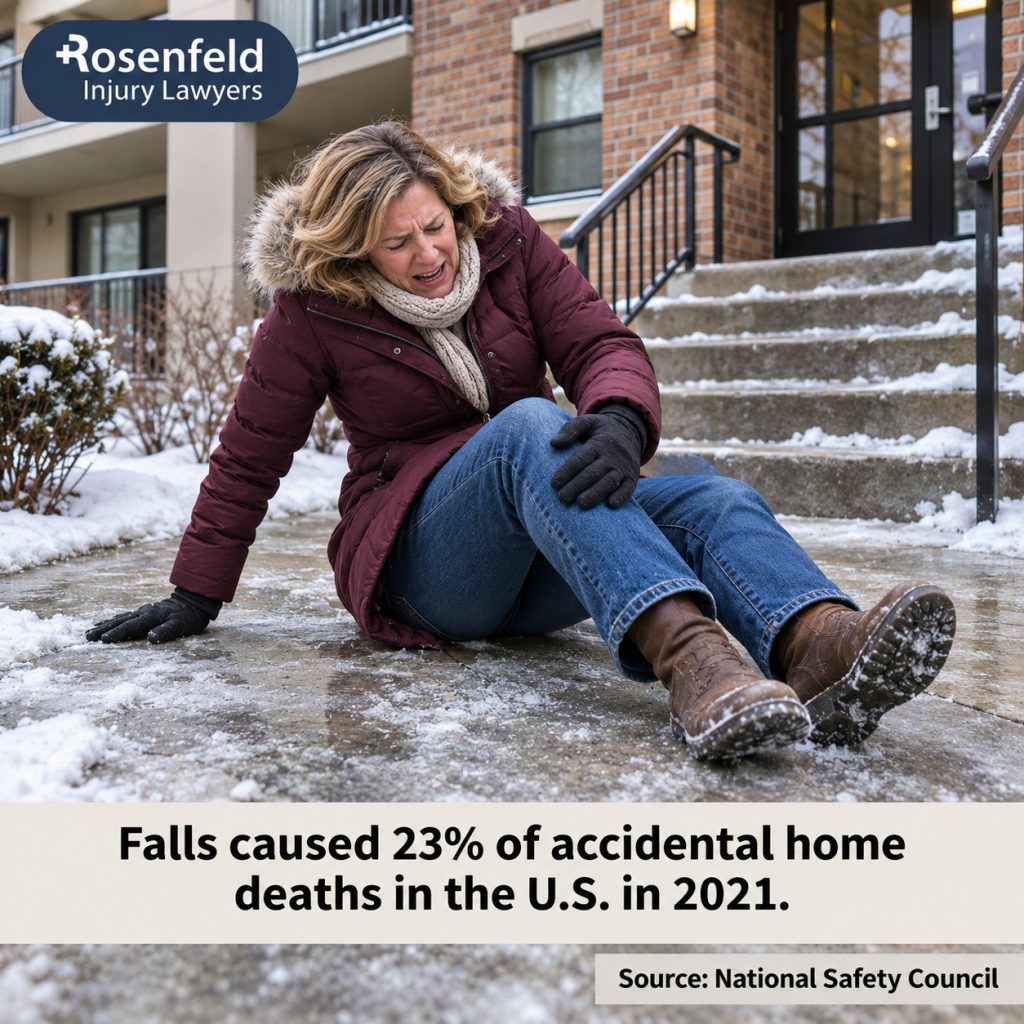
Hallways, porches, back stairs, and parking areas all invite the same question after a fall: whose fault is it? Landlord vs tenant liability for falls Illinois law recognizes turns mainly on control. The party who controls the area where the fall occurred, and who knew or should have known of the hazard, is typically the one responsible.
Where Did You Fall, and Who Controls That Space?
Responsibility changes with location, so start by identifying exactly where the fall happened. In landlord vs tenant liability for falls Illinois disputes, the answer to that question frames everything else.
Common Areas
Landlords generally must keep common areas they control reasonably safe. Shared stairways, hallways, lobbies, and entrances are typical examples, and Illinois courts have long held a landlord who retains control of a common passageway to a duty of reasonable care. Failure to repair a known defect there can create liability. Parking areas, laundry rooms, and basements shared by residents can fall into this category as well.
Inside the Rented Unit
A landlord is generally not liable for injuries inside premises leased to and controlled by a tenant. The tenant has possession, so liability often follows the tenant or the tenant’s own conduct. A guest hurt in a tenant’s kitchen, for example, would generally look first to the tenant, not the landlord. Exceptions can arise, such as concealed defects the landlord knew about or repairs the landlord undertook.
Porches, Back Stairs, and Shared Yards
These gray areas depend on the lease and on who actually maintained the space. A court will look at who had the right to control it and who in fact did. Written leases that give the landlord control of an area can make that landlord the responsible party.
How Do Illinois and Chicago Rules Affect Landlord Duties?
Illinois’ Premises Liability Act, 740 ILCS 130, requires reasonable care toward lawful visitors, and Chicago’s Residential Landlord and Tenant Ordinance adds repair and code-compliance duties for covered rentals.
Illinois also has a statute, 765 ILCS 705/1, under which a landlord cannot use lease language to escape liability for its own negligence. That means a clause saying the tenant takes the premises “as is” does not necessarily end a claim. Whether the ordinance applies depends on the building, since some owner-occupied small buildings are exempt.
Can a Tenant Be Liable for a Fall?
Yes. A tenant can be responsible when the tenant controls the space where a guest or neighbor was hurt, or when the tenant created the hazard.
- Leaving clutter or toys on shared stairs
- Altering or blocking a common area without permission
- Failing to clean up a spill in the tenant’s own unit
- Ignoring a hazard inside the unit that the tenant controls
Both sides can share fault, and guests of tenants are covered by the same control analysis. Courts ask who had the practical ability to fix the problem, and whether that person was told about it.
What Evidence Proves Who Controlled the Area?
Control is the heart of these cases, so evidence about it matters as much as evidence of the hazard.
Collect the lease and any building rules, since they may assign maintenance duties. Save texts, emails, and portal messages in which you or other tenants reported the hazard. Note who actually repaired, cleaned, or lit the area in the past, such as a maintenance worker or a janitorial company. Photographs showing the area is open to every resident support a common-area argument. Written requests also prove notice, which is often the deciding fact.
How Is Fault Divided Between Landlord and Tenant?
Illinois courts can assign percentages of fault to everyone whose conduct contributed to a fall, including landlords, tenants, contractors, and the injured person.
Your recovery is reduced by your own percentage of fault and barred if you are more than 50% responsible. When more than one defendant is liable, other Illinois rules govern how a judgment is collected. A landlord may blame a tenant for clutter, while a tenant may blame a landlord for a long-ignored defect. Sorting those claims out usually requires the lease, repair history, and photographs.
What About Snow and Ice at a Rental Property?
Residential owners receive some protection. The Illinois Snow and Ice Removal Act shields people who attempt cleanup from liability unless their conduct was willful or wanton. Illinois also generally imposes no duty to remove natural accumulations of ice and snow. Unnatural ice caused by drainage defects, or a contractor’s contractual duty, can still support a claim. Chicago’s ordinance independently requires sidewalk clearing.
Our page on apartment fall cases walks through typical tenant scenarios, and the page on apartment settlements explains how those claims are evaluated.
What Should You Do If You Fall at a Rental Property?
Report it in writing to the landlord or property manager, with the date and location, photograph the hazard, keep earlier repair requests, and seek medical care. Written complaints matter because they can prove notice, and they show you acted promptly. To see how landlord vs tenant liability for falls Illinois law applies to your lease, request a free consultation with Slip & Fall Injury Lawyers to review your lease and the facts.
What Do People Ask About Landlord and Tenant Falls?
Illinois law limits a landlord’s ability to contract away liability for its own negligence, though the lease is still important evidence. A signed “as is” clause is not the end of the analysis.
Possibly, if you controlled the space and knew or should have known of the hazard. Renters sometimes carry liability coverage that responds to guest injuries, so check your policy.
Notice matters. Without actual notice, a claim may depend on whether the landlord should have discovered the problem through reasonable inspection.
Yes. They can prove the landlord knew about the hazard, and they show you acted promptly.
Illinois generally allows two years for personal injury claims. Knowing landlord vs tenant liability for falls Illinois law applies to your facts early helps you act before that window closes.