



How Illinois Law Treats Landlord vs. Tenant Responsibility for Falls


A fall on rental property doesn’t automatically indicate a single responsible party. Landlord-tenant premises liability cases in Illinois often hinge on exactly where the fall occurred and who controlled that specific area at the time.
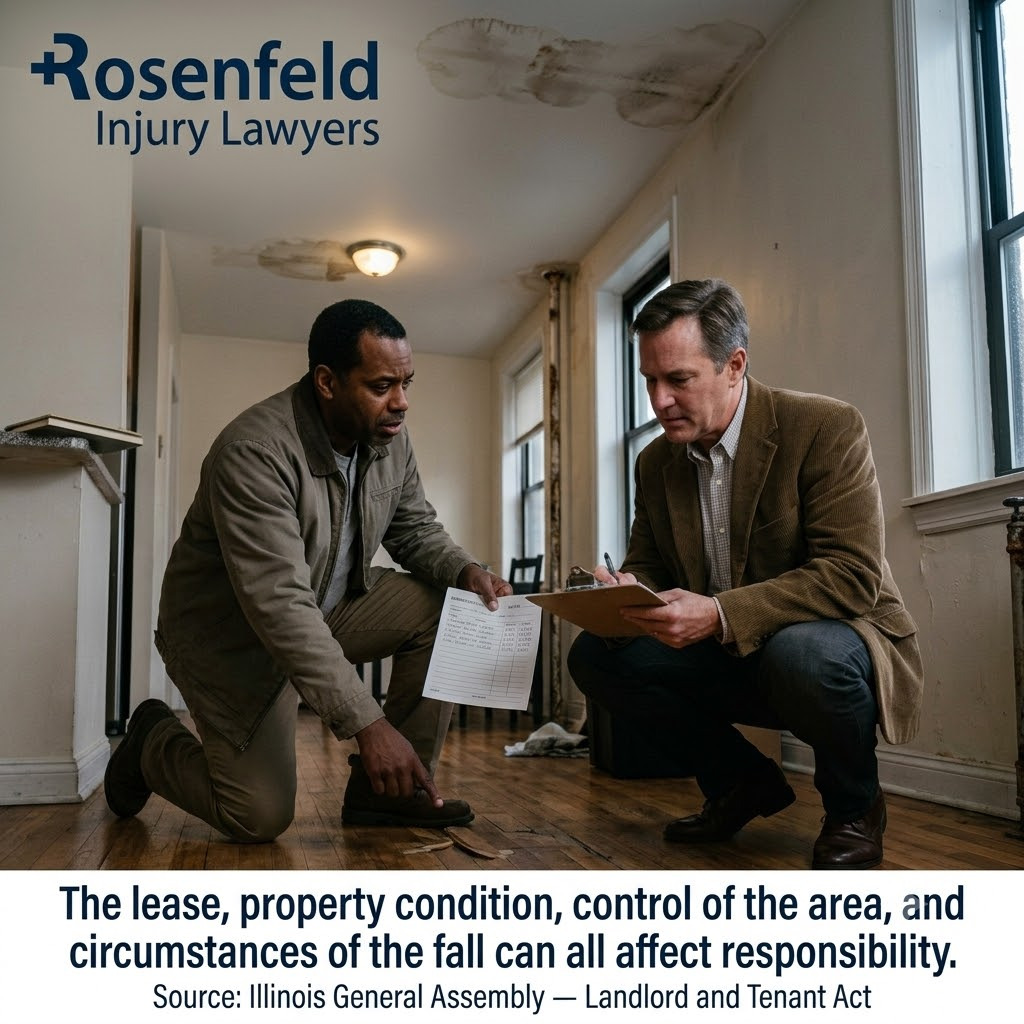
The Line Between Common Areas and Leased Space
Illinois courts generally draw a clear distinction based on control. Landlords typically remain responsible for common areas like hallways, stairwells, shared parking lots, and building entrances, since tenants have no authority to fix hazards in those spaces themselves.
Who is liable if I fall inside my own apartment? Interior conditions within a leased unit usually fall on the tenant, unless the hazard stems from something the landlord was contractually or legally obligated to maintain, such as plumbing, structural elements, or provided appliances.
Why the Lease Agreement Matters So Much
A lease can shift responsibility in ways that go beyond the general rule. If a lease specifically obligates the landlord to handle snow removal, repairs, or maintenance in certain areas, courts often hold landlords to those commitments even where common law wouldn’t otherwise require it.
- Snow and ice removal responsibilities for walkways
- Maintenance duties for shared amenities like laundry rooms
- Repair obligations for structural or mechanical issues
- Lighting and security maintenance in common areas
- Landscaping upkeep near entrances and walkways
When a lease is silent on these points, both landlord and tenant may face exposure, depending on how the fall occurred.
The Natural Accumulation Rule and Winter Falls
Illinois follows what’s known as the natural accumulation rule, which generally shields property owners from liability when someone slips on snow or ice that accumulated naturally from weather. Fresh snowfall or ice that formed from cold temperatures typically doesn’t create landlord liability on its own.
That protection disappears when the accumulation becomes unnatural. If poor drainage, a broken gutter, or negligent snow and ice removal creates ice that wouldn’t have formed naturally, landlord-tenant premises liability claims in Illinois can move forward despite the general rule.
When Snow Removal Efforts Actually Increase Liability
Can a landlord get in trouble for shoveling snow badly? Yes. Illinois law generally protects residential landlords who voluntarily attempt snow removal from ordinary negligence claims, but that protection has limits. If the removal effort creates a new hazard, such as pushing snow into a pile that melts and refreezes across a walkway, liability can still attach.
This is one of the more counterintuitive parts of Illinois law. Landlords who do nothing about natural snow are often protected, while landlords who remove it carelessly can create new exposure.
Multi-Unit Buildings Versus Single-Family Rentals
Responsibility often looks different depending on the type of rental property involved. In multi-unit buildings, landlords or property managers typically handle shared spaces like stairwells and apartment parking lots, while tenants may be responsible for maintaining their individual entrances.
In single-family home rentals, tenants often assume broader responsibility for the property, including snow removal and general upkeep, unless the lease specifically states otherwise.
How Comparative Fault Affects These Claims
Illinois follows a modified comparative negligence rule, meaning your compensation can be reduced if you share some fault for the fall. If you’re found more than 50 percent responsible, you may be barred from recovering compensation entirely.
This makes it especially important to document the hazard clearly and avoid assumptions about who was at fault before speaking with an attorney.
Building a Strong Landlord-Tenant Fall Claim
Establishing fault in these cases usually requires more than just showing a hazard existed. We investigate who had control over the area, whether the lease created specific obligations, and whether the condition was natural or the result of negligence.
Maintenance records, lease terms, prior complaints, and photographic evidence all play a role in determining exactly where landlord-tenant premises liability Illinois law places responsibility for your fall.
Frequently Asked Questions
No, responsibility varies based on the lease, the type of property, and who controlled the area where the fall occurred.
Yes, if the landlord failed to maintain the area reasonably or ignored a known hazard they controlled.
Yes, prior notice significantly strengthens a claim by showing the landlord knew or should have known about the danger.
Illinois generally allows two years from the date of the injury to file a personal injury lawsuit.
Illinois common-law rules regarding control of the area typically apply when a lease is silent on the issue.
Yes, as long as you’re found 50 percent or less at fault for the fall.
Let Us Help Determine Who’s Responsible
Landlord-tenant fall cases often come down to details that aren’t obvious at first glance. If you were injured on rental property, reach out to us today for a free consultation, and let’s determine exactly who’s responsible for your injury.

Legally Reviewed By
Attorney Jonathan Rosenfeld
The information on this page has been legally reviewed by Attorney Jonathan Rosenfeld, founder and managing partner of Rosenfeld Injury Lawyers LLC, a Chicago-based personal injury law firm. With decades of experience representing individuals injured in slip and fall accidents and other premises liability cases throughout Chicago, Mr. Rosenfeld is dedicated to protecting the rights of injury victims and helping them pursue the maximum compensation available under the law. His extensive legal knowledge and commitment to client advocacy ensure that the information provided is accurate, reliable, and aligned with current legal standards.