



Who’s Liable for a Fall Along the Naperville Riverwalk?


The Naperville Riverwalk draws thousands of visitors every year, from families taking a weekend stroll to office workers grabbing lunch along the water. But uneven brick paths, loose railings, and icy bridges can turn a pleasant walk into a serious injury. Understanding Naperville Riverwalk accident liability starts with knowing who actually owns and maintains the property where you fell.
If you were hurt along the Riverwalk, the deadlines and rules that apply may be different from a typical slip and fall case, and missing them can cost you your right to compensation. Reach out to discuss what happened and learn your options.
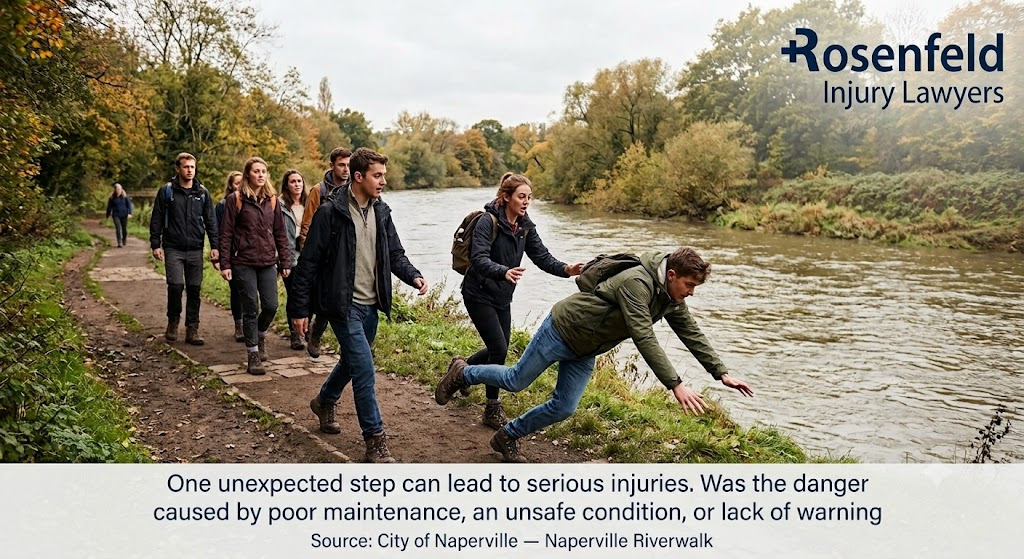
Who Owns and Maintains the Naperville Riverwalk?
The Riverwalk is a public space owned and maintained by the City of Naperville. That single fact changes almost everything about how Naperville Riverwalk accident liability works compared to a fall at a private business or apartment complex.
When a government entity controls a property, Illinois law treats claims against it differently than claims against a private landlord or store owner. This distinction is the foundation of how your case will be handled from the very beginning.
How Naperville Riverwalk Accident Liability Differs From Private Property Claims
Most slip and fall cases in Illinois follow a two-year statute of limitations. Claims involving public property, including the Riverwalk, are governed instead by the Illinois Local Governmental and Governmental Employees Tort Immunity Act. Under this law, you generally have only one year from the date of the fall to file a lawsuit, not two.
This shorter window catches many injured visitors off guard. Someone who assumes they have the standard two years may lose their right to pursue Naperville Riverwalk accident liability claims entirely by the time they seek legal advice.
Common Hazards That Lead to Falls on the Riverwalk
Certain conditions along the Riverwalk create a heightened risk of falls, including:
- Uneven or cracked brick and paver walkways
- Loose or missing handrails along bridges
- Poor lighting near underpasses and evening event areas
- Wet or icy walking surfaces during colder months
- Construction zones tied to ongoing Riverwalk improvement projects
When the city knew, or reasonably should have known, about one of these hazards and failed to fix it, that failure can support a claim.
What You Must Prove in a Naperville Riverwalk Accident Liability Case
Proving fault on public property requires the same basic elements as any premises liability claim: duty, breach, causation, and damages. The city owed a duty to keep the walkway reasonably safe. A breach happens when a known hazard goes unaddressed. Causation ties that hazard directly to your fall, and damages reflect the injuries and losses that followed.
Government entities often have additional defenses available to them under the Tort Immunity Act, including immunity for certain natural conditions of the property. Sorting through what applies to your specific fall is not something you should try to figure out alone.
Notice Requirements and Deadlines You Cannot Miss
Beyond the shortened one-year filing deadline, claims against a municipality may be subject to strict notice requirements. Evidence such as maintenance records, incident reports, and surveillance footage can also disappear quickly if a claim is not pursued promptly. Acting fast protects both your legal deadline and the strength of your evidence.
What to Do After a Fall on the Riverwalk
If you fall while walking along the Riverwalk, take these steps as soon as you safely can:
- Photograph the hazard, your injuries, and the surrounding area.
- Report the incident to the appropriate city department in writing.
- Seek medical attention, even if the injury seems minor at first.
- Collect contact information from anyone who witnessed the fall.
- Speak with a fall injury lawyer before the notice window closes.
- Talk to a Fall Injury Lawyer About Your Riverwalk Accident
At Slip & Fall Injury Lawyers, we understand how confusing Naperville Riverwalk accident liability claims can be when a public entity is involved. The shortened deadlines and added legal defenses make it especially important to move quickly. If you were injured along the Riverwalk, reach out for a free consultation to discuss your case and find out what your next steps should be.
Frequently Asked Questions
Yes. Claims against public property in Illinois generally have a shorter one-year deadline rather than the standard two-year window.
The City of Naperville owns and maintains the Riverwalk, which affects how liability claims involving the property are handled.
It depends on the circumstances. Speaking with a lawyer can help clarify whether your specific situation supports a claim.
You may still have options, but prompt reporting strengthens your case. Contact a lawyer as soon as possible to discuss your circumstances.
Cases involving government entities involve added complexity and deadlines. Legal guidance can help you understand your rights and options.

Legally Reviewed By
Attorney Jonathan Rosenfeld
The information on this page has been legally reviewed by Attorney Jonathan Rosenfeld, founder and managing partner of Rosenfeld Injury Lawyers LLC, a Chicago-based personal injury law firm. With decades of experience representing individuals injured in slip and fall accidents and other premises liability cases throughout Chicago, Mr. Rosenfeld is dedicated to protecting the rights of injury victims and helping them pursue the maximum compensation available under the law. His extensive legal knowledge and commitment to client advocacy ensure that the information provided is accurate, reliable, and aligned with current legal standards.