



Should You Settle Before or After Rotator Cuff Surgery?


Once an insurance adjuster puts a number on the table, it is tempting to take it and move on, especially when surgery is still ahead of you and bills are piling up. Understanding rotator cuff surgery recovery settlement timing before you sign anything can be the difference between a settlement that actually covers what you need and one that leaves you covering the gap yourself.
Why Settling Too Early Almost Always Backfires
A personal injury settlement is typically final. Once you accept an offer and sign a release, you generally give up the right to ask for more, even if your shoulder does not heal the way you expected or you end up needing additional treatment down the road.
This is exactly why settling before surgery, or before your recovery has stabilized, is risky. If the settlement amount was based on an incomplete picture of your injury, there is usually no way to reopen the claim later if things get worse.
The Concept That Should Drive Your Timing
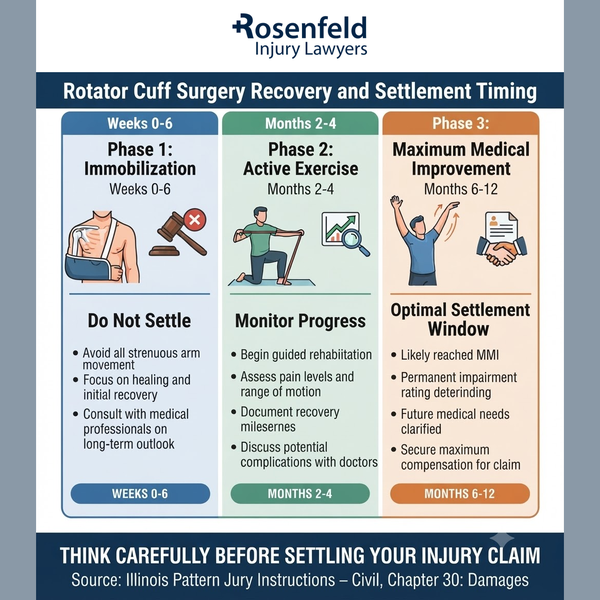
People often ask when the right time is to settle a shoulder injury claim, and the honest answer centers on a concept called maximum medical improvement, or MMI. This is the point at which your doctor determines that your shoulder has recovered as much as it reasonably can, even if some limitations remain permanent.
Rotator cuff surgery recovery settlement timing built around MMI matters because it is the first point where the full scope of your injury, including any lasting weakness, restricted range of motion, or need for future care, can actually be measured. Settling before that point means guessing at numbers that are still very much in motion.
What Reaching MMI Actually Looks Like
Rotator cuff surgery recovery typically unfolds over several months, often with physical therapy playing a major role in how much function ultimately returns. Your surgeon evaluates strength, range of motion, and pain levels over time before determining that further significant improvement is unlikely.
Only at that point can your medical team reasonably estimate whether you will need ongoing treatment, whether permanent limitations will affect your work or daily activities, and how those factors should be reflected in your claim’s value.
Why Insurers Prefer You Settle Early
Insurance companies are aware that surgical recoveries take time, and that waiting generally works in the injured person’s favor once the full picture becomes clear. This is exactly why early settlement offers often arrive before surgery has even happened, or shortly after, while the extent of lasting impairment is still unknown.
A rotator cuff surgery recovery settlement timing decision made under pressure, before your recovery has stabilized, tends to favor the party offering the money, not the person living with the injury.
When Waiting Isn’t Always Simple Either
Waiting until MMI is generally the safer path, but it is not without real tradeoffs. Medical bills and lost income do not pause while you recover, and some people genuinely need resolution sooner rather than later for practical reasons. Illinois’s filing deadlines also do not pause for your recovery timeline, which makes early legal guidance important even if you are not ready to settle yet.
A knowledgeable attorney can often help bridge this gap, whether by negotiating interim arrangements, addressing medical liens, or simply ensuring your case stays on track procedurally. At the same time, your recovery plays out on its own timeline.
What This Means for You
At Slip & Fall Injury Lawyers, we do not rush a shoulder injury claim toward a quick settlement before recovery has stabilized. Getting the timing right is often the single biggest factor in whether a settlement actually reflects what you have been through.
Frequently Asked Questions
You can, but doing so means settling before the full extent of your injury and future needs are known.
Often, yes, since surgery typically reflects a more serious injury and a more involved recovery process.
Talk to your attorney. Options like negotiating with providers or addressing liens can ease pressure without rushing settlement.
Recovery varies, but many surgical repairs take several months before function and limitations become clear.
Generally, no. Most settlements are final once signed, which is why timing matters so much beforehand.
Bottom Line
Timing is not just a detail in a shoulder injury claim; it often determines whether your settlement actually reflects the full impact of your injury. Getting the timing of your rotator cuff surgery recovery settlement right means resisting pressure to settle before your recovery has told its full story.
If you are recovering from a rotator cuff injury and unsure when to settle, Slip & Fall Injury Lawyers can walk you through what makes sense for your specific situation. Reach out to talk through where you are in your recovery.

Legally Reviewed By
Attorney Jonathan Rosenfeld
The information on this page has been legally reviewed by Attorney Jonathan Rosenfeld, founder and managing partner of Rosenfeld Injury Lawyers LLC, a Chicago-based personal injury law firm. With decades of experience representing individuals injured in slip and fall accidents and other premises liability cases throughout Chicago, Mr. Rosenfeld is dedicated to protecting the rights of injury victims and helping them pursue the maximum compensation available under the law. His extensive legal knowledge and commitment to client advocacy ensure that the information provided is accurate, reliable, and aligned with current legal standards.