



Do You Need Physical Therapy Records to Settle a Sprained Ankle Claim?


A sprained ankle physical therapy settlement depends on your records, but you do not need physical therapy to have a claim. You need documented treatment that your provider recommended. PT records help prove how limited you were, how long recovery took, and whether you followed your treatment plan.
Picture a fall on a wet entryway. The ankle swells that night, you visit a clinic, and then the paperwork begins. That paperwork often decides how an insurer values the claim.
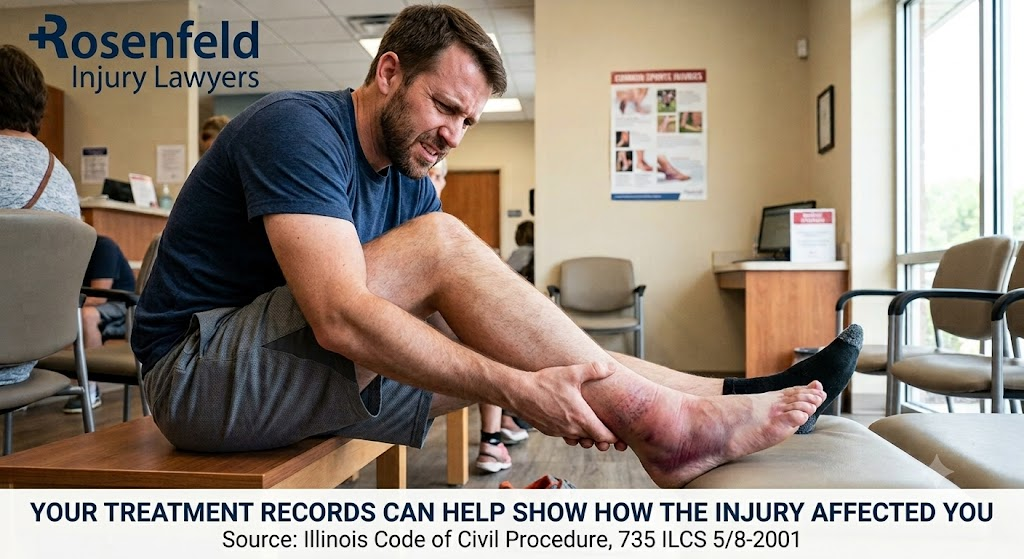
Do You Need Physical Therapy Records to Settle?
No rule requires them, but a claim with no treatment records is hard to prove. Insurers value records that show consistent care from the day of the fall. A first visit within a day or two links the injury to the fall, while a visit weeks later invites doubt.
Your claim rests on proving the fall caused your injury and that the injury cost you money, time, and comfort. Emergency or urgent care notes, imaging, doctor visits, and PT notes all support that. If your provider recommended therapy, those records often become the strongest proof of how your ankle actually functioned during recovery.
What Do Physical Therapy Records Show?
They show how your ankle moved and how it changed over time. They turn a hard-to-measure injury into a record a stranger can read.
Therapy notes commonly include your first evaluation, range of motion, pain ratings, strength, and daily limits such as stairs or standing at work. Later visits record progress, missed visits, and the discharge summary. Harvard Health describes ankle sprains in three grades, from mild to complete ligament tears, and notes that rehabilitation exercises are vital for restoring strength and range of motion. Detailed notes help tie your recovery to the grade of your injury. Ask therapists to record real activities, such as climbing the stairs to your apartment or standing a full shift, not just numbers.
How Do Insurers Use Gaps in Treatment?
They use gaps to argue you were not hurt as badly as you say, or that you failed to follow your treatment plan. Both arguments can reduce what you receive.
Defense lawyers often claim an injured person failed to mitigate damages by skipping care. Our page on evidence in slip and fall cases explains why continuous treatment records matter. Insurers may also point to old ankle problems and claim they caused your pain. Records showing how your ankle felt and worked before the fall can address that.
What if You Stopped Physical Therapy Early?
Tell your lawyer why. A gap with a clear reason, such as cost, pain, or a scheduling problem, is easier to explain than a gap nobody understands.
Ask your provider whether you can return. Don’t stop care because of your claim, and don’t skip it because you worry about the claim either. Follow your provider’s advice, because your recovery matters more than any settlement.
What if Your Provider Never Recommended Therapy?
Then do not add treatment to build a claim. Your other records carry the case.
A mild sprain may heal with a clinic visit and home care. Photos of swelling and bruising, work notes, and receipts then become more important. Our pages on medical expenses, pain and suffering, and lost wages explain how to document these losses.
When Should You Settle a Sprained Ankle Claim?

Settle only when you understand how your ankle has recovered and what future care you may need. At Slip & Fall Injury Lawyers, we want your treatment picture clear before we discuss any number. A settlement usually ends the claim for good.
An early offer can look generous while your ankle still hurts. Once you sign a release, you generally cannot ask for more if the ankle flares up again. Our slip and fall settlement calculator and our page on how long a slip and fall case takes can help you plan.
Sprained Ankle Settlement FAQs:

Generally yes. You can usually request copies from your provider. Ask your lawyer which records matter most.
Insurers often request broad records, sometimes covering years before your fall. Talk with a lawyer before signing a wide authorization.
There is no fixed amount. Value depends on your injuries, treatment, lost income, and who was at fault.
It depends on the grade and how long recovery takes. A severe sprain can limit work and daily life for a long time.
At Slip & Fall Injury Lawyers, we review your treatment records, help you spot gaps early, and explain your options. Call 312-800-1534 or contact us online for a free consultation.
Legally Reviewed By
Attorney Jonathan Rosenfeld
The information on this page has been legally reviewed by Attorney Jonathan Rosenfeld, founder and managing partner of Rosenfeld Injury Lawyers LLC, a Chicago-based personal injury law firm. With decades of experience representing individuals injured in slip and fall accidents and other premises liability cases throughout Chicago, Mr. Rosenfeld is dedicated to protecting the rights of injury victims and helping them pursue the maximum compensation available under the law. His extensive legal knowledge and commitment to client advocacy ensure that the information provided is accurate, reliable, and aligned with current legal standards.