



Stores Delete Surveillance Footage Fast — Here’s How to Preserve It


Surveillance footage retention policy at stores varies by location, and many systems record over old video on a loop. Illinois does not impose a general duty on a store to keep footage of your fall. To preserve it, report the fall in writing, note the exact time and camera areas, and have a lawyer send a preservation letter right away.
Picture a fall near the dairy case on a Tuesday afternoon. You call a lawyer the next week, and the recorder has already taped over the spill.
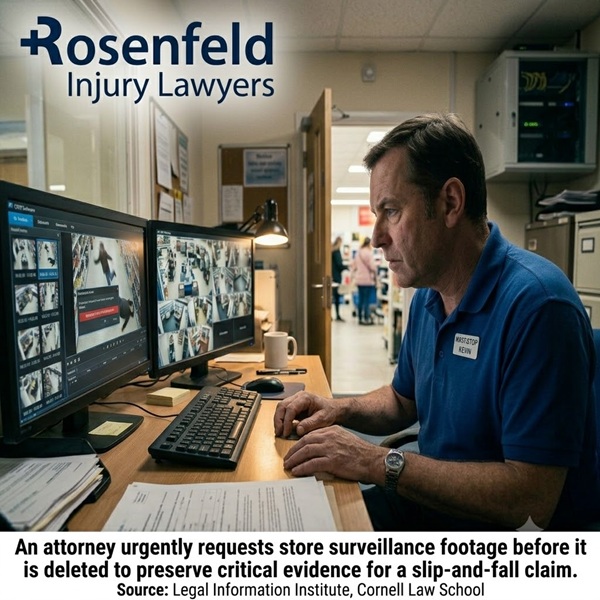
How Long Do Stores Keep Surveillance Footage?
Every store sets its own timeline. Many systems overwrite old video on a loop, so your fall footage can disappear faster than you expect.
Storage limits and company policy differ from store to store, so we don’t quote a set number of days. Whatever a store’s surveillance footage retention policy says on paper, treat the video as something you must act on this week.
Does a Store Have to Save Footage of Your Fall?
Not automatically. Illinois courts start from the rule that no general duty exists to preserve evidence, and a duty arises only in limited situations.
The Illinois Supreme Court set out a two-part test in Boyd v. Travelers Insurance Co. First, something must create the duty, such as an agreement, a statute, a special circumstance, or a store voluntarily taking on the job of keeping the video. Second, a reasonable store in that position must have seen the footage as material to a possible lawsuit.
The court confirmed that test in Martin v. Keeley & Sons and declined to impose a duty just because a lawsuit was likely. That is why your first steps matter.
What Should You Do in the First 24 Hours?
Report the fall in writing, ask the store to keep the video, and record the time and camera locations yourself. Then call a lawyer.
- Ask the manager for an incident report and request a copy. Keep it in writing.
- Say plainly that you want any video of the fall and the minutes before it saved.
- Write down the exact time, the aisle, and where you saw cameras. Photograph them if you can.
- Photograph the hazard, such as the wet floor, before staff cleans it up.
Footage from before the fall can matter most. It may show how long a spill sat there with no one checking, which goes to whether the store knew or should have known about the hazard. Our page on evidence in slip and fall cases covers what else to gather.
What Is a Preservation Letter and Why Does It Matter?
A preservation letter is a written demand that a store keep specific evidence, including video. It puts the store on notice that a claim is coming.
That notice can support the second part of the Boyd test. A strong letter names the date, time, location, and camera areas, and asks for video from before and after the fall.
At Slip & Fall Injury Lawyers, we work to preserve incident reports, maintenance records, and surveillance footage in every investigation. A letter does not guarantee the footage still exists. If it is already gone, the store’s explanation of what happened to it can become part of your case.
How Soon Should You Act on Store Video?
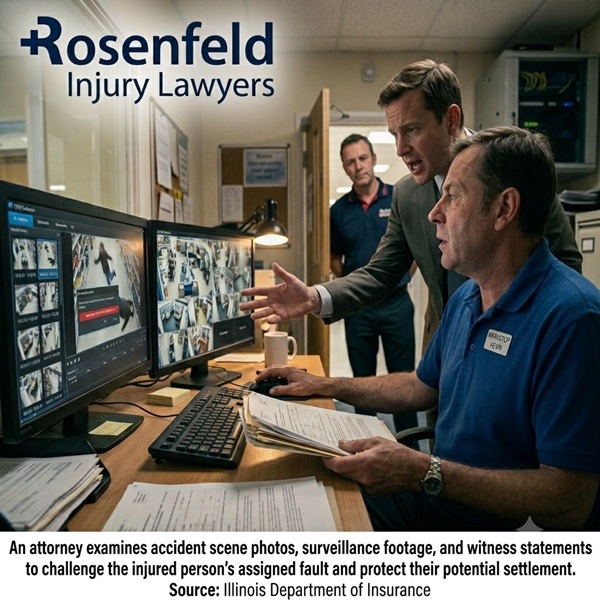
Act the same day if you can. The video deadline is far shorter than your filing deadline.
You generally have two years to file a lawsuit under 735 ILCS 5/13-202. That deadline protects your right to sue, not the recording on a store’s hard drive.
Our page on store slip and fall cases in Chicago explains who may be responsible, and our slip and fall lawsuit guidecovers the process.
Surveillance Footage FAQs
You can ask, but a store does not have to hand it over. A lawyer can request it formally and, once a lawsuit is filed, seek it through discovery.
Ask for that answer in writing, including what happened to the footage and when. Share it with your lawyer.
Not always. Video can also show what you were doing before you fell, so have a lawyer review it before you conclude.
You can decide later whether to bring a claim, but recorded-over video cannot be recovered.
At Slip & Fall Injury Lawyers, we can send a preservation request and start gathering evidence. Every case is different, and results depend on the facts. Call 312-800-1534 or contact us online for a free consultation.

Legally Reviewed By
Attorney Jonathan Rosenfeld
The information on this page has been legally reviewed by Attorney Jonathan Rosenfeld, founder and managing partner of Rosenfeld Injury Lawyers LLC, a Chicago-based personal injury law firm. With decades of experience representing individuals injured in slip and fall accidents and other premises liability cases throughout Chicago, Mr. Rosenfeld is dedicated to protecting the rights of injury victims and helping them pursue the maximum compensation available under the law. His extensive legal knowledge and commitment to client advocacy ensure that the information provided is accurate, reliable, and aligned with current legal standards.