



Injured Near Campus in Champaign? What U of I Students Should Know


A University of Illinois student injury claim depends on who owns the place where you were hurt. Landlords and businesses generally allow two years to file suit. City sidewalks generally allow one year. Falls in university buildings go to the Illinois Court of Claims, with notice to the Attorney General.
Student life moves fast. Leases end in May, classes end, and the stairwell where you fell gets repaired before you ever call anyone. That speed is why the first few weeks after a fall matter so much.
Who Is Responsible When You Are Injured Near Campus?
The property owner is usually responsible, and they decide which rules apply. Near campus, that could be a private landlord, a city, or the university.
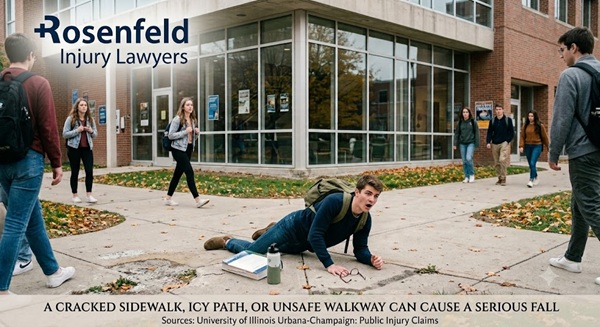
Think about where you were. Tripping on the stairs of an off-campus apartment building points to a landlord—a fall at a bar or nightclub points to the business. A cracked public sidewalk may belong to the city, and a lecture hall belongs to the university. Our page on university campus falls covers these settings.
How Long Do You Have to File Against a Landlord or Business?
You generally have two years from the date of the injury. That deadline comes from 735 ILCS 5/13-202.
The same two-year rule covers most private properties, including apartments, restaurants, and stores. Illinois also compares fault. You can recover only if you were no more than 50% at fault, and your share reduces what you receive. Do not let the deadline lull you into waiting, because evidence fades long before the filing date. A landlord can repair a broken step in a day, and a roommate who saw the fall may move away.
What Changes if a City Sidewalk Is Involved?
You generally must file a lawsuit within one year. Cities, counties, school districts, and park districts are local public entities under the Tort Immunity Act.
Under 745 ILCS 10/8-101, the one-year limit applies to claims against those entities, and Illinois repealed the old separate notice requirement for them. Our page on broken sidewalk falls explains how these cases often unfold. Check ownership early, since a sidewalk can belong to the city or to the adjacent property owner. At Slip & Fall Injury Lawyers, we look for repair requests and complaints that show the city knew about the defect.
What if You Were Hurt in a University Building?
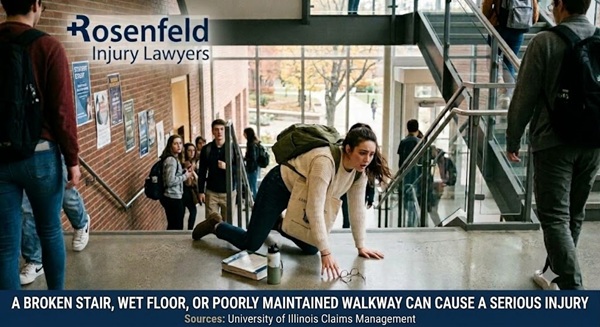
Claims against the University of Illinois Board of Trustees go to the Illinois Court of Claims, not circuit court. The rules differ from a claim against a landlord.
Under 705 ILCS 505/22-1, you must file written notice with the Attorney General and the Clerk of the Court of Claims within one year. You can skip that notice if you file the claim itself within one year. You generally must file the claim within two years, and the court caps most tort awards at $2,000,000. The notice must include your name, the date and approximate hour, the location, and how the fall happened. Missing the notice and the one-year filing window can bar the claim, so don’t leave this to chance.
What Should You Do After a Fall as a Student?
Get medical care, report the fall in writing, and photograph everything before it changes.
- Ask the building manager, landlord, or university to document the fall, and request a copy.
- Photograph the hazard, the lighting, and any missing warnings.
- Save messages with your landlord about the problem, and write down witness names.
- Keep your shoes and clothing as they were.
Do this before you move out or leave for the summer. A roommate or friend who saw the fall can write down what they remember while it is fresh. Our page on evidence in slip and fall cases lists more.
Student Injury Claim FAQs:
No. The same premises liability rules apply. Property ownership matters.
Deadlines keep running. It’s easier to gather photos and records before you leave.
Landlords often point to your shoes or your attention—evidence of the actual condition, such as photos and repair requests, answers that.
A lawyer can check ownership records, which is worth doing before any deadline passes.
We handle every case on a contingency fee basis, so you pay nothing unless we win. At Slip & Fall Injury Lawyers, we help injured people across Illinois determine who is responsible and which deadline applies, then gather evidence while it still exists. Our slip and fall lawsuit guide explains the process. Call 312-800-1534 or contact us online for a free consultation.

Legally Reviewed By
Attorney Jonathan Rosenfeld
The information on this page has been legally reviewed by Attorney Jonathan Rosenfeld, founder and managing partner of Rosenfeld Injury Lawyers LLC, a Chicago-based personal injury law firm. With decades of experience representing individuals injured in slip and fall accidents and other premises liability cases throughout Chicago, Mr. Rosenfeld is dedicated to protecting the rights of injury victims and helping them pursue the maximum compensation available under the law. His extensive legal knowledge and commitment to client advocacy ensure that the information provided is accurate, reliable, and aligned with current legal standards.