


Warehouse Store Injuries: Beyond the Slip and Fall


Bulk warehouse stores are built differently than a typical retailer, and that layout creates hazards most stores don’t have. Towering steel shelving, forklifts moving through the same aisles customers shop in, and pallets of heavy merchandise stacked well above head height all come with the warehouse format. Warehouse store injuries often trace back to these specific conditions, not just a wet floor.
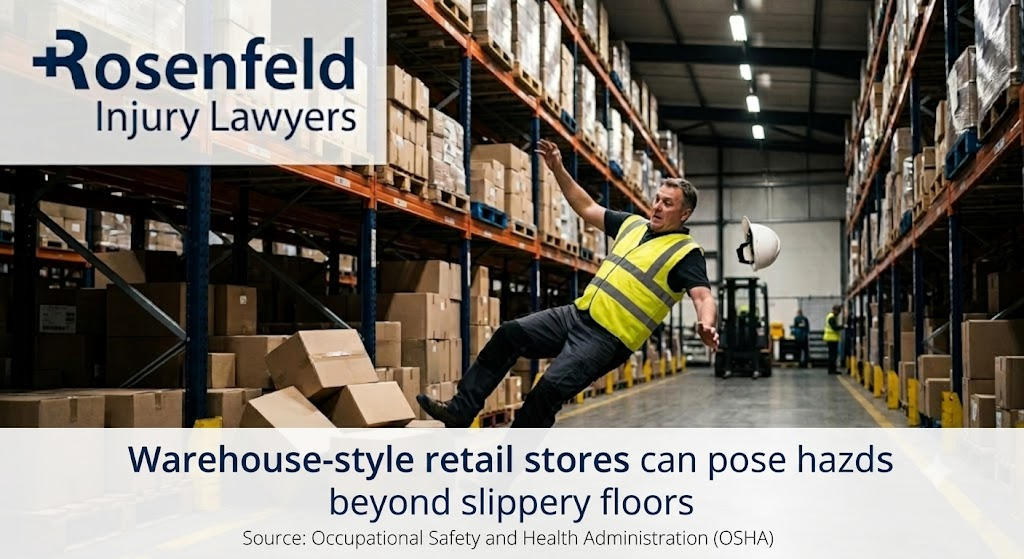
Falling Merchandise From High Shelving
Warehouse stores stock product on tall industrial racking, often stacking bulk items several shelves above where a customer can reach. When merchandise isn’t secured properly, or when someone nudges an item while reaching for a nearby box, it can fall from a significant height.
Given the weight of bulk packaging common in these stores, cases of water, large containers, or boxed appliances, a fall from overhead shelving can cause serious injury, including head trauma. This is one of the clearest examples of how warehouse store injuries differ from a standard retail fall.
Forklift and Equipment Hazards in Customer Areas
Unlike most retail stores, warehouse clubs often run forklifts and pallet jacks through the same aisles customers use, especially during restocking. These vehicles move slowly, but their size and limited visibility around tall pallet loads make them a real hazard in a space full of pedestrians.
An operator backing up without a clear sightline, or a customer stepping around a blind corner into an active aisle, can result in a serious injury that has nothing to do with the floor itself. This hazard is specific to how warehouse-format stores operate, not a condition you’d expect at a typical retailer.
Pallet Racking Collapse
Steel racking systems hold enormous weight, and they depend on proper loading, anchoring, and maintenance to stay stable. When a rack is overloaded, struck by equipment, or not properly maintained, a partial or full collapse can send merchandise and shelving down into a customer aisle.
While less common than other hazards on this list, a racking collapse is one of the more serious incidents tied specifically to the warehouse format, given the volume of product and the height involved.
Loading Dock and Parking Lot Hazards
Warehouse stores typically have larger footprints than standard retailers, with sprawling parking lots and active loading dock areas where delivery trucks and store equipment regularly move. These zones carry their own risks, from vehicle traffic to uneven pavement across a much larger area than a typical store lot.
Customers loading bulk purchases into vehicles in these lots face different hazards than someone walking into a smaller retail entrance, and the property’s sheer size can affect how quickly a hazard gets noticed and addressed.
Lifting and Strain Injuries From Bulk Merchandise
The entire warehouse club model is built around bulk packaging, and that means customers routinely lift heavier items than they would at a standard grocery or retail store. Awkward shelf heights or unstable stacking can turn a routine purchase into a strain injury.
While this type of injury looks different from a fall, it still raises the same basic question: did the store’s layout or shelving practices create an unreasonable risk for a customer handling the merchandise as intended?
Why These Claims Require a Different Kind of Investigation
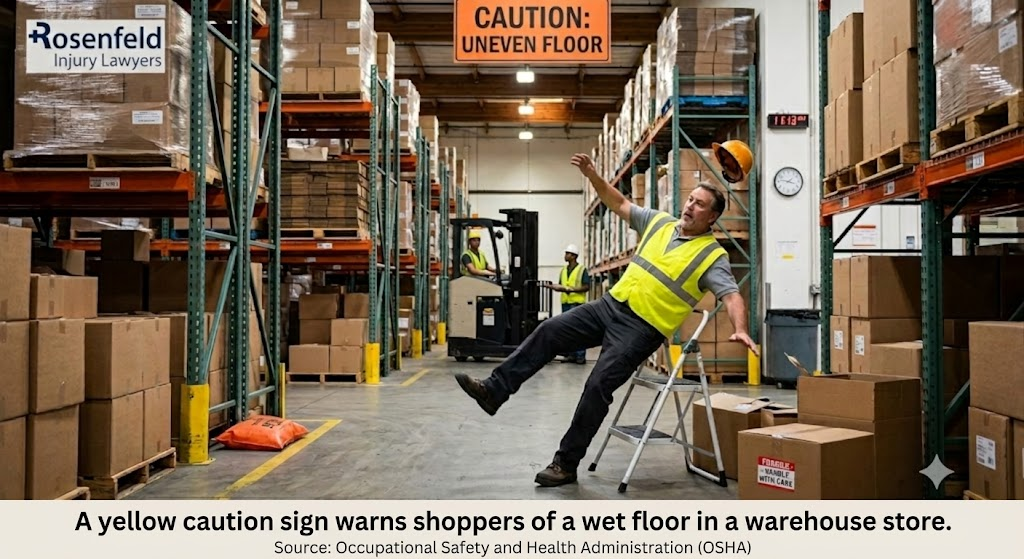
Warehouse store injuries often involve equipment, racking systems, and stocking procedures that a typical slip-and-fall case never touches. Maintenance records for shelving, forklift operation logs, and store layout documentation can all become relevant evidence depending on what caused the injury.
At Slip & Fall Injury Lawyers, we look beyond the obvious floor hazard in these cases, since the warehouse format itself often plays a direct role in how the injury happened.
Frequently Asked Questions:
Yes. Improperly secured bulk merchandise on warehouse-style racking is a recognized and compensable premises liability hazard.
This can support a claim, especially if the equipment operated without adequate safety precautions near customers.
The same premises liability principles apply, though the larger property size can affect how courts evaluate notice and maintenance.
It can, if the store’s shelving height or stacking practices created an unreasonable risk during normal use.
The hazards often involve equipment, racking, and bulk merchandise rather than a standard floor condition.
The hazards often involve equipment, racking, and bulk merchandise rather than a standard floor condition.
If you were hurt at a warehouse or big-box retail store, Slip & Fall Injury Lawyers can help you understand what caused it and who’s responsible. Contact us to talk through what happened.

Legally Reviewed By
Attorney Jonathan Rosenfeld
The information on this page has been legally reviewed by Attorney Jonathan Rosenfeld, founder and managing partner of Rosenfeld Injury Lawyers LLC, a Chicago-based personal injury law firm. With decades of experience representing individuals injured in slip and fall accidents and other premises liability cases throughout Chicago, Mr. Rosenfeld is dedicated to protecting the rights of injury victims and helping them pursue the maximum compensation available under the law. His extensive legal knowledge and commitment to client advocacy ensure that the information provided is accurate, reliable, and aligned with current legal standards.