



What Causes Escalator Accidents and Who Is Liable in Chicago?


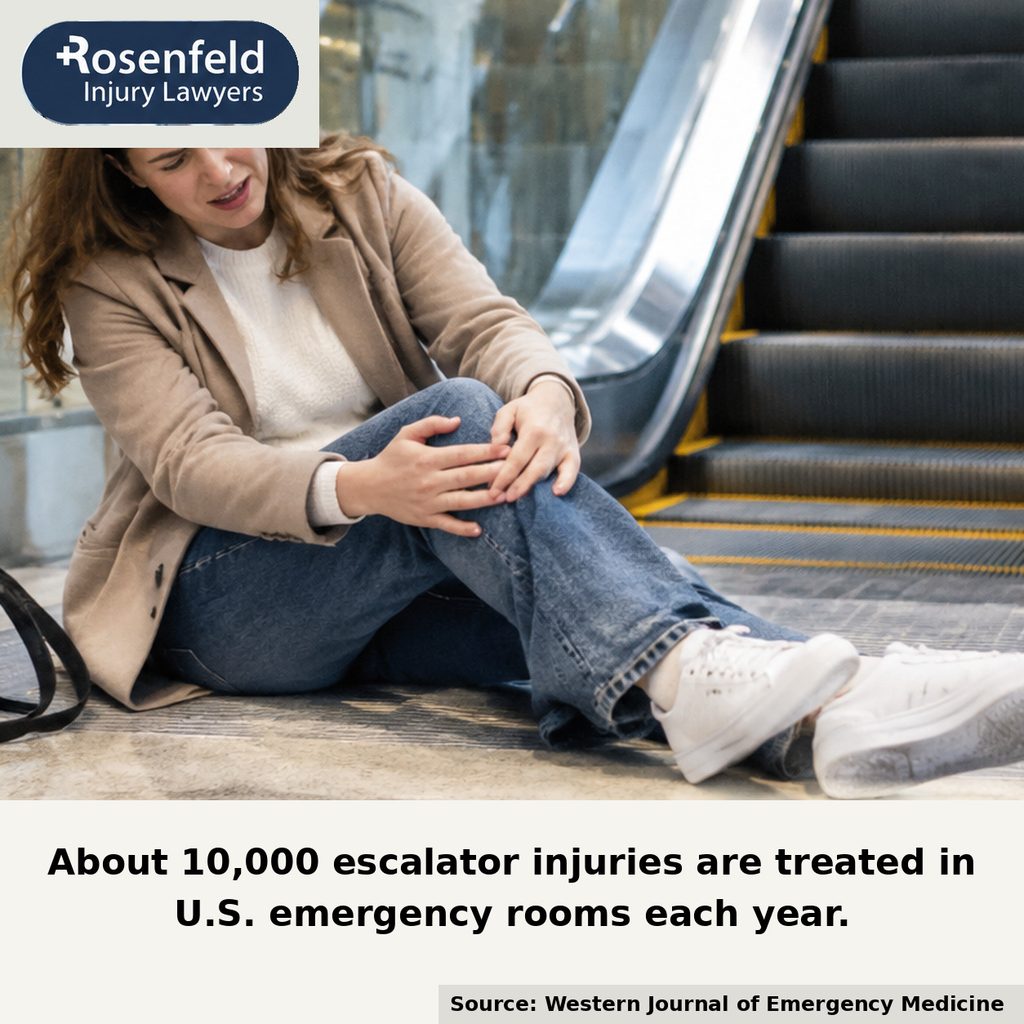
Escalators feel routine until a step stops, a handrail lurches, or clothing catches in the machinery. Understanding escalator accident causes and liability helps injured riders see why these accidents happen and who may answer for them. Often the fault lies in poor maintenance, a mechanical defect, or a hazard that an owner or operator failed to address.
What Commonly Causes Escalator Accidents?
Most escalator injuries trace back to mechanical failure, maintenance lapses, or hazards around the escalator rather than a rider’s misstep alone.
- Sudden stops or jerks that throw riders off balance
- Damaged, missing, or uneven steps
- Worn or misaligned comb plates at the top and bottom
- Handrails that move at a different speed than the steps
- Loose clothing, shoelaces, or footwear drawn into gaps
- Poor lighting, slippery floors, or crowding at the entrance and exit
- Missing warning signs or barricades after a malfunction
Not every accident is caused by equipment alone, and insurers often highlight rider behavior first. A single accident can involve more than one cause, such as a worn comb plate on a crowded escalator with poor lighting. Rider conduct, such as leaning or carrying bulky items, can also matter, which is why the facts of each incident count.
Who Can Be Liable for an Escalator Injury?
Several parties may share responsibility, and the right defendants depend on who owned, operated, maintained, or built the escalator.
- Building or store owner: responsible for keeping the equipment reasonably safe
- Operator or property manager: responsible for inspection and incident response
- Maintenance contractor: responsible if poor service or missed repairs caused the failure
- Manufacturer or installer: potentially responsible for a defective design or part
- Government or transit entity: if the escalator is publicly owned, with shorter deadlines
Several of these may be pursued together, and each will often blame another. A building owner may point to the maintenance firm, while the firm points to a manufacturing defect. Our page on escalator falls describes typical situations.
What Standard of Care Applies to Escalators in Illinois?
Illinois courts have historically treated escalator operators much like elevator operators, requiring a high degree of care.
The Illinois appellate court in Heffernan v. Mandel Bros. treated an escalator as a common carrier, a category held to the highest degree of care. The Illinois Supreme Court later questioned applying every common-carrier rule to escalators, so the standard of care can turn on the specific facts. Illinois’ state elevator safety law also does not apply within municipalities over 500,000 people, with an exception for state-owned buildings, so Chicago’s own inspection requirements and records can matter in these cases. These older cases are not the final word, so a lawyer should confirm how courts treat your specific facts today. A lawyer can sort out which rules apply to your incident.
Which Riders Face Higher Risk?
Children, older adults, and riders with strollers, walkers, canes, or luggage can be more vulnerable when an escalator jolts or stops. A sudden change in speed that a steady rider might absorb can send someone with limited balance tumbling backward. Owners and operators know their customers include these groups, so foreseeability can be part of a negligence argument. That does not remove a rider’s own responsibility, but it can shape how a court views a sudden stop or a missing warning sign.
How Do Escalator Cases Differ From Ordinary Slip and Fall Claims?
An escalator case focuses on machinery, inspection history, and engineering, rather than a spill or a loose rug.
A grocery spill claim often asks how long a hazard sat on the floor. An escalator claim asks whether equipment was designed, installed, inspected, and repaired properly. That usually calls for maintenance logs, inspection certificates, repair invoices, and sometimes an engineering examination. Escalator accident causes and liability therefore depend more on technical records than on eyewitness memory alone, and several companies may be involved at once.
What Evidence Helps Prove Escalator Fault?
Evidence is most useful when collected before the escalator is repaired or removed from service.
Photograph the escalator, any visible damage, and posted notices. Note the unit number or location if visible, plus the time and your exact position when you fell. Ask for an incident report and keep a copy. Ask whether the escalator had been out of service, repaired, or inspected recently, and who performed that work. Request preservation of video footage, maintenance logs, inspection certificates, and repair records in writing. Those records can show a pattern of problems or overdue service. Understanding escalator accident causes and liability often depends on those documents, which an owner or contractor is unlikely to volunteer.
Conclusion
Get medical attention, report the incident to the store or building, and avoid detailed recorded statements to insurers. Write down which escalator it was, which direction it ran, and what you were carrying while the details are fresh. When you are ready, request a free consultation to talk with Slip & Fall Injury Lawyers about your case, or read about fall cases in stores and retail businesses if the escalator was in a retail setting.
What Do People Ask About Escalator Accidents?
Yes, in many cases. Illinois reduces recovery by your share of fault and bars it only if you are more than 50% at fault. The defense may argue rider behavior, such as ignoring posted warnings, so keep accurate notes.
The company may share liability if poor service contributed, along with the owner.
A sudden stop can point to a mechanical or maintenance problem, or to an emergency shutoff someone pressed. Records and testing help show the cause, which is central to escalator accident causes and liability questions.
Often, but responsibility depends on who owns, controls, and maintains it, and on lease or service contracts. A store inside a mall may not control the mall’s escalators.
Illinois generally allows two years, with a one-year limit for claims against local public entities such as a transit agency. Keep that shorter deadline in mind if the escalator was publicly owned.