



What Happens When You Slip on a Wet Floor at McDonald’s?


Few things ruin a quick drive-thru run faster than hitting the ground on a slick tile floor. A McDonald’s wet floor lawsuit becomes a real possibility the moment an unmarked spill or a freshly mopped entryway sends a customer to the ground. We help injured clients across Illinois understand what these claims involve and what it takes to hold a franchise accountable.
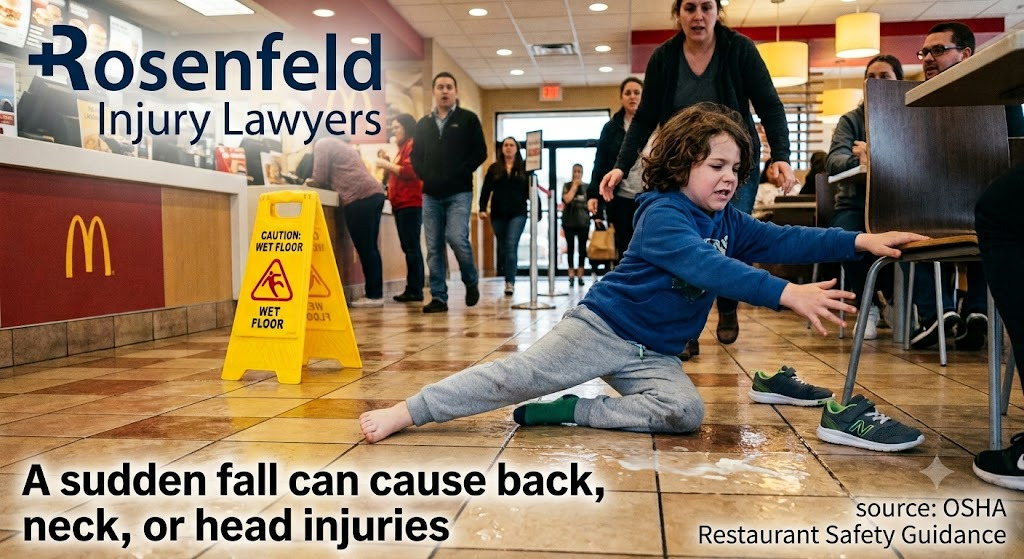
Why McDonald’s Locations Are a Common Site for Slip and Fall Injuries
Fast food restaurants move fast, and that pace creates hazards. Ice machines drip, beverage stations overflow, and mop buckets sit out during peak lunch rushes. Wet floor accident claims against national chains are common because these stores serve hundreds of customers daily, and busy staff do not always catch spills right away.
Many locations use hard tile flooring near entrances, counters, and restrooms. Tile becomes dangerously slick when wet, especially after rain tracks in on customers’ shoes, and limited signage only adds to the risk.
Common Causes Behind These Accidents
Most falls trace back to a handful of recurring problems:
- Spilled drinks or unattended ice near the counter.
- Recently mopped floors without a visible wet floor sign
- Leaking soda fountains or ice cream machines
- Rainwater tracked in near entrances without mats.
- Grease or food debris near kitchen pass-through areas
Any of these conditions can turn an ordinary visit into a serious injury, from broken wrists to head injuries after a hard fall on tile.
Who Can Be Held Responsible
Here is where these claims get complicated. Most McDonald’s locations are independently owned and operated by franchisees, not the corporation itself. Liability usually falls on the local franchise owner or the property management company responsible for maintaining the premises.
Under Illinois premises liability law, property owners owe customers a duty to keep the premises reasonably safe. When a restaurant knows about a hazard, or should have known through reasonable inspection, and fails to fix it or warn of it, that failure can support a McDonald’s wet-floor lawsuit.
What to Do Immediately After a Fall
The steps you take in the minutes after a fall can shape the strength of your claim.
What should I do after slipping at a fast food restaurant? Report the fall to a manager and ask for an incident report. Photograph the floor, the spill, and your visible injuries before conditions change.
Get the names of any employees or customers who witnessed the fall. Seek medical attention even if the pain feels minor, since injuries like concussions or soft tissue damage take time to present fully.
Building a Strong Wet Floor Injury Claim
A successful McDonald’s wet-floor lawsuit depends on evidence that the restaurant knew or reasonably should have known about the hazard. Surveillance footage often plays a major role because most locations continuously record their dining areas.
We work to secure that footage quickly, since many stores overwrite recordings within days. We also gather maintenance logs and inspection records to build a timeline showing how long the hazard existed before the fall.
Why These Claims Are Often Contested
Large chains and their insurers rarely settle quickly. Adjusters often argue the hazard was open and obvious, that the customer was not paying attention, or that warning signs were properly placed. Slip-and-fall compensation claimsagainst corporate-backed franchises often involve well-funded legal teams designed to minimize payouts.
Documented evidence and a clear understanding of Illinois comparative fault rules make a meaningful difference in how these disputes resolve.
Frequently Asked Questions
Yes, if the restaurant failed to address a known hazard, you may have grounds for a premises liability claim.
It can. A properly placed sign may reduce liability, while a missing or poorly positioned one strengthens your case.
Illinois generally allows two years from the date of injury to file a personal injury lawsuit, though exceptions can apply.
Medical bills, lost wages, pain and suffering, and future care costs may all be recoverable depending on your injuries.
Franchise-backed claims involve corporate insurers and legal teams, so experienced representation helps level the playing field.
We’re Ready to Help You Move Forward
A fall at a fast food restaurant can leave you with real injuries and real bills, even if the incident itself lasted only a second. If you’re considering a McDonald’s wet floor lawsuit, we’re here to review what happened and fight for the compensation your injuries deserve. Reach out today for a free, no-pressure consultation and let us handle the legal work while you focus on healing.

Legally Reviewed By
Attorney Jonathan Rosenfeld
The information on this page has been legally reviewed by Attorney Jonathan Rosenfeld, founder and managing partner of Rosenfeld Injury Lawyers LLC, a Chicago-based personal injury law firm. With decades of experience representing individuals injured in slip and fall accidents and other premises liability cases throughout Chicago, Mr. Rosenfeld is dedicated to protecting the rights of injury victims and helping them pursue the maximum compensation available under the law. His extensive legal knowledge and commitment to client advocacy ensure that the information provided is accurate, reliable, and aligned with current legal standards.