



What Percentage Does a Slip-and-Fall Lawyer Take in Illinois?


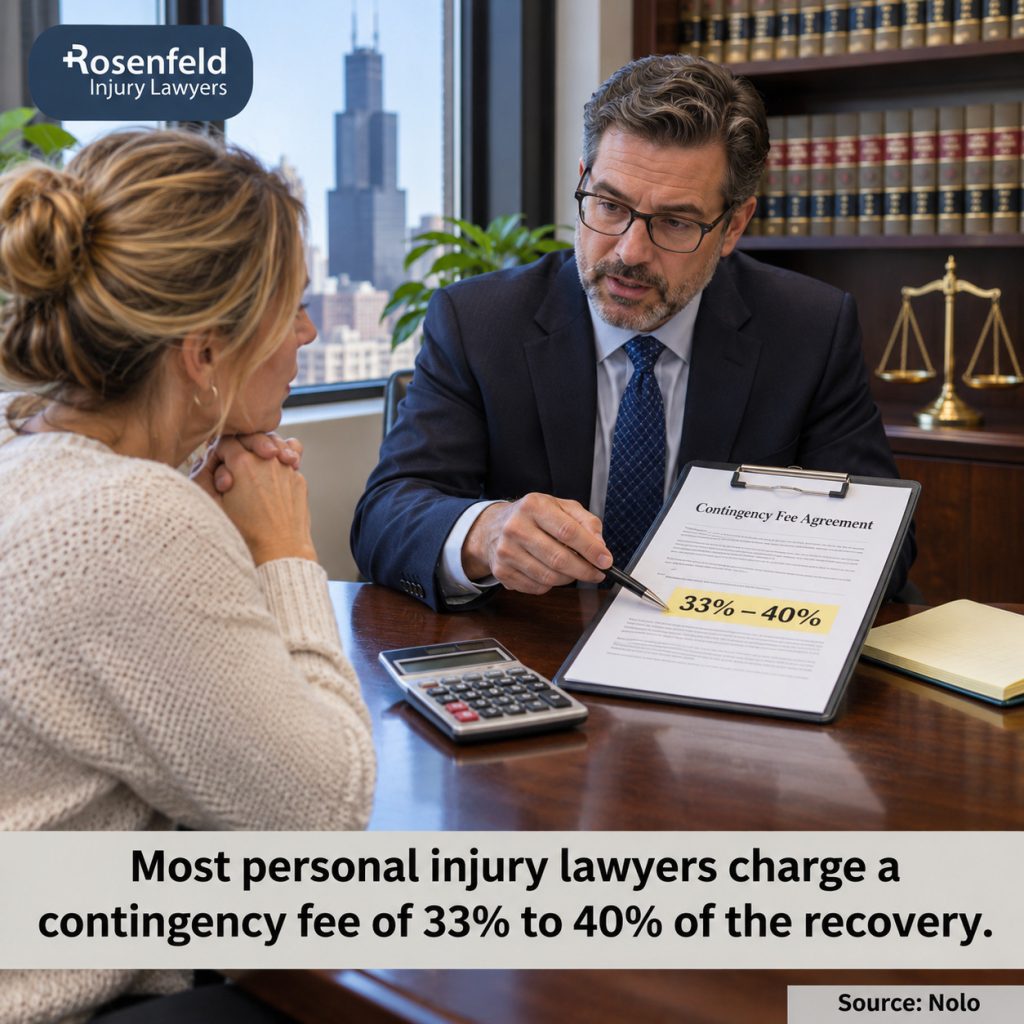
Understanding the slip-and-fall lawyer contingency fee Illinois injury victims are offered starts with one point: the lawyer is paid a percentage of what you recover. Many personal injury lawyers quote about 33% to 40%, but Illinois sets no single rate. Your contingency fee agreement controls, so review how it handles case expenses before signing.
This guide explains how percentages, expenses, and Illinois rules fit together, so you can ask clear questions before you sign.
What Is a Typical Slip-and-Fall Lawyer Fee in Illinois?
No single percentage applies to every Illinois case. Consumer legal guides such as Nolo commonly describe a range of 33% to 40% of the recovery, but this is a general example, not an Illinois requirement.
The attorney fee percentage often depends on how far the case goes. A lower rate may apply to a settlement before a lawsuit, with a higher rate after filing. The firm’s homepage does not state its percentage, so ask for the exact figure.
How Does a Contingency Fee Agreement Work?
The lawyer receives an agreed share of the money recovered, and you pay no hourly fee upfront. That does not mean every case expense is automatically waived. Under a contingency fee agreement, the personal injury attorney takes on the risk and gets paid from the settlement or verdict. Your legal representation begins with an agreement that spells out these terms.
Do You Pay a Lawyer If You Lose Your Case?
Usually, you owe no attorney fee if you recover nothing, but your agreement decides. Read how it treats expenses before signing. Slip & Fall Injury Lawyers states on its website that clients pay nothing unless the firm wins. The site doesn’tyou’d still owe any legal costs explain how expenses are handled, so ask whether any legal costs could remain payable if the claim is unsuccessful.
What Expenses Are Separate From Attorney Fees?
Attorney fees pay for the lawyer’s work. Expenses are the out-of-pocket costs of building your personal injury claim. Common examples include court filing fees, retrieving medical records, expert witness fees, deposition costs, investigation costs, and court reporter charges. In a premises liability case, an expert may help explain unsafe conditions. These litigation costs vary widely depending on the case’s complexity.
Is the Lawyer’s Percentage Calculated Before or After Expenses?
It depends on your written agreement. The fee may be calculated on the gross settlement, before expenses, or on the net settlement, after expenses. Here is a hypothetical example, not a quote from any firm. Assume a $90,000 settlement, a one-third fee, and $3,000 in expenses. If the fee comes first, the lawyer receives $30,000, and you receive $57,000. If expenses come off first, the fee is $29,00,0 and you receive $58,000.
Does the Attorney Fee Change If a Case Goes to Trial?
It can. Some agreements use higher percentages after a lawsuit is filed, at trial, or on appeal, while others use one rate throughout. Tiered fees are common but not universal. Ask which event triggers an increase, such as filing suit, and whether settlement negotiations before that point carry a lower percentage.
What Does Illinois Law Say About Contingency Fees?
Illinois sets no statewide percentage. Instead, the Illinois Rules of Professional Conduct require fees to be reasonable, and Rule 1.5 adds requirements for contingent fees. Under Rule 1.5, a contingent fee agreement must be in writing and state how the fee is determined, including percentages for settlement, trial, or appeal. It must also identify expenses deducted from the recovery and whether they come out before or after the fee. A written fee agreement protects the attorney-client relationship by making terms clear early.
What Should You Check Before Signing a Fee Agreement?
Review every financial term first. Ask for a copy to read at home, and request clear, plain answers.
- The exact percentage
- Whether it rises during litigation
- How expenses are calculated
- Whether expenses come out before or after the fee
- Who pays expenses if the case fails
- How proceeds are distributed
Any slip-and-fall lawyer contingency fee Illinois clients sign should answer these points in writing.
Are Free Consultations Available for Slip-and-Fall Cases?
Yes. Slip & Fall Injury Lawyers offers a free consultation, and you can use the contact form to schedule one. A consultation lets an attorney review your situation and answer questions about fees. You can also learn about the firm’s attorneys and read how a slip-and-fall lawsuit works beforehand.
How Can You Understand What You Will Actually Receive?
Your share equals the settlement minus the fee, expenses, and any other deductions. Ask for a written breakdown before accepting an offer. Request a statement showing the gross amount, the lawyer’s fee, itemized expenses, and your final share. Unpaid medical bills may also affect your total. Reviewing how to negotiate a settlement can help you ask better questions about your case recovery.
Frequently Asked Questions
Many lawyers quote roughly 33% to 40% of the recovery, but rates vary, so confirm the exact percentage in writing.
Often no fee is owed without a recovery, but your agreement controls, including whether expenses remain payable. Read it carefully.
Usually not. Filing fees and expert costs are typically separate from the lawyer’s percentage, so ask how they are handled.
Yes, if the written agreement says so. Some agreements raise the percentage after filing suit, at trial, or on appeal.
Yes. Illinois Rule 1.5 requires contingency fee agreements to be in writing and to explain how the fee is determined.
Ready to Talk Through Your Fee Questions?
Fee terms should never be a mystery. If you were hurt in a fall, Slip & Fall Injury Lawyers can discuss your situation during a free consultation, and you can contact the firm to ask about fees. Before hiring anyone, make sure the slip-and-fall lawyer contingency fee that Illinois clients agree to is explained in writing. Every case differs, and no outcome is guaranteed.