



Who Is at Fault for an Icy Parking Lot Slip and Fall in Chicago?


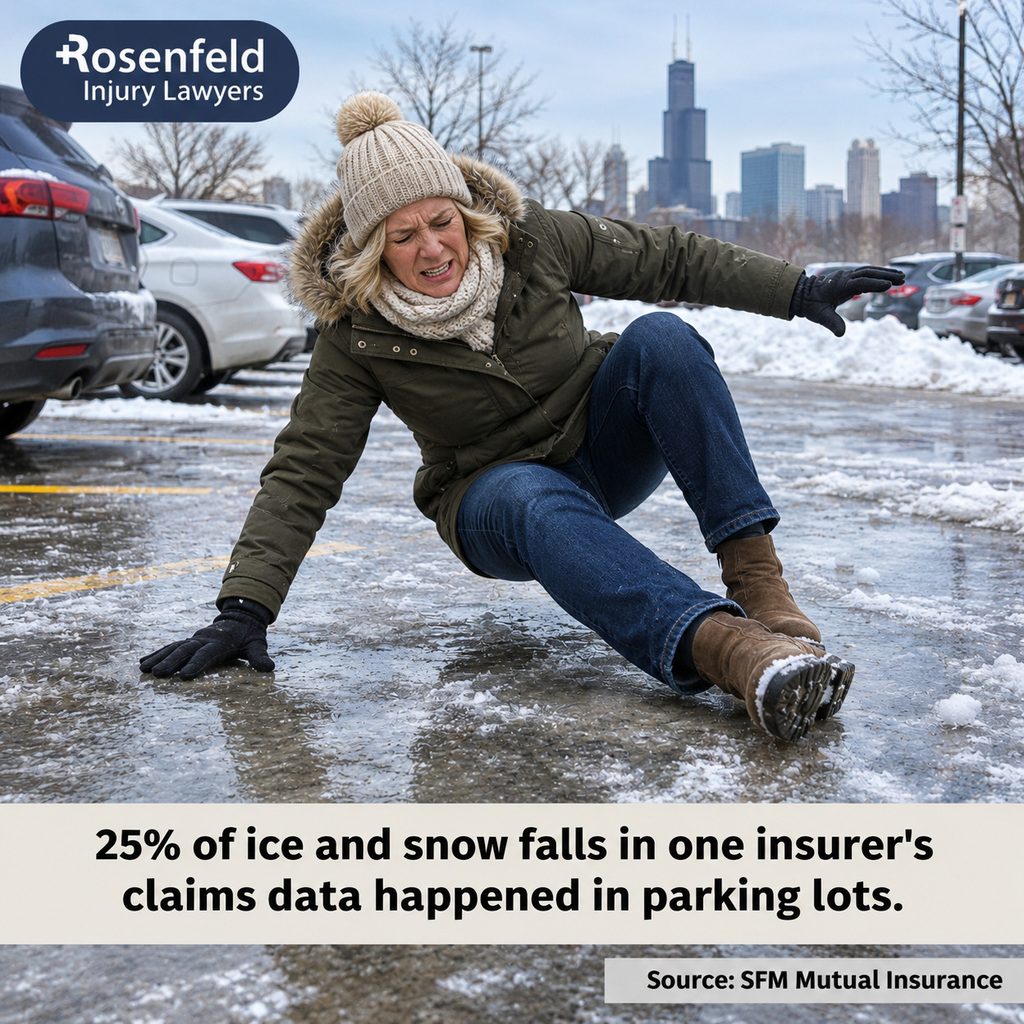
Picture a shopper stepping out of a car onto a sheet of ice near a store entrance, with the only path to the door crossing the same frozen patch. (This is a hypothetical, not a real client story.) Who is at fault for a parking lot slip and fall depends mostly on who owned, controlled, or maintained that pavement, and on whether the hazard was created, ignored, or simply caused by the weather. Here is how Illinois law sorts it out.
Who Controls the Parking Lot?
The party with control over the lot, usually the owner, a business tenant, or the property manager, owes visitors reasonable care.
The answer to who is at fault for a parking lot slip and fall starts with control. Illinois’ Premises Liability Act, 740 ILCS 130, sets that duty of reasonable care toward people lawfully on the property. Control matters because a shopping center owner, a management company, a store tenant, and a hired plowing company may each handle different tasks. A lease or service contract can show who was supposed to inspect, plow, salt, or repair the pavement. In practice, several parties may share responsibility for one fall, and each will try to point to the others. Insurance companies often do the same, which is why untangling control early saves time. Ask who signed the lot’s maintenance contracts and who receives complaints.
Is Ice in a Parking Lot Treated Differently Than Other Hazards?
Yes. Ice is judged under Illinois’ natural accumulation rule, which generally relieves owners of any duty to remove natural ice and snow, while potholes, spills, and lighting failures are judged under ordinary negligence principles.
Property owners generally need not remove ice that formed naturally from weather. Claims usually succeed when the ice was unnatural, such as meltwater from plowed piles refreezing across a walking path, or pooling caused by poor grading. Contractors may owe duties that owners do not. An Illinois appellate court has also read “sidewalk” narrowly in the Snow and Ice Removal Act, so owners should not assume that statute’s immunity automatically covers a parking lot walkway.
If you slipped on ice, our page on Illinois snow and ice falls explains the issues in more detail.
What Other Hazards Cause Parking Lot Falls?
Non-weather hazards often make the strongest cases, because an owner’s duty to repair them is clearer.
- Potholes, cracked asphalt, and uneven patches
- Missing or broken wheel stops and damaged curb edges
- Oil or fluid leaks left unattended
- Poor lighting that hides hazards after dark
- Drainage problems that leave standing water
Notice usually matters. Owners are typically liable for hazards they created, knew about, or should have discovered through reasonable inspection. Complaints, repair requests, and maintenance records can show what the owner knew and when. A pothole that has sat open for months, for example, is easier to tie to the owner than a hazard that appeared minutes before your fall. Those records often decide who is at fault for a parking lot slip and fall, so ask who manages the lot and preserve what you can.
What Evidence Helps Prove Fault in a Parking Lot Fall?
Good evidence connects the hazard to a specific party and shows that party had a reasonable chance to fix it.
Start with what you can capture yourself: wide and close photographs of the hazard, the surrounding pavement, nearby signs and lights, and the weather. Note the business name, lot address, and any numbers painted on the pavement. Then think about records only others hold. These include snow removal logs, inspection schedules, contracts with plowing or sweeping companies, prior incident reports, and camera footage from the lot or neighboring buildings. Lot cameras often overwrite on a loop, so ask promptly in writing that footage be preserved. A lawyer can send that request and follow up with formal discovery if a lawsuit is filed.
Can You Share Fault for Your Own Fall?
Yes. Illinois follows modified comparative fault, so your recovery is reduced by your percentage of fault and barred if you are more than 50% responsible.
Defendants often point to footwear, distraction, or a visible hazard. Your answer is evidence: photographs, lighting conditions, whether another route existed, and where the hazard sat relative to the building entrance. Cases involving visible ice can also raise the open and obvious defense, which courts apply with exceptions. A claim is rarely all-or-nothing, so honest facts about what you saw and why you walked where you did matter.
Ready to Find Out Where Responsibility Lands?
Before the lot is cleared or repaired, take photographs and note who manages the property. Then you can request a free consultation with Slip & Fall Injury Lawyers, or read how parking lot fall cases are evaluated before deciding on your next step. Even small details, such as the lot’s address and the time of day, can help.
What Do People Ask About Parking Lot Falls?
Yes, if it owns, leases, or controls the lot. A lease may divide duties between the store and its landlord, so the lease terms matter. A store cannot always escape responsibility by blaming a landlord, particularly for hazards near its own entrance.
It can be, depending on its contract and on what it did or failed to do. Illinois appellate courts have allowed claims against contractors in some snow cases.
Yes. Municipal or other government-owned lots bring special immunities and a one-year filing deadline. Because that window is short, do not wait to speak with a lawyer if a public entity may be involved.
Photographs, witness names, maintenance logs, complaint records, contracts, and camera footage can all help. Collect what you can early, and write down the time, weather, and exactly where you fell while your memory is fresh.
Illinois generally allows two years for personal injury lawsuits. Claims against local public entities have a shorter one-year limit. Learning who is at fault for a parking lot slip and fall early helps you meet whichever deadline applies.