



Who Is Liable for a Slip and Fall on an Icy Chicago Sidewalk?


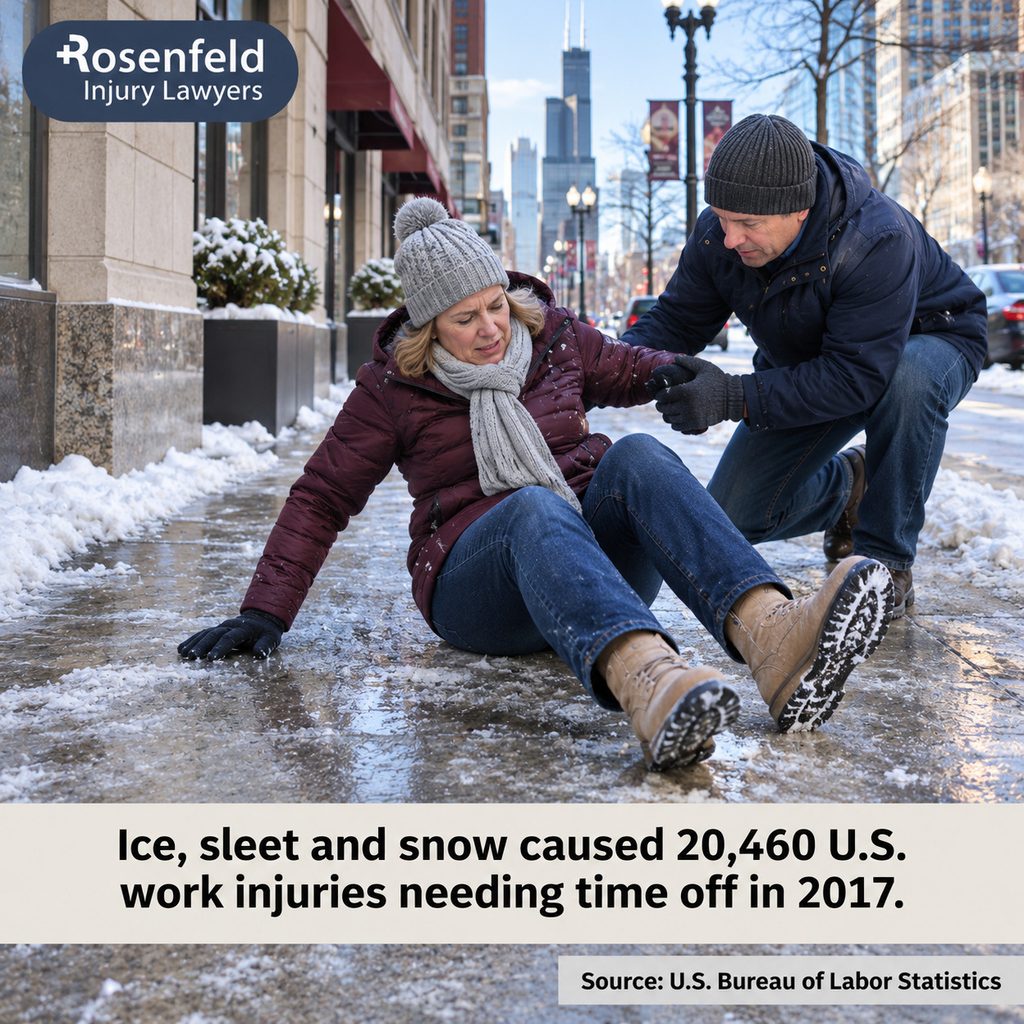
Who is liable for an icy sidewalk fall in Chicago usually comes down to who controls the walkway and how the ice formed. Owners and occupants must clear sidewalks under city law, yet Illinois courts generally excuse natural ice and snow. Liability often turns on whether the ice was unnatural, whether someone cleared it carelessly, or whether a contractor agreed to handle it.
Who Is Responsible for Clearing Chicago Sidewalks?
The owner, tenant, or occupant of the building or lot beside a sidewalk is responsible for clearing it under Chicago Municipal Code section 10-8-180.
The City of Chicago says snow falling between 7 a.m. and 7 p.m. must be removed by 10 p.m., while snow falling overnight must be gone by 10 a.m. Business tenants renting space beside a sidewalk are covered too. That means a missed deadline tells you who was expected to act. The ordinance sets a standard, but a civil claim still has to satisfy Illinois negligence law, so a missed deadline can support a case without deciding it.
Does Illinois Law Excuse Natural Ice and Snow?
Often, yes. Under the natural accumulation rule, Illinois property owners generally have no duty to remove ice or snow that formed naturally from the weather.
Residential owners get added protection. The Snow and Ice Removal Act shields them from liability for negligent cleanup efforts unless their conduct was willful or wanton. The law’s goal is to encourage people to clear walks without fear of being sued for doing it imperfectly. That immunity is written for residential property, so commercial owners cannot count on it. Their main protection is the natural accumulation rule, and that rule has exceptions, which is where most injury claims are won or lost.
The distinction between natural and unnatural ice is rarely obvious from the sidewalk alone. A lawyer or investigator usually has to trace where the water came from, whether the surface was graded to drain, and what the owner did before you arrived. Those details can turn an apparent weather accident into a maintenance failure.
When Can an Owner or Snow Contractor Still Be Liable?
Liability remains possible when the ice was unnatural, was made worse by the owner, or fell within a contractor’s duties.
- A leaking downspout, poor drainage, or runoff aimed across the walkway that creates ice
- Snow piled where meltwater refreezes across the path
- Careless clearing on commercial property
- A snow removal contractor that agreed to treat the walkway; in Mickens v. CPS Chicago Parking (2019), an Illinois appellate court confirmed that contractors and managers can face liability for natural accumulations they were hired to remove
Because who is liable for an icy sidewalk fall in Chicago can involve several parties at once, identifying the source of the ice early matters. A property owner, a tenant, a management company, and a plowing contractor may each point at one another. Insurers for each may dispute responsibility. If a government body is involved, shorter deadlines apply.
What Evidence Shows Who Was Responsible?
The strongest evidence shows who controlled the sidewalk, what caused the ice, and how long the hazard existed.
Useful records include snow removal contracts, property management agreements, leases, maintenance logs, weather data for the days before the fall, and earlier complaints made to the owner or to 311. Photographs of downspouts, grading, and nearby pavement can show whether the ice was natural or unnatural. Surveillance video from neighboring businesses may reveal when the ice formed and whether anyone treated the walkway before you fell. Owners rarely volunteer these records, so a lawyer can request them once a claim is underway.
What Should You Do After Falling on Ice?
Prompt documentation protects your claim, because ice melts and conditions change within hours. Even a few phone photographs taken from several angles can preserve what the walkway looked like.
- Get medical care and keep records of every visit.
- Photograph the ice, the walkway, nearby downspouts, and any salt or shoveling marks before conditions change.
- Write down the address, time, temperature, and who owns or occupies the adjoining property.
- Collect witness names and keep the shoes you wore.
- Avoid recorded statements to insurers until you understand your rights.
Illinois generally allows two years to file a personal injury lawsuit, but claims against local public entities face a one-year limit. Illinois also reduces your recovery by your share of fault and bars it if you are more than 50% at fault.
Need Help Sorting Out Who Should Pay?
Working out who is liable for an icy sidewalk fall in Chicago takes facts most people do not have on hand. The team at Slip & Fall Injury Lawyers can review your fall, the property, and the weather conditions. Learn more about snow and ice falls, or request a free consultation to talk through what happened.
What Else Do People Ask About Icy Sidewalk Falls?
Sometimes. Residential owners are protected from claims over negligent cleanup unless their conduct was willful or wanton, but unnatural ice caused by defective drainage may still support a claim. The details of the building and the ice matter.
Not automatically. It can be strong evidence of a failure to act, but you still must show that the failure caused your fall and that no legal defense applies.
Natural ice does not end every claim. Answering who is liable for an icy sidewalk fall in Chicago may still depend on drainage, contracts, and how the walkway was cleared. An owner’s label for the ice is a defense to test, not a final answer.
Possibly, but local governments have special immunities and a one-year filing deadline. Because that window is short, speak with a lawyer quickly.
Defendants often argue the ice was open and obvious. Illinois recognizes exceptions, so the specific facts of where and why you walked there matter. A lawyer can compare your account with photographs and weather records.