


Mall Management vs. Store Owner: Who’s Really Responsible for Common Areas?


A fall inside a mall raises a question most people never think about until it happens to them. Was the hazard the individual store’s responsibility, or does it fall on whoever runs the mall itself? Understanding who maintains common areas in a shopping mall is often the first step in figuring out who is actually accountable for your injury.
Two Different Parties, Two Different Responsibilities
Shopping malls typically involve more than one responsible party. Individual stores lease their space from a mall owner or management company, and that lease arrangement generally predictably splits maintenance duties.
The mall owner or management company is usually responsible for shared spaces used by every visitor, including hallways, food courts, restrooms, elevators, escalators, and parking areas. Individual stores are typically responsible only for what happens inside their own leased space.
What Actually Counts as a Common Area
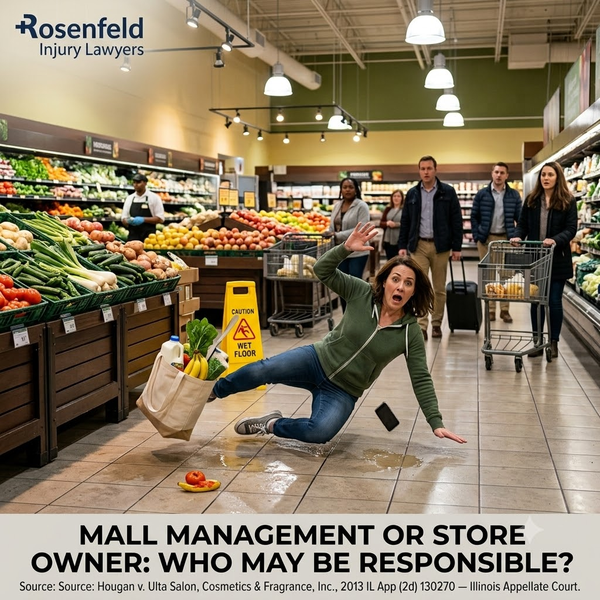
People often ask who is responsible for a fall in a mall hallway, and the answer is almost always the mall’s management or ownership entity, since hallways are shared infrastructure rather than any single tenant’s leased space.
Common areas generally include the walkways connecting stores, seating areas and food courts, public restrooms, parking lots and garages, and entryways or lobbies. These spaces exist for the benefit of every store and every visitor, which is exactly why responsibility for maintaining them typically sits with whoever manages the property as a whole.
Where It Gets Less Clear
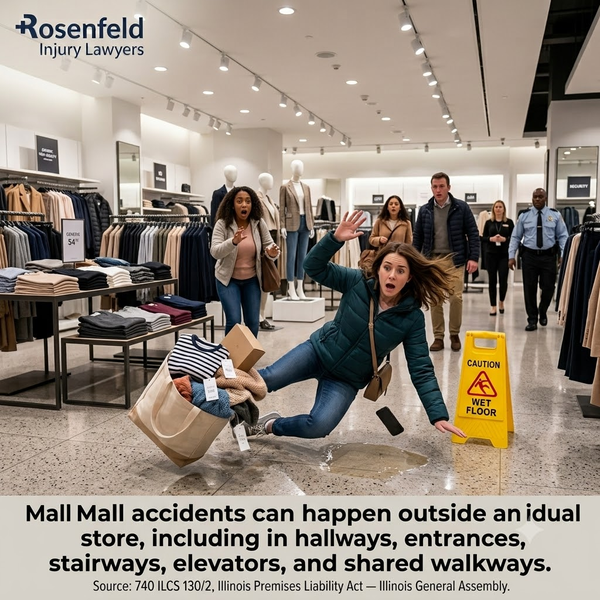
Not every situation divides cleanly. A spill that starts inside a store but spreads out into the hallway can raise questions about which party had notice of the hazard and enough time to address it. A poorly maintained storefront entrance right at the boundary between a leased space and a common walkway can create genuine overlap in responsibility.
Who maintains common areas in a shopping mall becomes harder to answer in these situations, which is exactly when a careful review of the lease agreement and the specific location of the hazard becomes necessary.
Why Lease Agreements Matter More Than People Expect
The lease between a mall owner and an individual store often spells out maintenance duties, sometimes shifting responsibility for certain areas, like the space directly outside an entrance, in ways that are not obvious just by looking at where the fall happened.
This is one reason why the question of who maintains common areas in a shopping mall cannot always be answered with a simple rule of thumb. The actual lease terms, not just common sense about where a hallway ends and a store begins, often determine who had a legal duty to address the hazard.
Why Identifying the Right Party Matters for Your Claim
Filing a claim against the wrong party, or missing a second responsible party entirely, can slow down your case or weaken your recovery. Some mall falls genuinely involve shared responsibility between the mall’s management and an individual tenant, particularly when a hazard originated in one area and extended into another.
This is why a thorough investigation, not just an assumption based on where you fell, matters so much in these cases. Surveillance footage, maintenance records, and lease documentation can all help establish exactly who controlled the area and whether they should have caught the hazard before you did.
How We Approach These Cases
At Slip & Fall Injury Lawyers, we look closely at property lease agreements, maintenance logs, and the specific location of the hazard before determining who should be held accountable. A fall in a mall is rarely as simple as one obvious defendant, and treating it that way can leave real liability unaddressed.
Frequently Asked Questions
Not always. Responsibility depends on whether the fall happened in a common area or inside a specific store’s leased space.
Yes. Shared or overlapping hazards, such as a spill spreading from a store, can involve more than one responsible party.
Usually, yes. Mall parking lots and garages are typically maintained by mall ownership or management, not individual tenants.
Lease agreements, maintenance records, and surveillance footage typically clarify who controlled the specific area involved.
Yes. Where a hazard originated can affect which party had notice and responsibility to address it.
Bottom Line
A mall injury claim starts with a question that sounds simple but often isn’t. Who maintains common areas in a shopping mall depends on lease terms, the specific location of the hazard, and sometimes more than one responsible party at once.
If you were hurt in a mall and are not sure who is actually accountable, Slip & Fall Injury Lawyers can help you sort through the details and identify who should be held responsible. Reach out to talk through what happened.

Legally Reviewed By
Attorney Jonathan Rosenfeld
The information on this page has been legally reviewed by Attorney Jonathan Rosenfeld, founder and managing partner of Rosenfeld Injury Lawyers LLC, a Chicago-based personal injury law firm. With decades of experience representing individuals injured in slip and fall accidents and other premises liability cases throughout Chicago, Mr. Rosenfeld is dedicated to protecting the rights of injury victims and helping them pursue the maximum compensation available under the law. His extensive legal knowledge and commitment to client advocacy ensure that the information provided is accurate, reliable, and aligned with current legal standards.