



Who’s Liable for a Beer-Spill Fall on a Stadium Concourse?


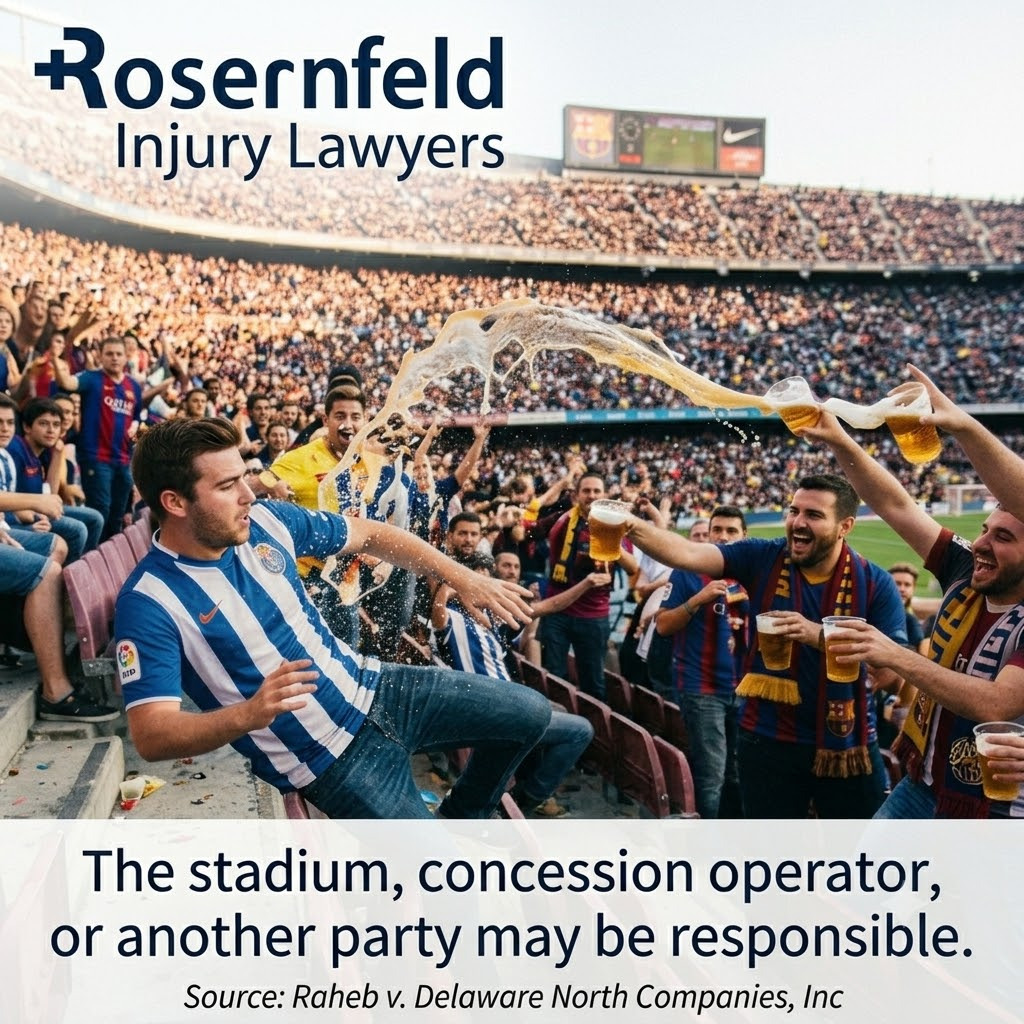
Game day crowds, cramped concourses, and cups changing hands in every direction make for a predictable mess. A beer spill concourse injury liability claim comes up more often than fans realize, and figuring out who’s actually responsible can get complicated fast.
Why Stadium Concourse Are Prone to This Hazard
Concourses see thousands of people moving through narrow walkways during a short window before kickoff or between innings. Add plastic cups, uneven foot traffic, and limited staff monitoring the floor, and spills become nearly inevitable.
Unlike a quiet grocery aisle, a packed concourse makes spills harder to spot and clean up quickly. Crowds often walk right past a hazard without flagging it to staff.
Who Can Be Held Responsible
Who is liable for a spill at a stadium? Liability often depends on who controlled that section of the concourse and who was responsible for keeping it clean. Several parties can potentially share fault.
- The stadium or venue ownership group
- The team’s management company operating the facility.
- Concession vendors serving drinks in that area
- Third-party cleaning or janitorial contractors
- Independent food and beverage license holders
Each of these parties may carry separate insurance, which is part of why these cases often involve more investigation than a typical retail fall.
The Role of Concession Vendors in These Claims
Many stadiums contract out food and beverage service to independent vendors rather than handling it in-house. That arrangement matters because the vendor may bear direct responsibility for spills within their service area.
If a vendor’s staff overfilled a cup, handed off drinks carelessly, or ignored a visible spill nearby, that vendor’s insurance may be the primary source of compensation rather than the stadium itself.
What Illinois Premises Liability Law Requires
Property owners and operators, including stadiums, owe visitors a duty to maintain reasonably safe conditions. When a hazard, such as a beer spill, exists long enough that staff should have noticed it, failing to clean it up or warn patrons can support a beer spill concourse-injury liability claim.
The challenge in these cases often comes down to timing. Insurers frequently argue that the spill was too recent for anyone to have reasonably caught it before the fall occurred. Reviewing how settlement negotiations work can help set expectations for how insurers typically respond to that argument.
Evidence That Strengthens a Stadium Fall Claim
Stadiums are heavily monitored environments, which can work in an injured fan’s favor if the right evidence is preserved quickly.
Surveillance footage from concourse cameras often captures the spill itself, as well as how long it went unaddressed. Concession sales records, staff schedules, and cleaning logs can also establish whether reasonable maintenance was being followed that day.
Steps to Take If You Fall on a Stadium Concourse
If you go down during a game or event, a few in-the-moment actions can protect your claim.
Report the fall to stadium staff or security right away and request an incident report. Photograph the spill, your injuries, and the surrounding area before the crowd disperses or the area gets cleaned.
Get contact information from anyone nearby who saw the fall, since stadium crowds make it easy to lose track of witnesses once the moment passes.
Why These Cases Can Be More Complex Than They Appear
Does it matter if I was watching the game instead of the ground? Insurers sometimes argue comparative fault, claiming the injured person wasn’t paying attention. We push back by showing the hazard itself was unreasonably dangerous regardless of where a patron’s attention was focused during a live event.
Multiple potentially liable parties, layered contracts between the venue and vendors, and large crowds add complexity that a straightforward retail slip-and-fall doesn’t usually involve.
Frequently Asked Questions
Yes, multiple parties, such as vendors and stadium operators, often share responsibility, unlike a single-owner retail location.
Possibly. Depending on the contract between the venue and vendor, both parties may share liability for your injury.
Illinois generally allows two years from the date of the injury to file a personal injury lawsuit.
Evidence such as footage and cleaning logs can confirm or refute how long the hazard actually existed.
Medical bills, lost wages, and pain and suffering are commonly recoverable depending on your injuries.
Multiple parties and layered insurance coverage make experienced representation especially valuable in these cases.
Let Us Sort Out Who’s Responsible
Stadium falls involve more moving parts than most injury cases, and untangling them shouldn’t fall on you while recovering. If you were hurt in a beer spill concourse injury liability situation at a venue, we’re ready to investigate every responsible party and fight for the compensation you deserve. Reach out today for a free consultation and let’s talk through what happened.

Legally Reviewed By
Attorney Jonathan Rosenfeld
The information on this page has been legally reviewed by Attorney Jonathan Rosenfeld, founder and managing partner of Rosenfeld Injury Lawyers LLC, a Chicago-based personal injury law firm. With decades of experience representing individuals injured in slip and fall accidents and other premises liability cases throughout Chicago, Mr. Rosenfeld is dedicated to protecting the rights of injury victims and helping them pursue the maximum compensation available under the law. His extensive legal knowledge and commitment to client advocacy ensure that the information provided is accurate, reliable, and aligned with current legal standards.