


Who’s Liable When You’re Hurt at a Franchise Restaurant


You fell at a restaurant with a name you’d recognize anywhere. The logo was the same one you’ve seen in a dozen cities. So the claim should be simple, right? Go after the big company behind the sign.
It usually isn’t that simple. A slip and fall in a restaurant carrying a national brand name often means the local building, the staff, and the hazard that caused your fall belonged to someone else entirely, someone you’ve probably never heard of.
The Name on the Sign Isn’t Always Who Owns the Building
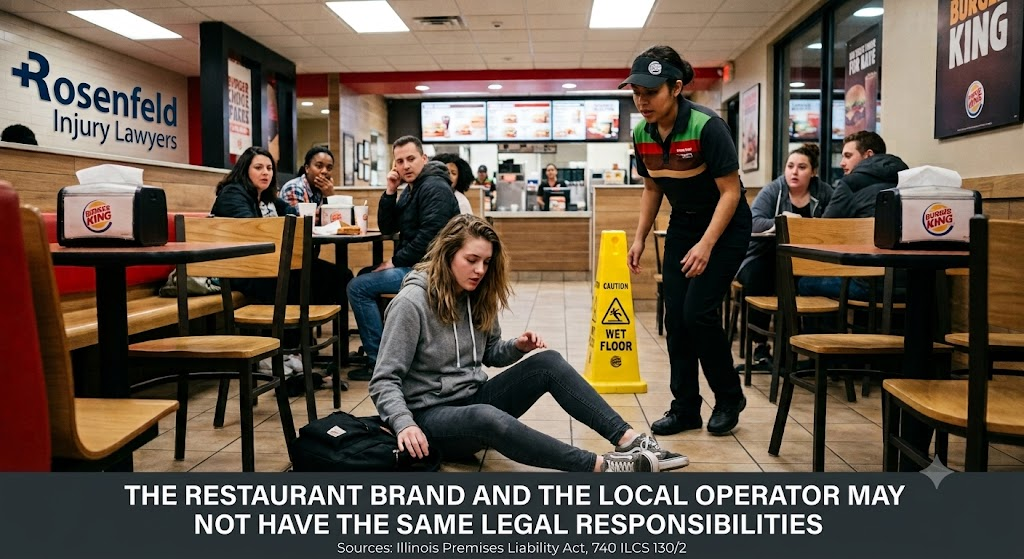
Most locations flying a familiar restaurant logo are independently owned and operated. A local franchisee signs an agreement to use that brand name, menu, and look, then runs the day-to-day business on their own.
This means the entity actually responsible for your fall, the one that hires staff, sets cleaning schedules, and controls what happens on the floor, is usually the local franchisee’s own company, not the national corporation. Hurting yourself in a slip and fall in a restaurant with a famous name doesn’t automatically put that famous name on your claim.
When the Corporate Brand Can Still Be Named in a Claim
The franchisor isn’t always off the hook. If the parent company kept tight control over daily operations, training, or safety procedures, courts can treat the relationship as closer to employer and employee than two separate businesses.
This concept is called agency, and it comes in two forms. Actual agency exists when the franchisor directly dictates how the location is run. Apparent agency exists when a reasonable customer would believe the franchisor was running the place, based on uniform branding, national advertising, and consistent operating standards across locations.
Why This Split Matters for Insurance, Not Just Blame
Franchise agreements typically require the local franchisee to carry their own commercial liability insurance. That policy, not a corporate fund controlled by headquarters, is usually where a settlement is paid from.
Knowing this upfront changes expectations. A franchise restaurant fall is rarely a case of a small, under-resourced business versus an injured customer. It’s a case against a business required to carry real insurance specifically because incidents like this happen.
Corporate Training Manuals Can Become Evidence
Here’s something most people never think to ask about. Many franchisors issue detailed operations manuals covering exactly how a location should be cleaned, how spills get addressed, and how often floors get checked during a shift.
When a franchisee skips those steps, that gap between the written standard and what actually happened on the floor becomes real evidence. A manual requiring a floor check every thirty minutes during dinner service says something specific if no one did it the night you fell.
What Actually Changes How You Build the Claim
You need to figure out early whether you’re dealing with the franchisee’s company, the franchisor, or both. Filing against the wrong entity, or missing one entirely, can stall a case once a lawsuit is already underway.
Don’t leave this for later. The business entity actually named in your claim determines which insurance policy responds, what records get requested, and who sits across the table during negotiation.
What This Means If You Were Hurt at a Franchise Location
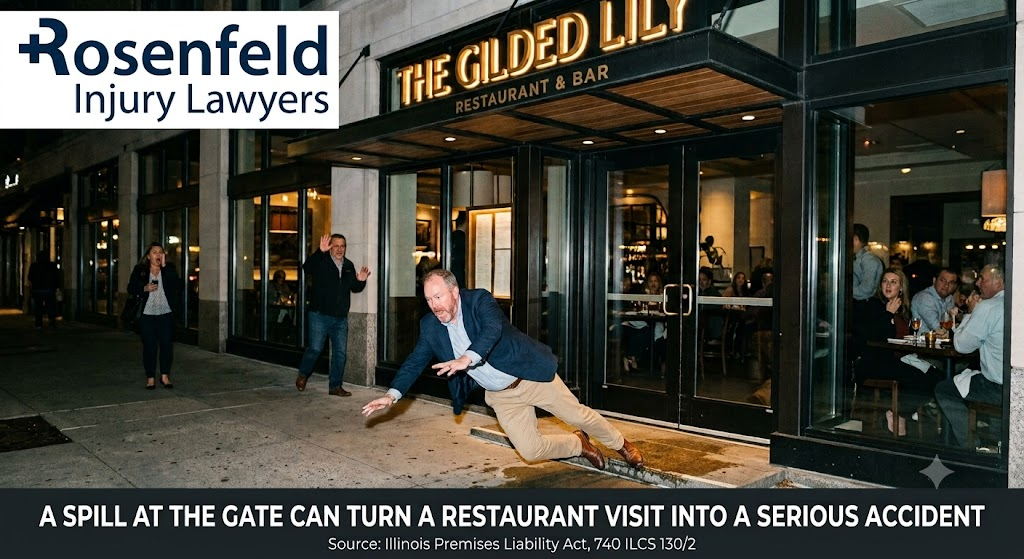
A fall at a franchise restaurant deserves the same careful investigation as any other premises liability claim, with one extra layer: figuring out exactly who controlled the property and to what degree. At Slip & Fall Injury Lawyers, we identify the right parties early, so your claim isn’t built against the wrong target from day one.
Frequently Asked Questions:
Usually the local franchisee’s company, though the franchisor can sometimes be added depending on how much control it kept.
Generally, yes. Franchise agreements typically require the local owner to carry commercial liability insurance for exactly this situation.
That’s common. Identifying the correct legal entity is often one of the first steps your attorney handles.
Yes. A gap between the franchisor’s written safety standards and what actually happened can be strong evidence.
The underlying premises liability rules are the same. The added complexity is figuring out exactly who’s responsible.
If you were hurt in a slip and fall at a restaurant, franchise, or elsewhere, Slip & Fall Injury Lawyers can help determine who’s responsible and what your claim is worth. Reach out to talk through what happened.
Legally Reviewed By
Attorney Jonathan Rosenfeld
The information on this page has been legally reviewed by Attorney Jonathan Rosenfeld, founder and managing partner of Rosenfeld Injury Lawyers LLC, a Chicago-based personal injury law firm. With decades of experience representing individuals injured in slip and fall accidents and other premises liability cases throughout Chicago, Mr. Rosenfeld is dedicated to protecting the rights of injury victims and helping them pursue the maximum compensation available under the law. His extensive legal knowledge and commitment to client advocacy ensure that the information provided is accurate, reliable, and aligned with current legal standards.