



Who’s Liable When a Leaking Washing Machine Causes a Fall?


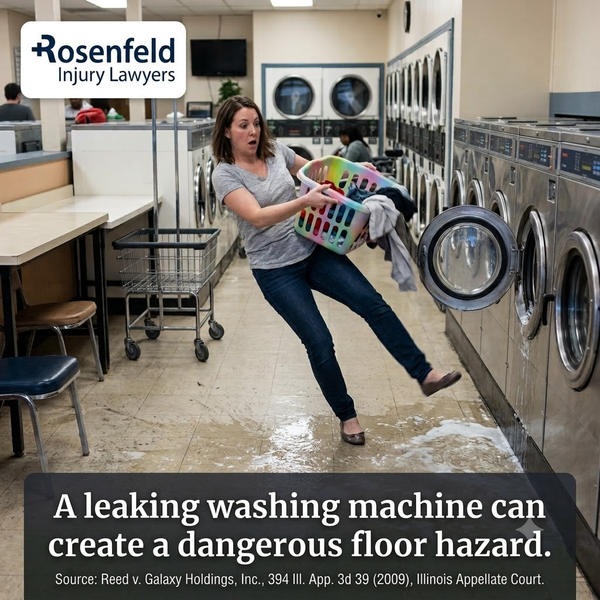
A shared laundry room is one of those spaces tenants use constantly and rarely think twice about, until a puddle from a leaking machine sends someone to the floor. Leaking washing machine landlord liability depends heavily on where the leak happened and who was actually responsible for maintaining the appliance in the first place.
Why Location Determines Everything Here
Under the Illinois Premises Liability Act, 740 ILCS 130, Illinois landlords are generally responsible for keeping common areas in reasonably safe condition. Common areas typically include hallways, lobbies, stairwells, and shared laundry rooms, spaces every tenant uses but no single tenant controls.
This is why leaking washing machine landlord liability usually applies when the machine sits in a shared laundry facility owned and maintained by the building, rather than inside an individual tenant’s unit.
Shared Laundry Room vs. Inside a Unit
People often ask whether their landlord is responsible for a leak inside their apartment, and the answer depends on control and notice. If the landlord provides a washing machine in a shared laundry room, the landlord generally controls that equipment and is responsible for addressing leaks or hazards connected to it.
Inside your own leased unit, the analysis shifts. A landlord is typically not liable for a hazard they had no reasonable way to know about, especially one contained entirely within your private space. That said, if the washing machine was landlord-installed or maintained under your lease, and the landlord knew of a defect and failed to repair it, liability can still apply even for an in-unit leak.
Why Notice Still Drives the Outcome
Just like any other premises liability claim, leaking washing machine landlord liability typically hinges on whether the landlord knew or reasonably should have known about the leak and had a fair opportunity to fix it before someone got hurt. A one-time leak that happened moments before a fall looks very different from a machine that had been leaking, or reported as leaking, for days beforehand.
Prior maintenance requests, previous tenant complaints about the same machine, or visible signs the leak had existed for some time, such as water staining or mold, can all help establish that the landlord had noticed.
Why Lease Language Doesn’t Always Settle the Question
Under the Illinois Landlord and Tenant Act, 765 ILCS 705, a lease generally cannot fully exempt a landlord from liability for injuries caused by the landlord’s own negligence in maintaining the property. Even if a lease assigns general appliance responsibility to tenants, that language does not automatically shield a landlord from liability for a hazard connected to equipment they own, install, or are contractually responsible for maintaining.
This is why the specific facts, not just the lease’s general language, often determine how a leaking washing machine landlord liability claim gets evaluated.
What Actually Helps Prove This Kind of Claim
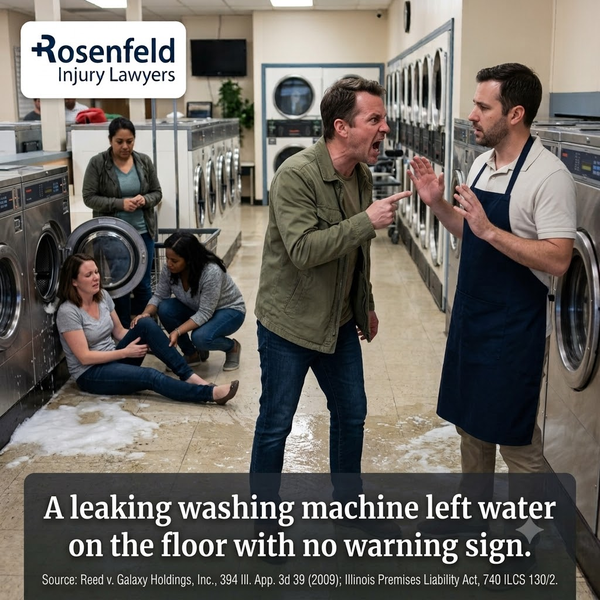
Photos of the leak and the surrounding area, maintenance records showing prior repair requests, and any building policy about how often laundry equipment is inspected can all support a claim. Witness accounts from other tenants who noticed the leak beforehand, or who reported it themselves, often carry real weight.
What This Means If This Happened to You
At Slip & Fall Injury Lawyers, we closely examine who owned, controlled, and maintained the equipment involved before determining how to build a claim like this. A leak in a laundry room is rarely as simple as it first appears.
Frequently Asked Questions
Not automatically, but shared laundry rooms are generally treated as common areas the landlord must maintain.
It depends on who controls the appliance and whether the landlord knew about a defect beforehand.
Illinois law limits how much a lease can shield a landlord from liability for their own negligence.
Maintenance requests, prior complaints, and visible signs like water staining can help establish notice.
Yes. Prior reports about the same equipment can support the argument that the landlord had noticed.
Bottom Line
A puddle from a leaking washing machine can cause a serious fall, and figuring out who is responsible depends on where it happened and who controlled the equipment. Leaking washing machine landlord liability comes down to notice, control, and how quickly the hazard should have been addressed.
If a leaking machine hurt you in your building, Slip & Fall Injury Lawyers can help you sort out who is actually responsible. Reach out to talk through what happened.

Legally Reviewed By
Attorney Jonathan Rosenfeld
The information on this page has been legally reviewed by Attorney Jonathan Rosenfeld, founder and managing partner of Rosenfeld Injury Lawyers LLC, a Chicago-based personal injury law firm. With decades of experience representing individuals injured in slip and fall accidents and other premises liability cases throughout Chicago, Mr. Rosenfeld is dedicated to protecting the rights of injury victims and helping them pursue the maximum compensation available under the law. His extensive legal knowledge and commitment to client advocacy ensure that the information provided is accurate, reliable, and aligned with current legal standards.