



Why “It Was Obvious” Doesn’t Always Get Property Owners Off the Hook


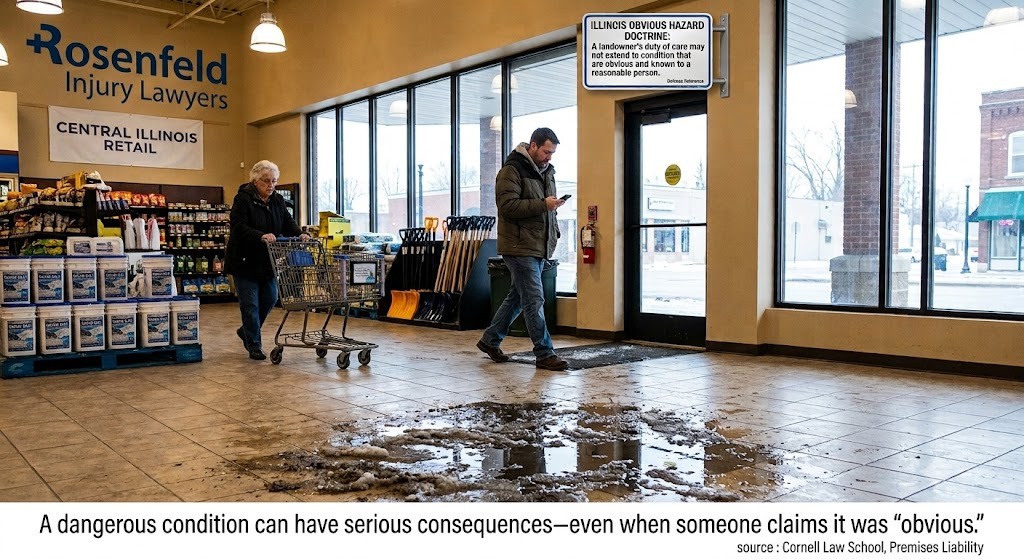
Property owners love to say a hazard was “obvious.” A cracked step, a puddle by the entrance, a patch of ice on the sidewalk. They argue that if you could have seen it, you should have avoided it. But the open and obvious hazard defense Illinois property owners rely on doesn’t automatically shut the door on your claim. Illinois law carves out real exceptions, and we use them to hold negligent property owners accountable.
What the Open and Obvious Rule Actually Means
Under Illinois premises liability law, a property owner generally owes no duty to warn visitors about dangers a reasonable person would notice on their own. Courts assume you’ll watch where you’re walking around common hazards like curbs, stairs, or puddles near an entrance.
Many injured clients ask us, is a hazard automatically the victim’s fault if it was visible? The honest answer is no. Visibility alone doesn’t settle liability. Courts look at why the hazard existed and whether the owner should have anticipated harm despite it being visible.
Two Exceptions That Keep Claims Alive
Illinois recognizes two major exceptions to the open and obvious hazard defense Illinois defendants raise so often. Both focus on foreseeability, meaning the owner should have known injury was likely even though the danger was plain to see.
The Distraction Exception
If something on the property reasonably diverts a visitor’s attention away from the hazard, the owner can still be liable. Think of a grocery store display positioned right next to a wet floor, or signage directing customers across an icy walkway.
We often hear people ask whether you still sue if you were distracted when you fell? Yes, if we can show the owner created or allowed that distraction, courts may find the hazard wasn’t truly avoidable.
The Deliberate Encounter Exception
Sometimes a person has no reasonable alternative but to face a known hazard, such as an employee who must use a damaged staircase to reach their workstation. If the owner should have expected someone to encounter the danger anyway, liability can still attach.
Where This Defense Shows Up Most in Chicago Cases
We see the open and obvious hazard defense Illinois insurers lean on constantly across common fall locations throughout the city. It comes up in grocery store aisles where spills sit near sale displays, on stairways with worn treads, and along entryways during snow and ice season.
Retail and wet floor cases are especially common, since stores often argue a cone or sign excused them from further responsibility. We’ve also handled falls at general stores and retail businesses where lighting or crowded layouts made an otherwise visible hazard easy to miss.
Building a Strong Case When the Defense Comes Up
Clients often wonder what I should do if the store says the hazard was obvious. Start by documenting everything. Photograph the scene, note lighting conditions, and identify anything that may have pulled your attention elsewhere.
Taking the right steps after your fall strengthens your position before an adjuster ever raises this defense. We also review maintenance logs, prior complaints, and surveillance footage to show the owner understood the risk regardless of visibility.
Every case is different, and settlement values vary widely depending on how strong the evidence is against this defense. That’s why a thorough record matters so much.
Frequently Asked Questions
Not automatically. Courts weigh distraction, necessity, and foreseeability before deciding whether the owner still owed a duty of care.
Not always. A sign near a distraction or blocked view may not count as adequate warning under Illinois premises liability law.
Yes. These claims require detailed evidence gathering and legal argument that’s difficult to manage without experienced representation.
Generally two years from the date of your fall, though government property claims may involve shorter notice deadlines.
Illinois follows comparative fault, so partial distraction doesn’t necessarily bar your recovery, though it may affect your total compensation.
Don’t Let This Defense Discourage You From Seeking Justice
Property owners and their insurers count on people assuming an obvious hazard ends the conversation. It doesn’t. The open and obvious hazard defense Illinois businesses raise so confidently has real limits, and we know exactly how to challenge it with evidence, case law, and persistence.
If a property owner is trying to blame you for a hazard they should have fixed or warned about, don’t accept that answer without a fight. Reach out to our team today for a free consultation, and let us show you what your case is really worth.

Legally Reviewed By
Attorney Jonathan Rosenfeld
The information on this page has been legally reviewed by Attorney Jonathan Rosenfeld, founder and managing partner of Rosenfeld Injury Lawyers LLC, a Chicago-based personal injury law firm. With decades of experience representing individuals injured in slip and fall accidents and other premises liability cases throughout Chicago, Mr. Rosenfeld is dedicated to protecting the rights of injury victims and helping them pursue the maximum compensation available under the law. His extensive legal knowledge and commitment to client advocacy ensure that the information provided is accurate, reliable, and aligned with current legal standards.