



Why Winter Sidewalk Falls Spike in Rockford Every Year


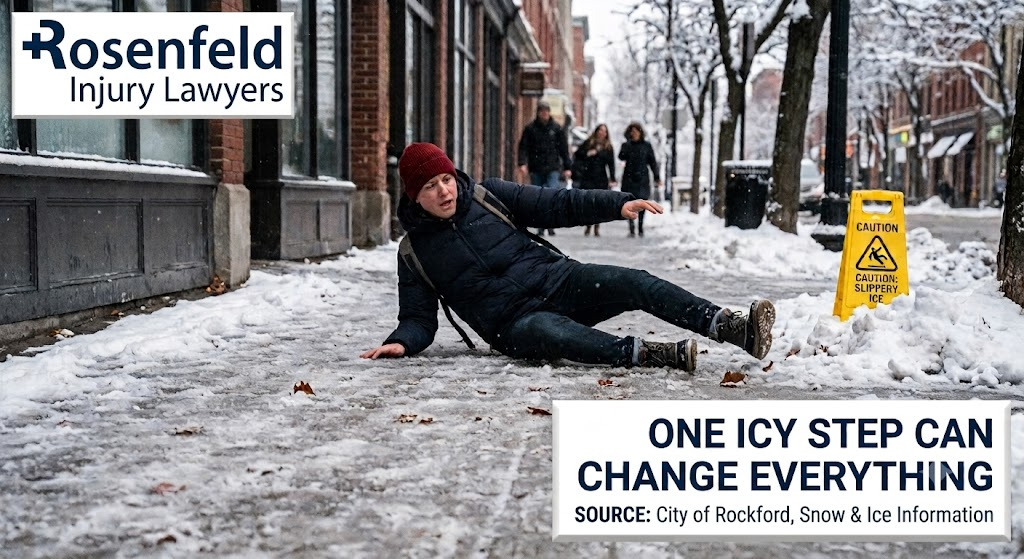
Rockford’s winters are beautiful right up until the first patch of black ice sends someone to the ground. Winter sidewalk falls in Rockford, Illinois, cases climb every year once temperatures drop, and the pattern is predictable enough to set a calendar by.
The Seasonal Pattern We See Year After Year
Every November, our phones start ringing more. By January, calls about sidewalk falls peak and remain elevated through early March as freeze-thaw cycles recur.
This is not random. Rockford sits in a climate zone where temperatures swing above and below freezing throughout winter, and that swing creates the most dangerous walking conditions.
Why the Freeze-Thaw Cycle Is the Real Culprit
Why is black ice more dangerous than snow? Snow is visible, but the thin, clear ice left behind after melting and refreezing often is not. A sidewalk can look dry while hiding a slick layer underneath.
During the day, sun and slightly warmer air melt surface snow into water. Once evening temperatures drop again, that water refreezes into a nearly invisible sheet. This cycle repeats across a typical Rockford winter, and each repetition adds another risky window for a fall.
Common Locations Where These Falls Happen
Certain spots around Rockford see this problem more often:
- Downtown sidewalks near shaded storefronts that never get direct sun
- Apartment complex walkways that are cleared inconsistently
- Parking lot entrances near retail stores along State Street
- Steps and ramps outside offices and medical buildings
- Residential sidewalks bordering rental properties
Shaded areas are especially risky because they hold onto ice long after sunnier spots have dried out completely.
Who Is Responsible for Clearing the Ice
Property owners and managers in Illinois have a duty to keep walkways reasonably safe for people lawfully on the property. That includes clearing snow and ice within a reasonable time after a storm.
Can you sue if you fall on ice outside a business? Yes, if the owner knew about the hazard or should have known and failed to address it in time, they may be held liable for winter sidewalk falls that Rockford, Illinois, residents experience each season.
Landlords, commercial property managers, and municipalities can all bear responsibility depending on who controlled the space where the fall occurred.
What Makes These Cases More Complicated in Winter
Ice-related falls carry unique challenges that summer slip-and-fall cases do not. Ice often melts or is cleared before it can be photographed, which makes timing critical for building a strong claim.
Weather records become important evidence, showing conditions at the time of the fall. Witness statements also carry extra weight, since physical evidence can disappear quickly as temperatures shift.
Steps to Take Immediately After a Winter Fall
If you slip on an icy sidewalk, a few steps can protect your claim later.
Photograph the ice and surrounding area as soon as possible, before it melts or gets salted over. Note the time and location, and check whether any nearby security cameras captured the fall.
Seek medical care even if your injuries seem minor, since bruising, sprains, and fractures can worsen over the following days.
Building a Strong Case for a Winter Fall
Every winter, sidewalk falls in Rockford, Illinois, claim benefits from documentation gathered quickly. We pull local weather data, request maintenance logs from the property, and interview any available witnesses while memories are fresh.
We also examine whether the property exhibited a pattern of neglecting winter maintenance, as prior complaints or recurring hazards can strengthen a claim.
Frequently Asked Questions
Yes, winter sidewalk falls in Rockford, Illinois, follow a clear seasonal pattern tied to freeze-thaw cycles and inconsistent snow removal.
Illinois generally allows two years from the date of the fall to file a personal injury lawsuit, with some exceptions.
It can factor into comparative fault, but a hazardous, unaddressed condition still creates liability regardless of your footwear.
Courts weigh whether reasonable steps were taken, so unavoidable natural accumulation differs from a neglected known hazard.
Yes, Illinois follows a comparative fault rule that reduces, rather than eliminates, compensation based on shared fault.
Medical bills, lost wages, and pain and suffering are commonly recoverable depending on the severity of your injuries.
Let Us Help You Through the Aftermath
Winter falls catch even careful people off guard, and the injuries that follow deserve to be taken seriously. If you were hurt in one of Rockford’s icy sidewalk accidents, we’re ready to review the details, gather the evidence while it still matters, and fight for the compensation you need to recover. Give us a call today and let’s talk through what happened.

Legally Reviewed By
Attorney Jonathan Rosenfeld
The information on this page has been legally reviewed by Attorney Jonathan Rosenfeld, founder and managing partner of Rosenfeld Injury Lawyers LLC, a Chicago-based personal injury law firm. With decades of experience representing individuals injured in slip and fall accidents and other premises liability cases throughout Chicago, Mr. Rosenfeld is dedicated to protecting the rights of injury victims and helping them pursue the maximum compensation available under the law. His extensive legal knowledge and commitment to client advocacy ensure that the information provided is accurate, reliable, and aligned with current legal standards.