



What to Expect When Filing an Injury Claim in Will County


Will County injury claims start with a complaint filed with the Circuit Clerk at the Joliet courthouse, usually electronically. Claims between $10,000 and $50,000 often go to mandatory arbitration, while larger cases proceed in court. Deadlines are strict, so know yours before you file.
Many people picture one big courtroom moment. At Slip & Fall Injury Lawyers, we explain early that the process is slower and more document-driven than television suggests. In reality, most of the work happens in paperwork, records, and negotiation long before a judge or jury is involved.

Where Do You File an Injury Claim in Will County?
You file with the Clerk of the Circuit Court at the Will County Courthouse, 100 W. Jefferson Street in Joliet. Will County is part of the Twelfth Judicial Circuit.
Illinois law decides which county is proper. Under 735 ILCS 5/2-101, a case belongs in the county where a defendant lives or where the events happened. Claims against a public entity belong in the county of its principal office or where the incident occurred. A fall in Will County usually belongs there, even if you live elsewhere. If the person or business you are suing lives in another county, a second county may also be proper, and your lawyer will weigh the choice.
How Does Filing a Claim Work?
You start by filing a complaint, which explains what happened, who is responsible, and what you seek. Most filings in Illinois are made electronically through eFileIL.
The Clerk’s office also offers e-filing kiosks inside the courthouse. Filing fees vary by case type and are due when you file. The complaint should be specific, because it frames everything that follows. After filing, the defendant must be formally served with a summons, then has time to respond. Our slip-and-falllawsuit guide walks through each stage.
Will Your Case Go to Mandatory Arbitration?
It might. In Will County, civil cases seeking only money damages above $10,000 and up to $50,000 are subject to mandatory arbitration.
Arbitration is required but non-binding. A panel hears the case and issues an award. The Will County Courts website explains that a case can sometimes be moved between the arbitration calendar and the Law Division by motion. A party who disagrees with the award can generally reject it and ask for a trial. Serious injury claims often exceed the limit and stay in the Law Division.
What Happens After You File?
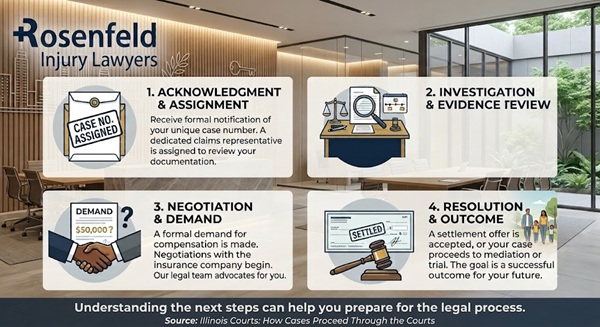
The defendant answers, both sides exchange evidence in discovery, and the case moves toward settlement talks or trial. Most cases settle before trial, often after the key records are in and both sides understand the risks.
Discovery can include written questions, document requests, and depositions. Your lawyer may obtain maintenance logs, surveillance footage, and accident reports. Expect to answer questions under oath about how you fell and what you have treated since. Our page on how long a slip and fall case takes explains why timelines vary.
How Long Do You Have to File in Will County?
Most injury claims must be filed within two years under 735 ILCS 5/13-202. Claims against local governments generally must be filed within one year.
A fall on a Joliet city sidewalk, for example, may involve a local public entity under 745 ILCS 10/8-101. State and federal claims follow different rules. Our page on government property slip and fall claims explains why checking ownership early matters.
What Should You Do Before You File?
Gather evidence now. Courts decide claims on records, not memory, and records are easiest to collect early.
Keep medical records, photos, witness names, and any incident report. Save bills and pay stubs. Write down how the injury changes your days, such as stairs you avoid or shifts you miss, while the details are fresh. Our page on evidence in slip and fall cases lists what to collect.
Will County Injury Claim FAQs:
Not always. You can generally file electronically, though in-person filing is available at the courthouse.
The case may belong in Cook County instead. Venue depends on where the defendant lives or where the events occurred.
Fees vary by case type. The court’s website lists a process for fee waivers.
You can, but defendants and insurers have experienced counsel. A lawyer can help with evidence, deadlines, and negotiation.
At Slip & Fall Injury Lawyers, we help injured people across Illinois understand their options before they file, and we gather the evidence a court will expect. Call 312-800-1534 or contact us online for a free consultation.

Legally Reviewed By
Attorney Jonathan Rosenfeld
The information on this page has been legally reviewed by Attorney Jonathan Rosenfeld, founder and managing partner of Rosenfeld Injury Lawyers LLC, a Chicago-based personal injury law firm. With decades of experience representing individuals injured in slip and fall accidents and other premises liability cases throughout Chicago, Mr. Rosenfeld is dedicated to protecting the rights of injury victims and helping them pursue the maximum compensation available under the law. His extensive legal knowledge and commitment to client advocacy ensure that the information provided is accurate, reliable, and aligned with current legal standards.