



Window Blind Cord Safety: What Parents Need to Know


A toddler grabs a dangling blind cord and loops it around like a necklace. Nothing happens, you catch it in time, and your heart rate takes a few minutes to come back down. That moment is the reason window blind cord safety is a documented, regulated issue, not an overreaction to an ordinary household object.
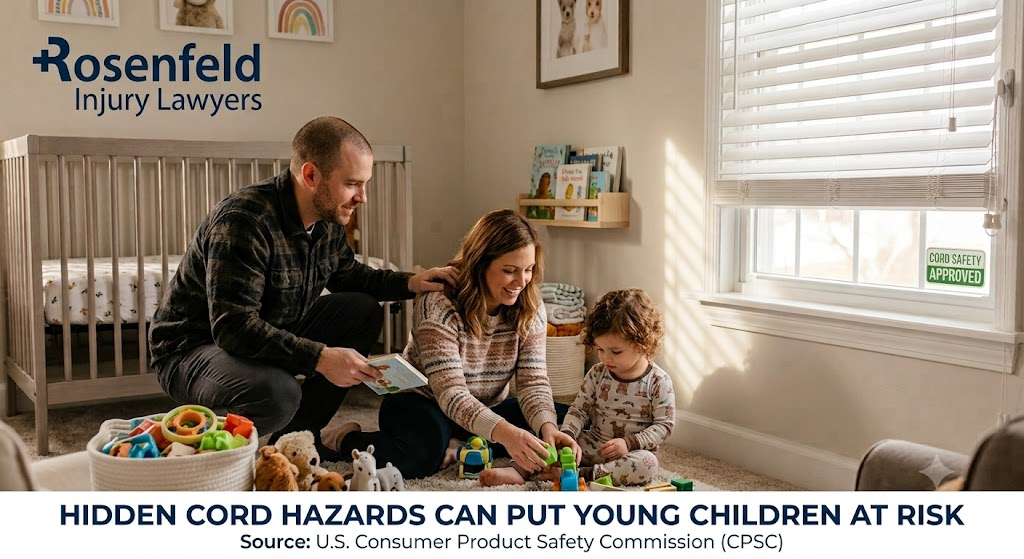
Why a Loose Cord Is More Dangerous Than It Looks
Young children don’t see a cord the way adults do. They see a cape, a necklace, a toy to pull on. A harmless-looking loop hanging against a wall can fit around a small child’s neck in seconds.
What makes this hazard especially dangerous is how quiet it is. There’s no crash, no scream in most cases, just a child who goes still. A parent in the next room, or even sitting a few feet away, may not realize anything is wrong until it’s already too late.
This Isn’t a New or Obscure Risk
Federal regulators have been tracking window cord strangulation since the 1980s. The Consumer Product Safety Commission has called it a particularly insidious hazard, and government data has tied a meaningful share of strangulation deaths among young children directly to window covering cords.
This history matters. Window blind cord safety standards weren’t written in response to a single incident or a theoretical worry. They emerged from decades of documented deaths, warnings, and industry recalls that kept happening even after earlier voluntary standards were already in place.
What Changed in 2018 and 2022, and What Didn’t
In 2018, the window covering industry adopted a voluntary standard requiring new retail blinds and shades to be cordless or to have cords children can’t reach. In 2022, federal regulators went further, approving a rule specifically for custom window coverings with cords longer than eight inches, treating that length as an unreasonable strangulation risk for children eight and under.
Here’s what surprises most parents. Neither rule requires anyone to replace blinds installed before the standards took effect. A blind bought in 2015 can still be hanging in a nursery today, fully legal, fully outdated, and just as hazardous as it always was.
The “Already Installed” Gap Nobody Mentions
Because there’s no retrofit requirement, whether your blinds are safe depends almost entirely on when you bought them, not what’s currently sold in stores. Older homes, hand-me-down furniture, and especially rental units are where this gap shows up most.
A landlord replacing a broken blind with whatever’s cheapest at a hardware store isn’t necessarily breaking any law, even if that replacement is a corded model identical to ones already recalled years earlier. This is exactly the kind of detail people miss until it matters.
What Actually Works If You Can’t Replace Your Blinds Today
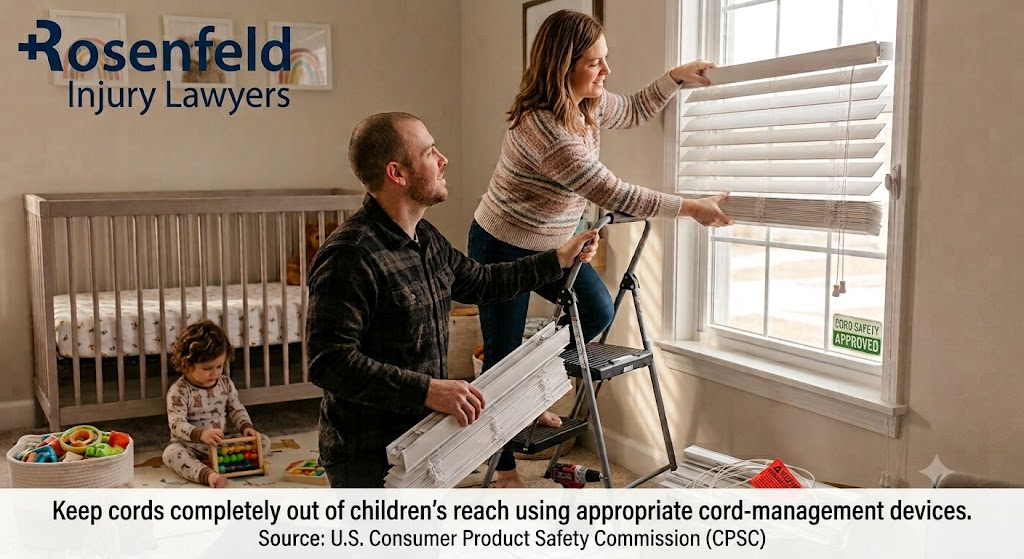
Full replacement with cordless blinds is the only option that eliminates the hazard. When that’s not possible right away, a few specific steps make a real difference. Cord-shortening devices or wall-mounted cord wraps keep loose cords out of reach.
Cord stops positioned close to the headrail limit how far a cord can be pulled down. Keeping cribs, beds, and climbable furniture away from any window with an accessible cord removes the easiest path a child has to reach it.
When a Landlord or Daycare Could Be Held Responsible
This becomes a liability question, not just a safety one, when a property owner knew about a dangerous cord and did nothing. A landlord who is notified about a hazard and ignores it, or one who keeps installing outdated corded blinds in units they know house young children, can bear responsibility if a child gets hurt.
The same principle applies to daycare facilities and any property where children are foreseeably present. Window blind cord safety failures in those settings follow ordinary premises liability rules: did the property owner know, or should they have known, and did they fail to act?
What This Means If This Already Happened
If a blind cord has already injured a child, a few details matter. The blind’s age, who installed it, and whether anyone raised the hazard can all shape what happened and why.
At Slip & Fall Injury Lawyers, we look closely at those details when a property owner’s choices may have contributed to a preventable injury.
Frequently Asked Questions:
Not entirely. Current standards require new retail products to be cordless or have inaccessible cords, but there’s no blanket nationwide ban on every corded product.
Generally, no, though it’s strongly recommended, especially in units with young children.
Shorten or secure cords out of reach, add cord stops near the headrail, and move furniture away from affected windows.
Possibly, if they knew or should have known about the hazard and failed to take reasonable steps to fix it.
Very fast, and often silently, which is exactly why prevention matters more than reacting after the fact.
If your child was hurt by a window covering cord in a rental unit or other property, Slip & Fall Injury Lawyers can help you understand what happened and whether the property owner bears responsibility. Contact us to talk through your situation.

Legally Reviewed By
Attorney Jonathan Rosenfeld
The information on this page has been legally reviewed by Attorney Jonathan Rosenfeld, founder and managing partner of Rosenfeld Injury Lawyers LLC, a Chicago-based personal injury law firm. With decades of experience representing individuals injured in slip and fall accidents and other premises liability cases throughout Chicago, Mr. Rosenfeld is dedicated to protecting the rights of injury victims and helping them pursue the maximum compensation available under the law. His extensive legal knowledge and commitment to client advocacy ensure that the information provided is accurate, reliable, and aligned with current legal standards.