
Experienced Attorneys. Proven Results.
Hire the Team That Knows How To Win and Maximize the Value of Your Case



A slip and fall at Starbucks is rarely about the coffee. It is about who runs the store you fell in, because that decides who you claim against.
Injured in a fall at a Chicago Starbucks? Store cameras and cleaning logs usually show exactly what happened, and both are kept only for a limited time. Call 312-800-1534.
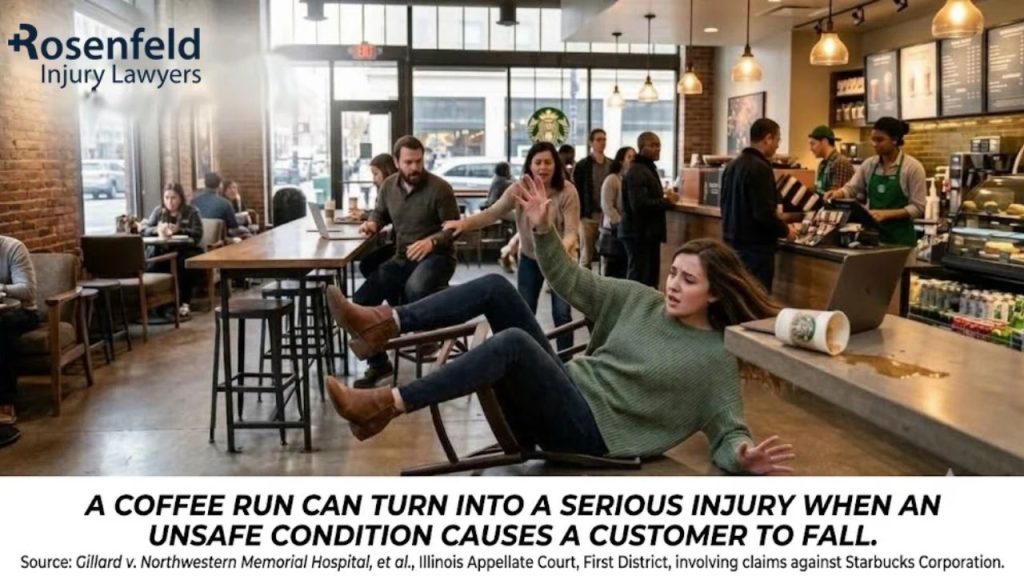
After a slip and fall at Starbucks, check the setting first.
If you walked through another business’s doors to reach the counter, it is probably licensed. Staff can tell you who employs them. For a different ownership model, see McDonald’s slip and fall settlements.
Different defendants carry different insurance, records and claims handlers. A Starbucks injury claim at a standalone store goes to the company. A coffee shop slip and fall at a grocery counter may run through the grocery chain.
Illinois owners must use reasonable care under the Premises Liability Act (740 ILCS 130). Cafe premises liability follows whoever controlled the floor. A claim against the wrong entity wastes time you may not have. See restaurant slip and fall settlements and grocery store slip and fall claims.
A coffee shop’s core product is a liquid that customers carry across the floor. Cups sweat in summer and are handed over at a crowded counter. Water on the floor is a predictable result of the business, not an accident.
That matters for constructive notice: the store knew, or should have known, about the hazard. A spilled drink hazard that sat for several minutes is harder to excuse. See wet floor slip and fall claims.
Winter slush follows customers through high-footfall Loop doors all day. A store with thin entryway matting, or none, is a store with a wet floor.
We ask whether mats were down, whether staff mopped, and whether a wet floor sign was out. See snow and ice slip and fall claims.
The mobile order handoff area concentrates people, drinks and movement in a small space. Customers reach across each other, and spills are more frequent and easier to miss in the crush.
Photograph the counter layout and where you stood.
Restrooms and condiment bars create common spill points. Water, coffee, sugar syrup, milk, ice, and drink lids can end up on the floor as customers move through these areas.
Staff should check high-traffic areas regularly and clean spills when they find them. Cleaning logs, inspection records, and camera footage may help show whether the store knew, or should have known, about a dangerous condition.
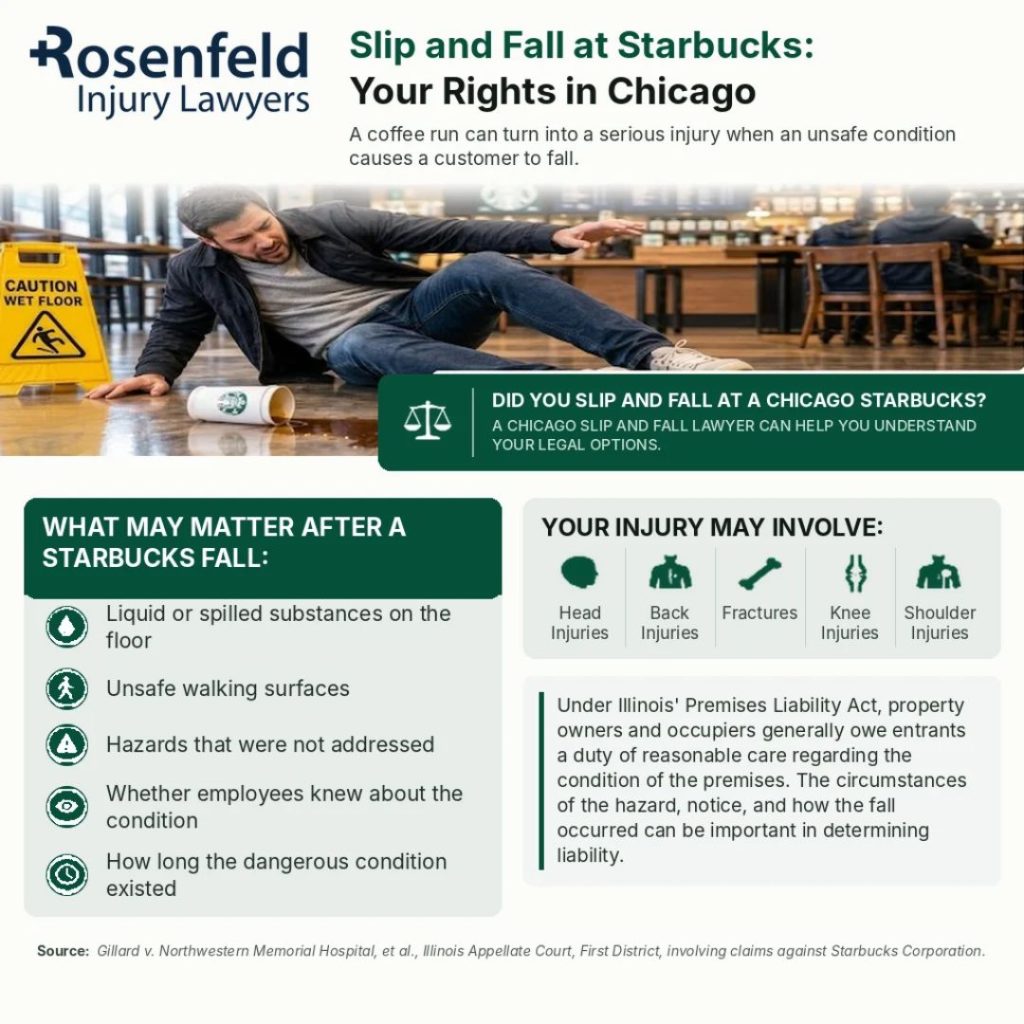
Large chains keep documented cleaning and inspection routines, and those records can decide notice. Surveillance footage retention is limited, so the video may be overwritten before you call anyone.
Each cleaning and inspection log can show whether anyone checked the floor. We send a preservation request to the right entity quickly.
A preservation request needs to reach the right entity before the footage cycles. Call 312-800-1534 for a free review of what happened.
There is no fixed value. It depends on medical bills, lost income, pain and suffering, and each side’s share of fault. We fight for fair compensation.
An injured person can still recover damages as long as they are not more than 50% at fault, but the compensation is reduced by their share of fault (735 ILCS 5/2-1116). Most personal injury claims in Illinois must be filed within two years of the accident (735 ILCS 5/13-202). Cases are usually filed in the Circuit Court of Cook County.
We will establish whether the store is company-operated or licensed, request the footage and cleaning records, and tell you if a claim is worth bringing. Free consultation, no fee unless we win. Call 312-800-1534.
Talk to us about your slip and fall at Starbucks and request a free case review.
Yes, if the store failed to use reasonable care and you were hurt. The right defendant depends on whether the store is company-operated or licensed. A claim usually turns on whether staff knew, or should have known, about the hazard and failed to fix it.
Look at the location. A standalone store with its own entrance is generally company-operated, while a counter inside a grocery store, hotel, university or airport is usually licensed to the host business. Ask staff who employs them, and keep your receipt.
It can. The store must use reasonable care, including checking the floor. Another customer’s spill matters less than how long it sat there and whether anyone looked. Cleaning logs and camera footage can show whether staff should have noticed it.
Yes, usually through a formal request rather than at the counter, and footage is kept for a limited time. A written preservation request sent to the correct entity, whether Starbucks or a licensed host business, can help protect it. A lawyer can send that request and ask for cleaning records.
Not before you speak to a lawyer. Before a lawsuit is filed, a claimant is under no obligation to give the insurer or claims administrator a recorded statement, and doing so unrepresented frequently damages the claim. A third-party claims administrator often handles these claims.