Experienced Attorneys. Proven Results.
Hire the Team That Knows How To Win and Maximize the Value of Your Case



Falling on a train platform is not like falling in a grocery store. A train station slip and fall lawyer in Chicago can explain why the legal duty a transit operator may owe passengers is higher than many people assume. The circumstances of your fall still determine what duty applies and whether it was breached.
Hurt on a CTA or Metra platform? The deadline to bring a transit claim is shorter than for an ordinary fall, and station footage may be overwritten within days. Call 312-800-1534 for a free case review.
Commuters may assume they have two years to file or that a transit fall is a weak case because “the CTA is the government.” Both assumptions can be misleading. This page explains what actually applies.
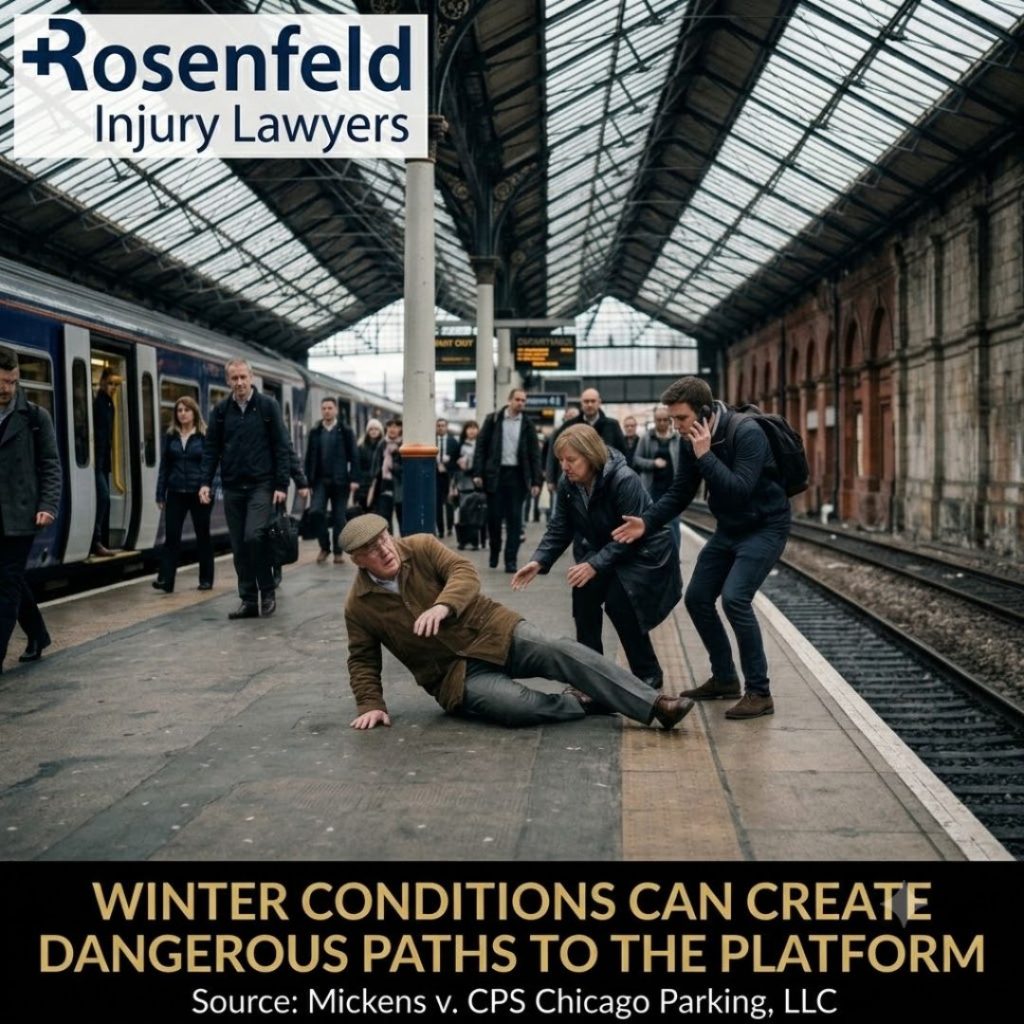
Every part of a station carries its own fall risk, and Chicago’s mix of elevated, underground, and open-air platforms adds conditions you will not find in a typical premises claim. Common locations for a train station fall claim include:
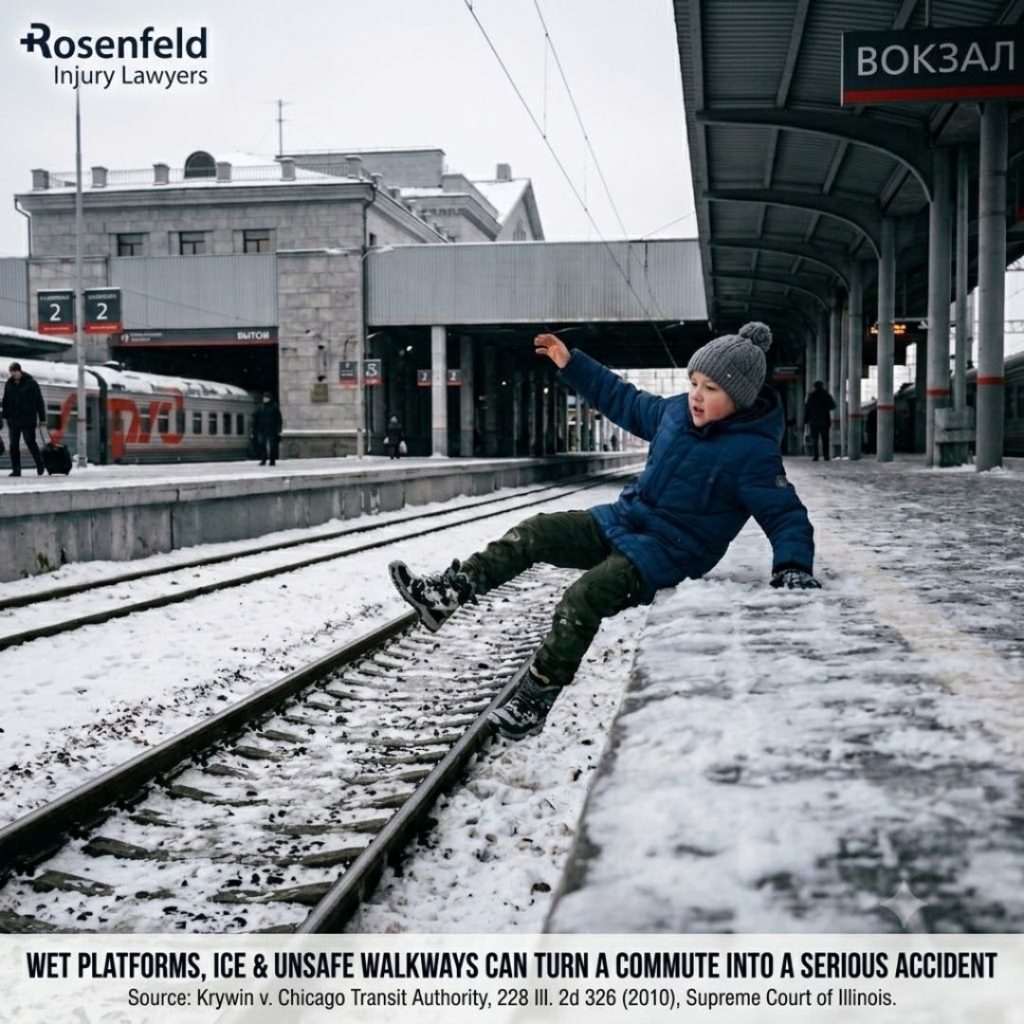
Open-air platforms along the Loop’s elevated tracks see freeze-thaw cycles that create black ice, while underground stops like Clark/Lake deal with tracked-in water and condensation. A turnstile or fare gate defect, a jammed exit, or a broken handrail can each support a claim if the station operator knew or should have known about the hazard.
Illinois common carriers, including public transit operators, owe passengers the highest degree of care consistent with the practical operation of their business. The Illinois Supreme Court recognized this heightened duty in Rotheli v. Chicago Transit Authority. The duty can extend beyond the ride itself, including when a passenger is boarding, leaving a train, or reaching a place of safety.
For a CTA slip and fall on a platform, staircase, or escalator, the applicable duty may therefore differ from the ordinary reasonable-care standard used in many premises liability claims. Whether the operator breached that duty depends on the specific hazard, circumstances of the fall, and available evidence.
This is the single most important fact on this page. Illinois generally gives injury victims two years to file a lawsuit, a rule explained in more detail on our page covering the Illinois statute of limitations. Claims against the CTA and Metra do not follow that timeline.
The CTA is governed by its own one-year filing deadline. Metra and other Regional Transportation Authority service boards are subject to a similar one-year limitation. These shortened windows sit alongside the broader notice requirement that already applies to Illinois government property claims, so a fall on transit property can trigger both a compressed filing deadline and a strict notice requirement before a lawsuit is ever filed. Waiting to “see how the injury heals” before calling a lawyer is a common and costly mistake, especially in transit cases.
Three hazards account for a large share of the transit fall claims we review, and each raises a slightly different legal question.
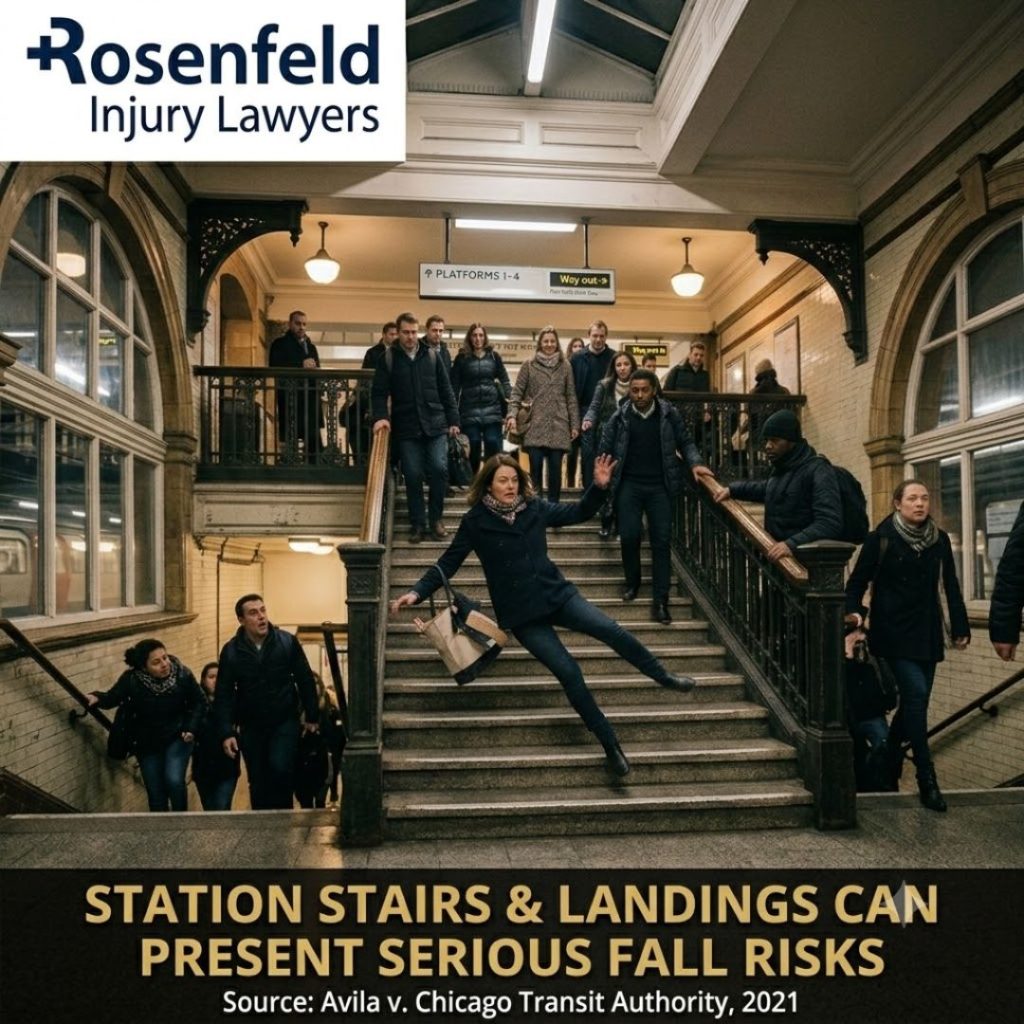
A stairway falls claim at an L station often turns on maintenance records and inspection logs, while an escalator accident claim depends on service and repair history for that specific unit. Winter falls raise their own issues, and our page on snow and ice slip and fall claims covers how Illinois treats natural versus unnatural accumulations, a distinction that matters on open platforms exposed to the elements.
Not every downtown station has the same defendant, which can affect how a claim is built. CTA stops such as Clark/Lake are operated by the CTA. Union Station is owned and operated by Amtrak, while Ogilvie Transportation Center has areas operated by Metra and track and platform areas maintained by Union Pacific. A fall at each location may involve different notice requirements, filing deadlines, and maintenance records.
Identifying the correct owner and operator is an early step in a Metra platform injury case. Railroad employees injured while working generally pursue claims under the Federal Employers’ Liability Act, not premises liability, under which different federal rules apply.
Station cameras do not keep footage indefinitely. If you fell on a platform or in a station, a preservation request needs to go out now.
Transit stations run on recycling surveillance systems, and footage of your fall can be gone within days or weeks if nobody asks the operator to save it. A spoliation letter is a formal written request telling the station operator to preserve video, maintenance logs, and incident reports before routine deletion erases them. Once that footage is gone, it is usually gone permanently, along with one of the clearest pieces of evidence in a public transportation injury case. This is the one step that genuinely cannot wait until next week.
Every transit injury lawyer Chicago commuters call will tell you the same honest answer: value depends on the injury, medical treatment, lost income, and evidence showing the station operator fell short of its duty. A sprained wrist and a hip fracture from an icy platform are not valued equally. No attorney can responsibly quote a number before reviewing your medical records and fall circumstances.
We can start by securing a preservation request, requesting maintenance and inspection records, identifying the correct station owner and operator, and calculating your filing deadline. A free case review can help you understand where your claim stands.
Talk to a Chicago transit injury lawyer before the deadline passes. We explain which authority may be responsible, the applicable filing window, and what your claim involves. The consultation is free, and there is no fee unless we win. Call 312-800-1534. We also address notice requirements, evidence preservation, and procedures in the Cook County Circuit Court.
Yes, but CTA claims follow a shorter deadline and different notice steps than a private property fall, so early legal review matters most here.
Both generally fall under a one-year filing deadline, far shorter than the standard two-year window for an ordinary premises liability claim.
Responsibility depends on ownership and operating agreements, since Union Station, CTA stops, and Metra platforms are not all run by the same entity.
Transit surveillance footage may be overwritten as part of a routine retention schedule, sometimes within days or weeks. A preservation request can help prevent the deletion of potentially relevant footage.
Not necessarily. Rushing for a train does not automatically eliminate a claim, but the circumstances of the fall and any evidence of comparative fault can still matter.
 Legally Reviewed By
Attorney Jonathan Rosenfeld
The information on this page has been legally reviewed by Attorney Jonathan Rosenfeld, founder and managing partner of Rosenfeld Injury Lawyers LLC, a Chicago-based personal injury law firm. With decades of experience representing individuals injured in slip and fall accidents and other premises liability cases throughout Chicago, Mr. Rosenfeld is dedicated to protecting the rights of injury victims and helping them pursue the maximum compensation available under the law. His extensive legal knowledge and commitment to client advocacy ensure that the information provided is accurate, reliable, and aligned with current legal standards.