
Experienced Attorneys. Proven Results.
Hire the Team That Knows How To Win and Maximize the Value of Your Case



When you slip and fall on an icy sidewalk along Michigan Avenue or trip over uneven flooring inside a Loop coffee shop, it’s more than a simple mishap; it could be a valid legal claim under Illinois premises liability law.
In Chicago, property owners and managers from bustling retail stores in the Magnificent Mile district to restaurants lining Navy Pier are legally obligated to maintain safe premises for patrons and visitors. Yet each year, countless Chicagoans sustain preventable injuries caused by hazardous conditions like wet floors, defective staircases, and improperly cleared sidewalks.
If you or someone you love has suffered injuries due to negligence or dangerous property conditions in Chicago, experienced guidance from seasoned attorneys is crucial. At Slip & Fall Injury Lawyers, we focus on premises liability cases understand the nuances of Illinois law, and have a proven track record navigating Cook County’s civil courts.
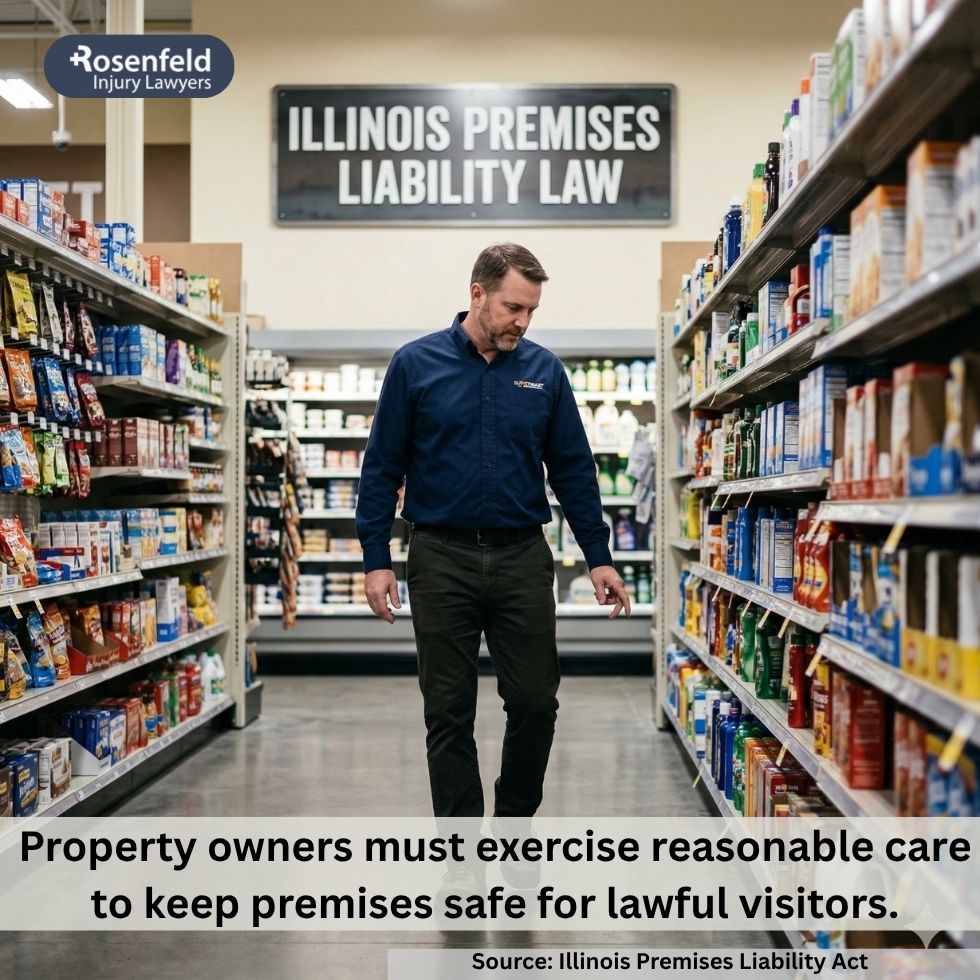
The Illinois Premises Liability Act (Illinois Compiled Statutes 740 ILCS 130/) is the cornerstone of state law governing injuries that occur on someone else’s property. It establishes that property owners and occupiers have a duty of reasonable care toward lawful visitors. This means actively maintaining safe conditions and addressing hazards as soon as they are known or should have been known through reasonable inspection.
The act makes clear that owners can be held liable if a hazardous situation causes injury and the danger was foreseeable. In Chicago, this could include a grocery store on State Street failing to mop up a spill for hours or an apartment complex in Uptown leaving icy walkways untreated after a storm. The law applies to both private and commercial properties, as well as public areas.
The statute also rejects broad immunity. A simple “Enter at your own risk” sign rarely eliminates responsibility. Owners must provide adequate warnings and take corrective action. This framework is central to any premises liability claim in Illinois.
It’s worth knowing that Illinois statute databases sometimes display two versions of 740 ILCS 130/2 side by side, one reflecting changes made by Public Act 89-7, and one without them. That’s because P.A. 89-7 was found unconstitutional by the Illinois Supreme Court in Best v. Taylor Machine Works (1997). The version of the law currently in force is the one without the P.A. 89-7 changes.
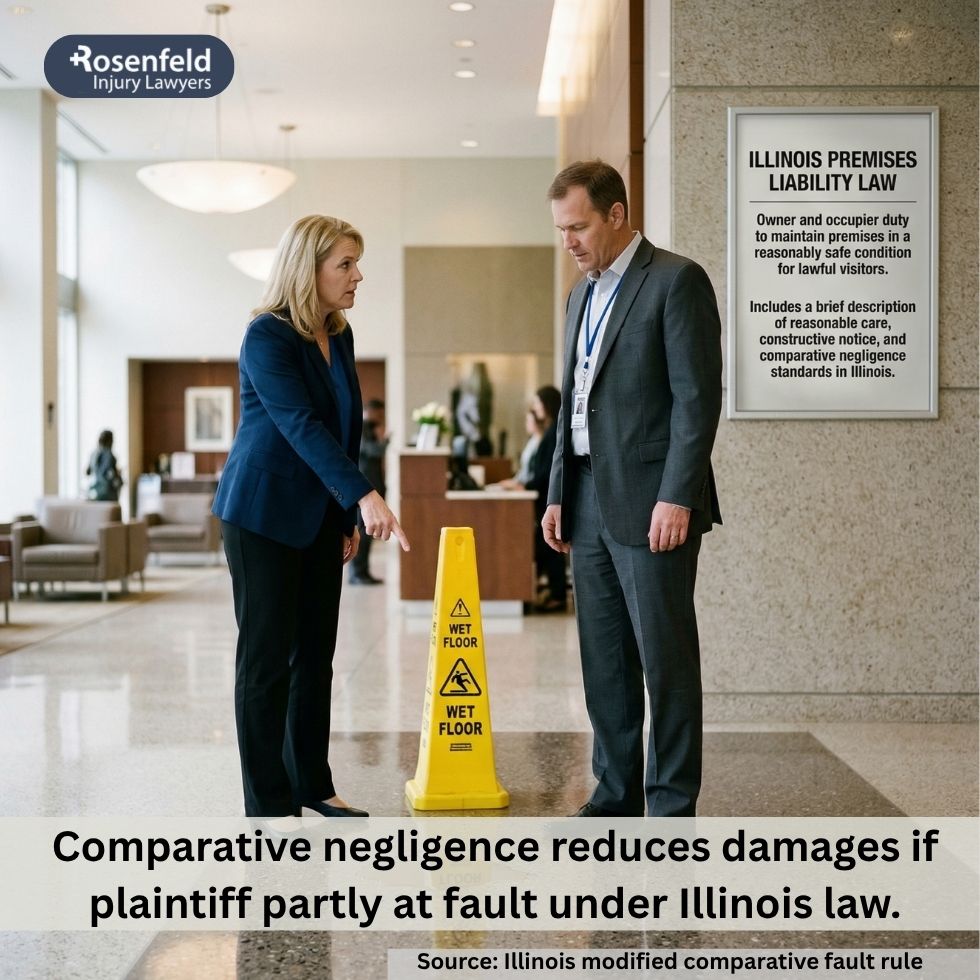
While the act sets the legal foundation, there are several core principles to establish a valid premises liability claim. First is the concept of duty: property owners owe lawful visitors a responsibility to keep the premises safe. Second is notice: plaintiffs must show the owner had actual or constructive knowledge of the hazard (what courts call “constructive notice”—meaning the hazard existed long enough that a reasonably careful owner should have discovered it).
In practice, Chicago courts often examine whether the hazard was “open and obvious”—a legal doctrine, not just a plain description. For example, if a cracked sidewalk in front of a Lincoln Park coffee shop is clearly visible, the property owner might argue that visitors should have avoided it. Yet, exceptions exist, like when the owner could anticipate people would be distracted or compelled to encounter the hazard.
Illinois courts recognize two main exceptions to the open and obvious doctrine: the distraction exception, which applies when the owner should have anticipated a visitor’s attention would be diverted from the hazard, and the deliberate encounter exception, which applies when the visitor had a legitimate reason to proceed despite seeing the danger, such as it being the only available path. Naming these exceptions matters because they’re often the deciding factor in whether a claim survives. These principles apply equally to retail spaces, rental properties, and public venues. Understanding them is critical for both injury victims and property owners defending against a claim.
To be held liable under Illinois law, a property owner’s conduct must meet certain criteria. The injured party generally must prove:
For instance, if a restaurant in River North ignores repeated complaints about loose carpeting that later trips a customer, liability is likely. On the other hand, if the hazard developed moments before the accident with no reasonable chance for the owner to address it, liability may not attach.
Illinois law also considers the status of the visitor; invitee, licensee, or trespasser. Though the Premises Liability Act unified many of the duties owed to lawful visitors. Specifically, 740 ILCS 130/2 abolished the old distinction between invitee and licensee duties for lawful entrants, while 740 ILCS 130/3 leaves the pre-existing law on trespassers in place, including special protections for child trespassers.
Many premises liability incidents in Chicago stem from everyday situations where a property hazard was ignored. Slip-and-fall accidents are common, especially in winter when snow and ice accumulate outside businesses along Michigan Avenue or in neighborhood shopping plazas.
Other frequent scenarios include:
Each of these examples can form the basis of an Illinois premises liability claim if the elements of notice and negligence are met.
A dangerous condition is any property defect or hazard that poses an unreasonable risk of harm to lawful visitors. Illinois courts interpret this broadly; it can be a physical defect, an environmental hazard, or even a combination of factors that create a safety risk.
Examples in Chicago might include a pothole in a busy parking lot, a slick subway platform at a CTA station, or malfunctioning escalators in a downtown shopping center. The key factor is whether a reasonable property owner would have identified and corrected the hazard before it caused harm.
Owners and occupiers of Illinois premises have a set of ongoing duties under the law. These include:
In Chicago, compliance with municipal ordinances such as snow removal rules outlined in the Chicago Municipal Code 10-8-180 is part of this duty. Failure to meet these obligations can strengthen a claimant’s argument that the owner breached their duty of care.
Importantly, duties can vary depending on the type of property. Commercial landlords may have broader responsibilities than residential owners, and public entities may have statutory immunities that limit certain claims.
In slip and fall incidents and other property‑related accidents, victims can sustain injuries caused by a wide range of hazards. These may include fractured bones, concussions, spinal cord injuries, and soft‑tissue damage. The cause often traces back to known hazards such as uneven flooring, inadequate lighting, or slick surfaces.
The damages available in premises liability claims in Illinois go beyond immediate medical expenses. Victims may also seek compensation for lost wages, future treatment costs, and the impact on quality of life. In certain cases, especially where the conduct was reckless or intentional, courts may award punitive damages to punish wrongdoing and deter similar acts, though punitive damages are rare in premises liability cases and generally require a judge’s permission to even plead them.
Claims often involve various parties, from commercial landlords to municipal entities, depending on who had control over the property and what the property owner knew about the hazard. When supported by strong evidence, an injured person can recover compensation for both economic losses and non‑economic harms such as pain and suffering. These awards are designed to restore the victim, as much as possible, to their position before the accident occurred.
Wondering what your specific claim might be worth? Our settlement calculator can give you a starting estimate based on similar Illinois cases.
If injured on someone else’s property in Chicago, taking the right steps immediately can significantly impact the success of a premises liability claim:
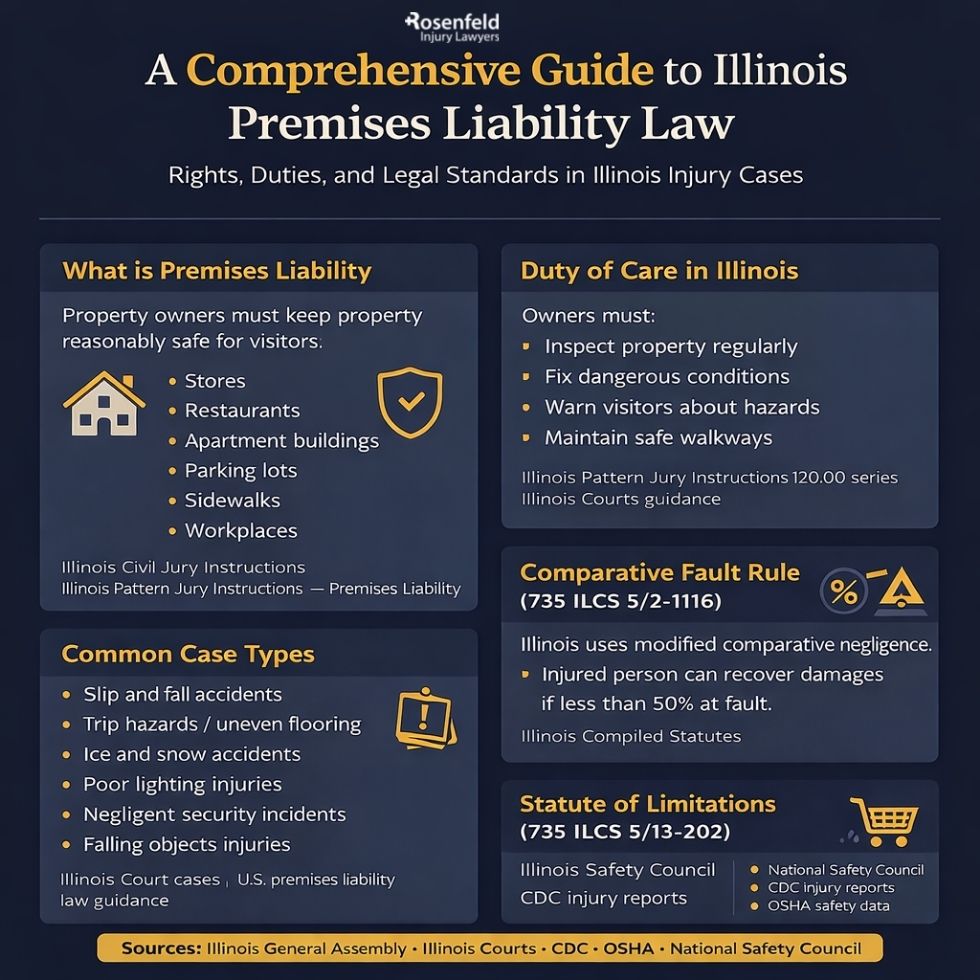
The statute of limitations in Illinois (735 ILCS 5/13-202) generally allows two years to file a personal injury lawsuit. Timely action is key. Consulting with an attorney familiar with local courts, such as the Circuit Court of Cook County, can ensure critical evidence is preserved and deadlines are met.
Claims against local public entities work differently. Under the Illinois Tort Immunity Act (745 ILCS 10), you generally have only one year, not two, to file, and there may be earlier notice requirements as well. Many people assume the standard two-year window applies to every claim, and that assumption can cost them their case.
Navigating premises liability law without professional help can be challenging. The legal framework demands proof of duty, notice, and causation, each supported by credible evidence. In Chicago, these cases often involve both state statutes and local ordinances, requiring careful legal interpretation.
Whether the issue is a slip-and-fall in a store, a trip hazard in a public park, or inadequate security in a residential building, understanding your rights under the Illinois Premises Liability Act is the first step toward recovery. Property owners who fail to uphold their duties may be held liable for the harm caused, allowing injured parties to seek compensation for medical bills, lost income, and other damages.
Local legal counsel can make a significant difference, guiding claimants through the complexities of liability cases and ensuring that Chicago-specific legal standards are met. If you’d like to talk through what happened, our Chicago premises liability lawyers can walk you through your options at no cost.
Premises liability is the legal doctrine that holds property owners responsible when a lawful visitor is injured because of a hazard the owner knew about or should have known about and failed to fix or warn about. Premises liability insurance is a separate thing: a policy that helps pay for the owner’s legal costs and any settlement or judgment if they’re found liable.
You generally have two years from the injury date to file, though claims against local public entities may be limited to just one year under the Illinois Tort Immunity Act, sometimes with earlier notice requirements too. Proving the four elements of negligence with evidence—like proof the property wasn’t properly maintained or the property owner knew of potential dangers is essential.
No. Premises liability broadly holds property owners accountable for hazards affecting lawful visitors, including invited guests. Landlord liability is specific to rental properties. In both, proving the four elements is key, and both can apply to landlords, commercial owners, or government property operators.
If you’ve been injured due to unsafe conditions on someone else’s property, our Chicago premises liability attorneys are ready to help. We handle every case on a contingency fee basis—meaning you pay no attorney’s fees unless we recover compensation for you. Contact Slip & Fall Injury Lawyers for a free consultation today. Let us protect your rights and pursue the justice you deserve under premises liability law.

Legally Reviewed By
Attorney Jonathan Rosenfeld
The information on this page has been legally reviewed by Attorney Jonathan Rosenfeld, founder and managing partner of Rosenfeld Injury Lawyers LLC, a Chicago-based personal injury law firm. With decades of experience representing individuals injured in slip and fall accidents and other premises liability cases throughout Chicago, Mr. Rosenfeld is dedicated to protecting the rights of injury victims and helping them pursue the maximum compensation available under the law. His extensive legal knowledge and commitment to client advocacy ensure that the information provided is accurate, reliable, and aligned with current legal standards.