
Experienced Attorneys. Proven Results.
Hire the Team That Knows How To Win and Maximize the Value of Your Case



If you tore a rotator cuff, dislocated your shoulder, or damaged your labrum after a fall, you are likely wondering what your shoulder injury slip and fall settlement could be worth. The answer depends on more than just the diagnosis. Which arm you injured, whether the damage is permanent, and how the fall happened all shape the final number.
Injured your shoulder in a fall? What your claim is worth depends heavily on which arm and whether the damage is permanent. Free case review: 312-800-1534.
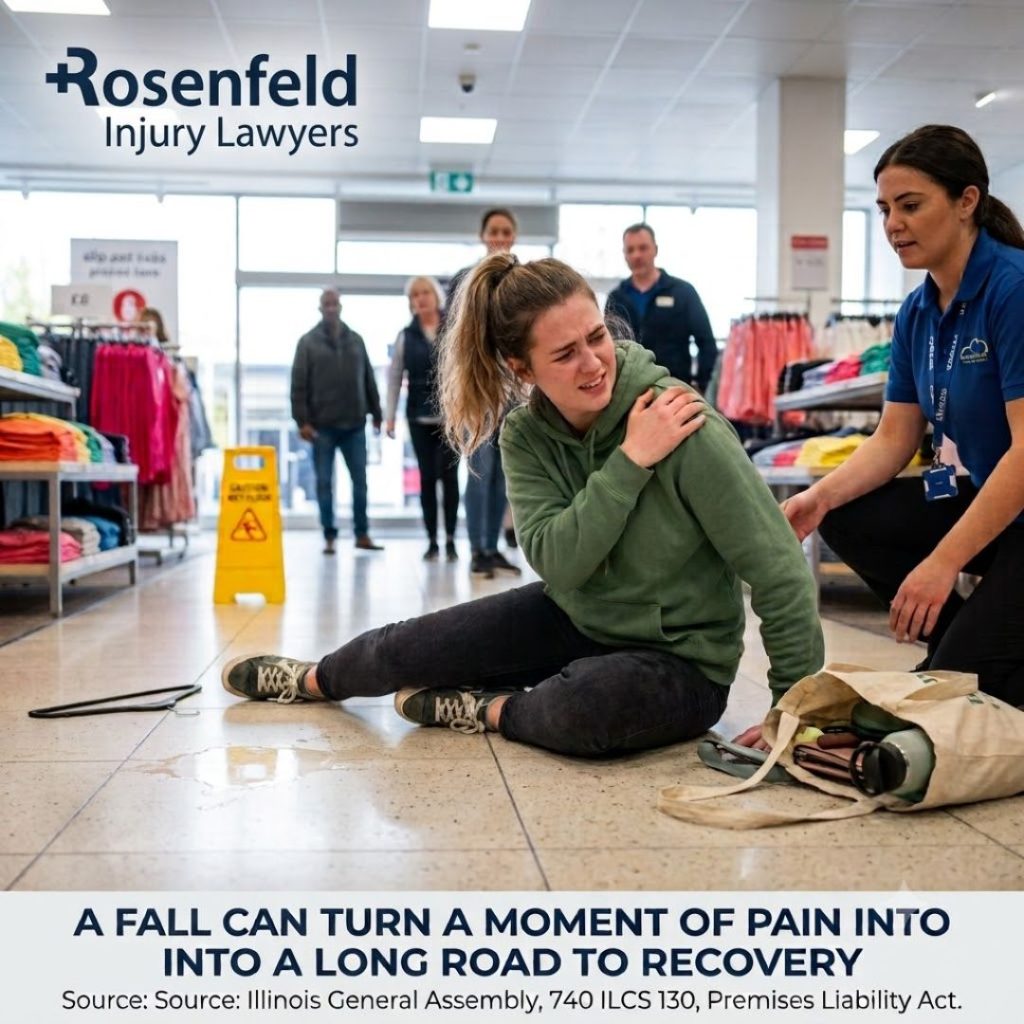
Shoulder injuries can range from soft tissue strains that heal in weeks to full-thickness rotator cuff tears that affect a career. This is why every shoulder injury slip and fall settlement differs. According to Law.com‘s VerdictSearch, Chicago slip and fall recoveries can reach six figures, while shoulder claim value often depends on whether surgery was required and whether lasting impairment remains.
Our slip and fall settlement calculator walks through how medical bills, lost income, and injury severity combine to shape a range, and it is a useful starting point before you speak with an attorney about the specifics of your shoulder injury.
Every shoulder diagnosis carries a different treatment path, and the treatment path drives value. The table below reflects general patterns seen in Illinois premises liability claims.
| Injury | Typical Treatment | Typical Range |
| Soft tissue strain or sprain | Rest, physical therapy | Lower end |
| Partial rotator cuff tear | Conservative care, injections | Low to mid range |
| Full-thickness rotator cuff tear | Arthroscopic repair | Mid range |
| Labral tear with repair | Arthroscopic surgery, rehab | Mid to upper range |
| Fracture or dislocation with hardware | Surgical fixation | Upper range |
| Permanent impairment with lost range of motion | Ongoing care, possible replacement | Highest range |
These bands are illustrative rather than fixed figures. Cases that involve settlements with surgery generally resolve for more than settlements without surgery, but liability disputes, insurance limits, and comparative fault findings can move any single case up or down.
An injury to your working arm can affect your job, independence, and daily activities differently than an injury to your other side. If you cannot lift, reach overhead, or carry with your dominant shoulder, those limitations may affect your earning capacity and quality of life. This distinction can be important when evaluating a shoulder injury slip and fall settlement involving the working arm.
One example from our firm illustrates this difference. A 65-year-old woman slipped on ice in a Calumet Park parking lot and caught herself with an outstretched arm, tearing the rotator cuff in her dominant shoulder. The injury required a full shoulder replacement, and the case settled for $52,500 against the property manager and municipality involved.
If you are over 40, an insurer may argue that your rotator cuff tear resulted from age-related degeneration rather than your fall. MRI findings, treatment records, and the circumstances of the accident can help distinguish a traumatic tear from pre-existing changes. Even when some degeneration exists, a fall that aggravates or worsens an existing condition may still support a claim under Illinois law.
A 53-year-old service technician slipped on oil and grabbed a conveyor belt to break his fall, tearing his supraspinatus tendon. He required surgery and physical therapy. The case resulted in a $635,955 verdict despite an argument that a later re-injury was unrelated to the original accident.
Shoulder injuries can affect structures beyond the rotator cuff. A labral or SLAP tear can damage the cartilage that helps stabilize the joint and may require arthroscopic repair. A dislocation can stretch or tear surrounding ligaments, while an acromioclavicular (AC) joint injury may cause persistent pain and difficulty with overhead movement.
In one case, a construction worker tripped on an anchor bolt and slipped on snow at a downtown site, developing shoulder impingement that required arthroscopic surgery. Although he was cleared to work, he could no longer perform fieldwork and moved to office duties. His claim settled for $260,000 based on medical costs and lasting career limitations.
Some shoulder injuries never fully resolve. Limited range of motion, chronic pain with overhead reaching, or the need for future joint replacement may indicate permanent impairment. Under the Illinois Pattern Jury Instructions, loss of normal life is a distinct category of damages separate from pain and suffering. It considers how a lasting injury affects daily activities, independence, and the ability to enjoy normal life.
Chicago winters can contribute to falls on icy entryways and stairs, where people may instinctively reach out to catch themselves. CTA platform and stairway falls can cause similar injuries. If your shoulder does not return to its prior function after treatment, lasting limitations may affect the value of your claim.
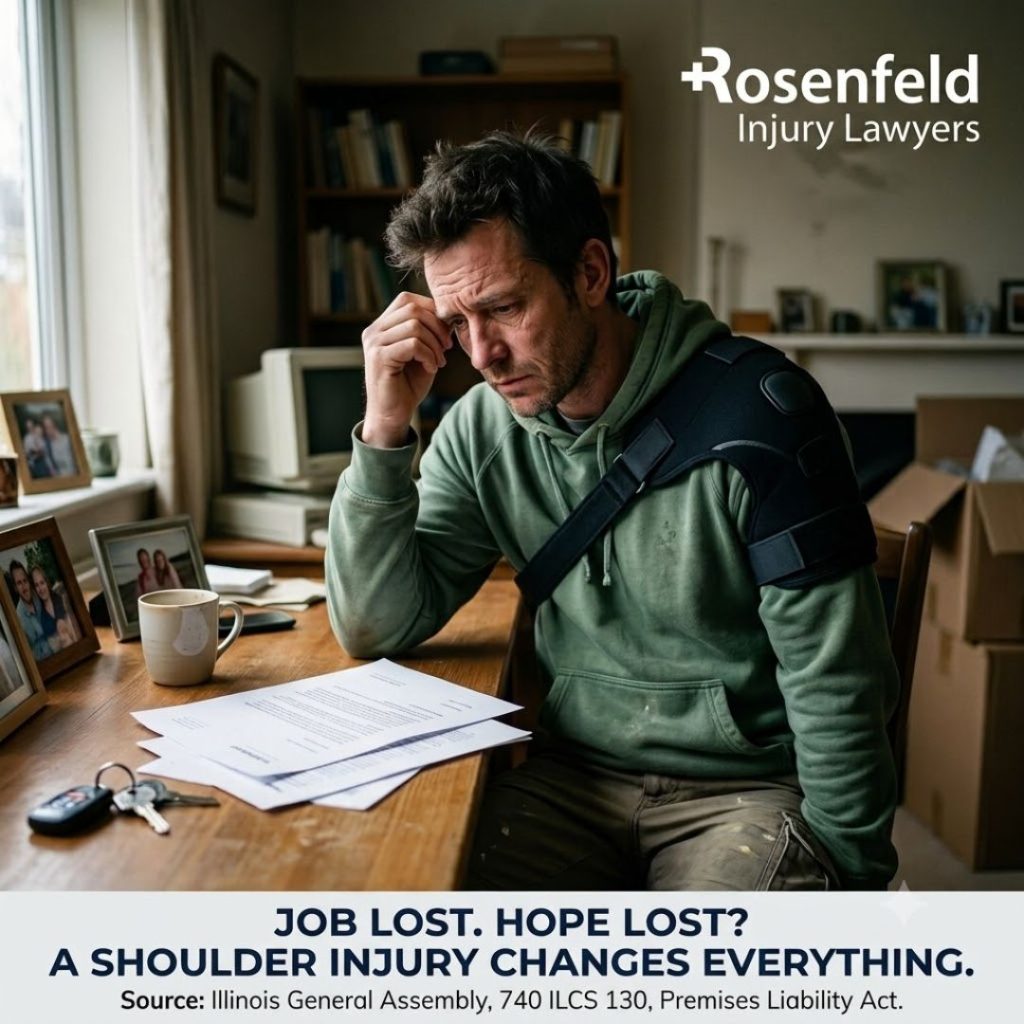
Overhead work is often impossible with a damaged shoulder. For workers in trades, warehousing, and construction, a torn rotator cuff or labrum can mean the end of a career rather than a temporary setback. If your injury limits the work you can perform going forward, you may be entitled to compensation for lost wages in a slip and fall claim as well as disability compensation tied to your reduced earning capacity. Shoulder damage is one of several joint injuries that can carry this kind of long-term financial impact, and it deserves its own careful documentation rather than a rough estimate.
Illinois law may allow recovery if you were no more than 50% at fault under 735 ILCS 5/2-1116. Most property injury claims have a two-year deadline under 735 ILCS 5/13-202, while government claims may have shorter notice periods. We will review your imaging, treatment, and work limitations and explain your options. Free consultation, no fee unless we win. Call 312-800-1534.
It depends on the diagnosis, whether surgery was needed, and whether the injury is permanent. A free case review can give you a clearer picture based on your specific facts.
Yes. Damage to your dominant, or working, arm often affects daily function and earning ability more than the same injury to your non-dominant side, which can influence claim value.
Insurers sometimes argue a tear was pre-existing rather than caused by the fall. Medical imaging can often show whether the damage is acute, and aggravation of a prior condition is still compensable.
Cases requiring surgery, such as arthroscopic repair, generally involve higher medical costs and longer recovery times, both of which can increase the overall settlement value compared to conservative treatment.
Permanent limitations, including reduced range of motion, can support a claim for loss of normal life in addition to standard medical and wage damages. An attorney can help document the long-term impact.
 Legally Reviewed By
Attorney Jonathan Rosenfeld
The information on this page has been legally reviewed by Attorney Jonathan Rosenfeld, founder and managing partner of Rosenfeld Injury Lawyers LLC, a Chicago-based personal injury law firm. With decades of experience representing individuals injured in slip and fall accidents and other premises liability cases throughout Chicago, Mr. Rosenfeld is dedicated to protecting the rights of injury victims and helping them pursue the maximum compensation available under the law. His extensive legal knowledge and commitment to client advocacy ensure that the information provided is accurate, reliable, and aligned with current legal standards.