
Experienced Attorneys. Proven Results.
Hire the Team That Knows How To Win and Maximize the Value of Your Case



A bank slip and fall lawyer in Chicago starts with one question: is the camera footage still there? Branches record lobbies, vestibules, ATMs and lots, and the video is often overwritten within weeks.
Injured at a bank branch or ATM? Branch cameras cover almost everything, and the footage is usually overwritten within weeks. Call 312-800-1534.
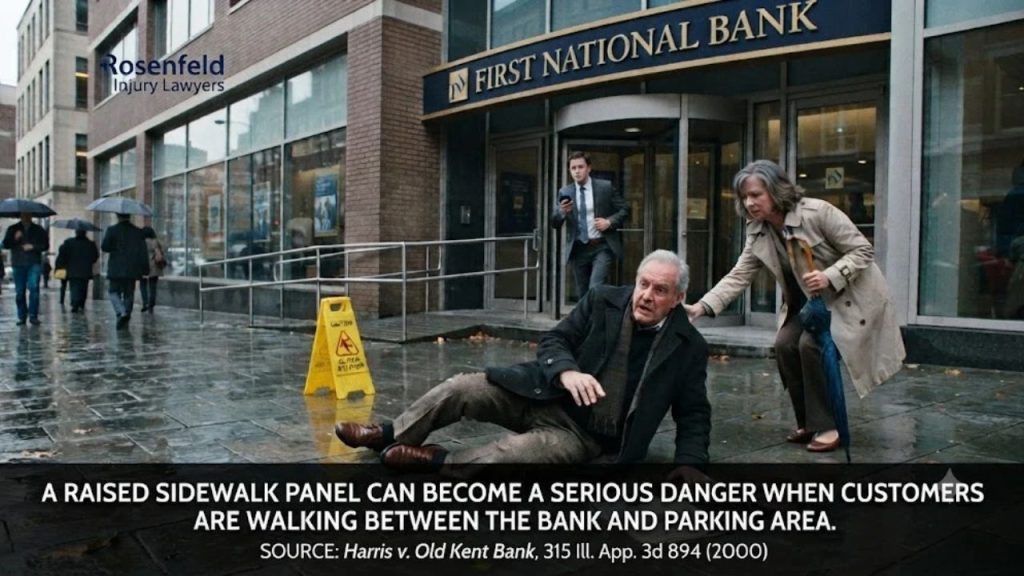
A bank slip and fall lawyer in Chicago sees falls at entrances, lobbies, ATM vestibules, drive-through lanes and parking lots. Chicago has dense branch coverage, from Loop towers to corner storefronts, and each location can put responsibility on a different party.
A branch lobby slip and fall is a premises case. Under the Premises Liability Act (740 ILCS 130), owners must use reasonable care. That is financial institution premises liability. See wet floor slip and fall claims.
Branch video can show how you fell, how long the hazard was there, and whether staff walked past it. Surveillance footage retention is short, so the recording may be erased before you call anyone.
Video can prove:
We send a spoliation letter, a written demand to preserve evidence. A bank that erases footage after it knows of a claim may face consequences in court.
A preservation request needs to go to the bank before the recording cycles. Call 312-800-1534 today rather than next month.
Winter is the main risk at Chicago branches. Slush and road salt get tracked in, and tile turns slick within minutes.
Footage shows whether the branch put down entryway matting, mopped, or posted a wet floor sign. Outside, it shows whether the walk was cleared. See snow and ice slip and fall claims.
After-hours card-access lobbies are unstaffed most of the day, which affects the inspection and notice argument. The space is controlled and monitored, not simply left alone.
An ATM vestibule fall often leaves a record: card-swipe logs and camera timestamps show who entered, when, and what the floor looked like.
A drive-through lane fall can come from ice, potholes or standing water. Whoever controls the lot owes reasonable care.. Evidence such as photos, surveillance footage, and maintenance records may help show how the area was maintained.
Read our guide to parking lot slip and fall settlements.
Responsibility depends on who controlled the area. Commercial lease liability often turns on lease terms that assign entrances, sidewalks and lots to the bank or the landlord. Snow and cleaning contractors may share it. See business premises falls and Illinois premises liability law.
An injured person can still recover damages as long as they are not more than 50% at fault, but the compensation is reduced by their share of fault (735 ILCS 5/2-1116). Cases are usually filed in the Circuit Court of Cook County.
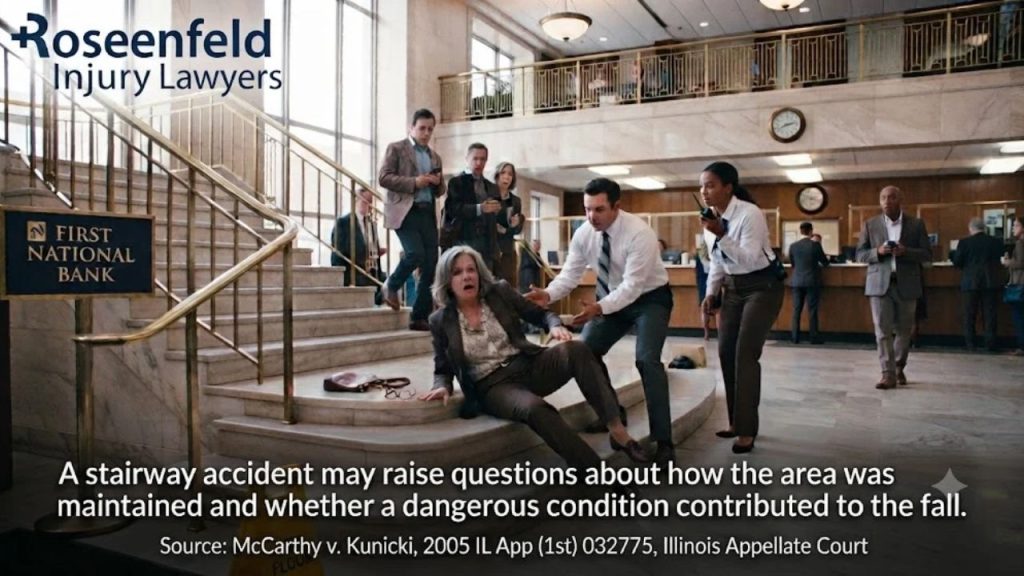
There is no fixed value. A bank branch injury claim depends on medical bills, lost income, pain and suffering, and each side’s share of fault. Clear video helps settle what happened, and we fight for fair compensation.
Most personal injury claims in Illinois must be filed within two years of the accident (735 ILCS 5/13-202). The footage will not last that long.
We will request the branch footage and incident records, establish who maintained the area where you fell, and tell you whether a claim is worth bringing. Free consultation, no fee unless we win. Call 312-800-1534.
Talk to a bank slip and fall lawyer in Chicago and request a free case review.
Yes, if the bank, its landlord or a contractor failed to use reasonable care and you were hurt. A bank branch injury claim usually turns on whether they knew, or should have known, about the hazard. Branch video often answers that question.
Send a written preservation request, called a spoliation letter, to the bank right away. Banks often overwrite recordings within weeks, and asking staff verbally is not enough. A lawyer can send the demand and request the footage and incident records.
Yes, but it does not end your claim. After-hours vestibules are unstaffed yet controlled and monitored, so the bank may still owe reasonable care. Card-access logs and camera footage can show when you entered, the floor condition, and how long the hazard existed.
The bank, the landlord or both may be responsible. Commercial lease liability follows whoever controlled the spot where you fell, and the lease usually assigns entrances, sidewalks and parking areas. We review the lease and maintenance contracts to identify every responsible party.
Most personal injury claims in Illinois must be filed within two years of the accident (735 ILCS 5/13-202). Claims against a government body may have a shorter deadline. Bank video may be gone in weeks, so act long before the deadline.
 Legally Reviewed By
Attorney Jonathan Rosenfeld
The information on this page has been legally reviewed by Attorney Jonathan Rosenfeld, founder and managing partner of Rosenfeld Injury Lawyers LLC, a Chicago-based personal injury law firm. With decades of experience representing individuals injured in slip and fall accidents and other premises liability cases throughout Chicago, Mr. Rosenfeld is dedicated to protecting the rights of injury victims and helping them pursue the maximum compensation available under the law. His extensive legal knowledge and commitment to client advocacy ensure that the information provided is accurate, reliable, and aligned with current legal standards.