
Experienced Attorneys. Proven Results.
Hire the Team That Knows How To Win and Maximize the Value of Your Case



A car dealership slip and fall lawyer in Chicago looks at more than one type of floor. A dealership effectively combines three different environments under one roof: a polished retail showroom, a semi-industrial service department, and a large outdoor lot. Each one creates a different hazard, and each calls for its own liability analysis.
If you were hurt at a dealership on a major Chicago arterial road, whether in the showroom, the service bay, or the lot outside, Slip & Fall Injury Lawyers can review what happened at no cost. Request a free case review or call 312-800-1534.
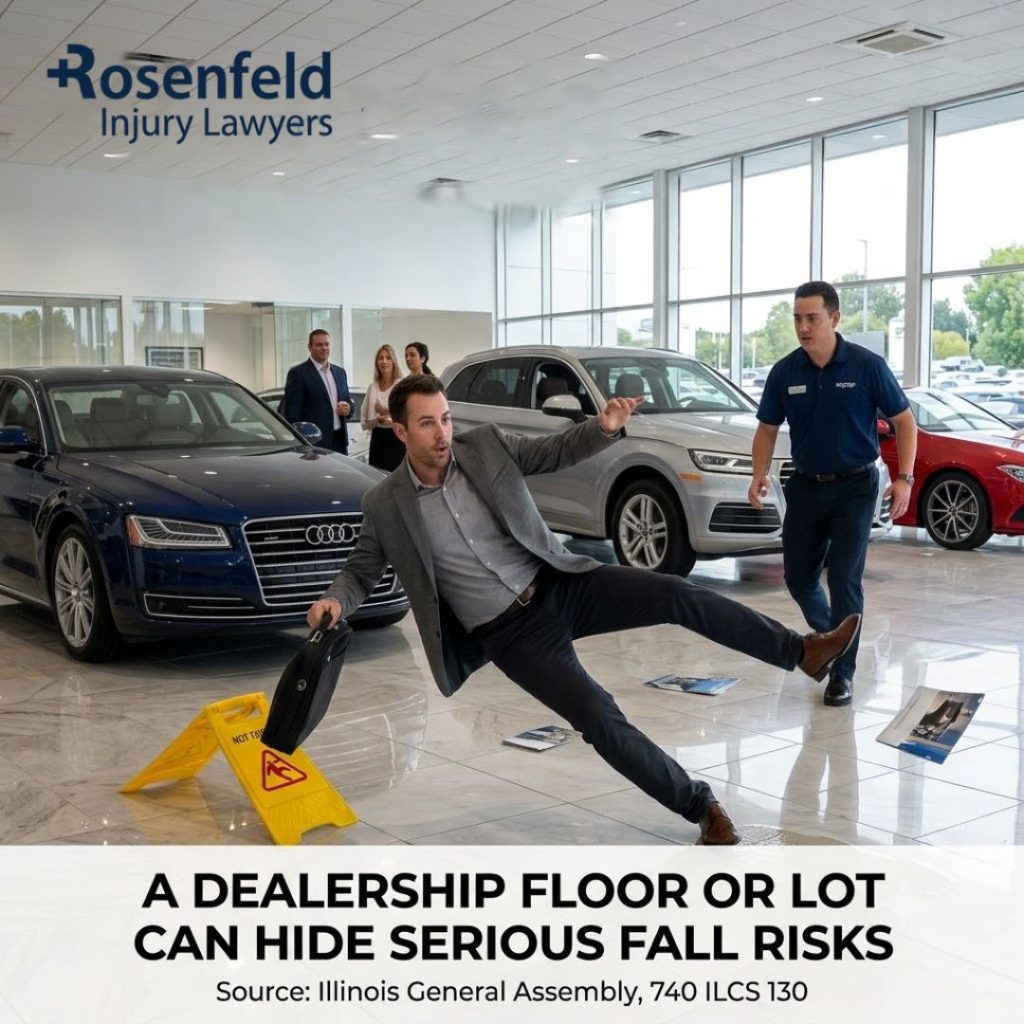
Most retail stores are a single continuous space with a single flooring type. A dealership is not. The showroom serves foot traffic in dress shoes, the service department handles fluids and tools, and the lot is built for vehicles even though customers walk it constantly.
That distinction matters because Illinois premises liability law asks what a reasonable owner would have inspected, given the space’s actual use. A car dealership injury claim almost always turns on which of the three areas the fall happened in, since the hazards and even the responsible party can differ by section. This is closer to how courts evaluate business premises falls, except a dealership compresses three environments into one visit.
Dealership showrooms are designed to create a polished impression. High-gloss tile and polished concrete can look appealing under showroom lighting, but wet surfaces may become slippery. Chicago winters can also bring slush, snow, and road salt into dealership entrances as customers come and go throughout the day.
A dealership that fails to use adequate mats, promptly address tracked-in water, or provide reasonable warnings during wet weather may face questions about whether it maintained reasonably safe conditions. A showroom floor slip claim depends on the circumstances, including how long the condition existed and what the dealership’s inspection and maintenance records show about the entrance that day.
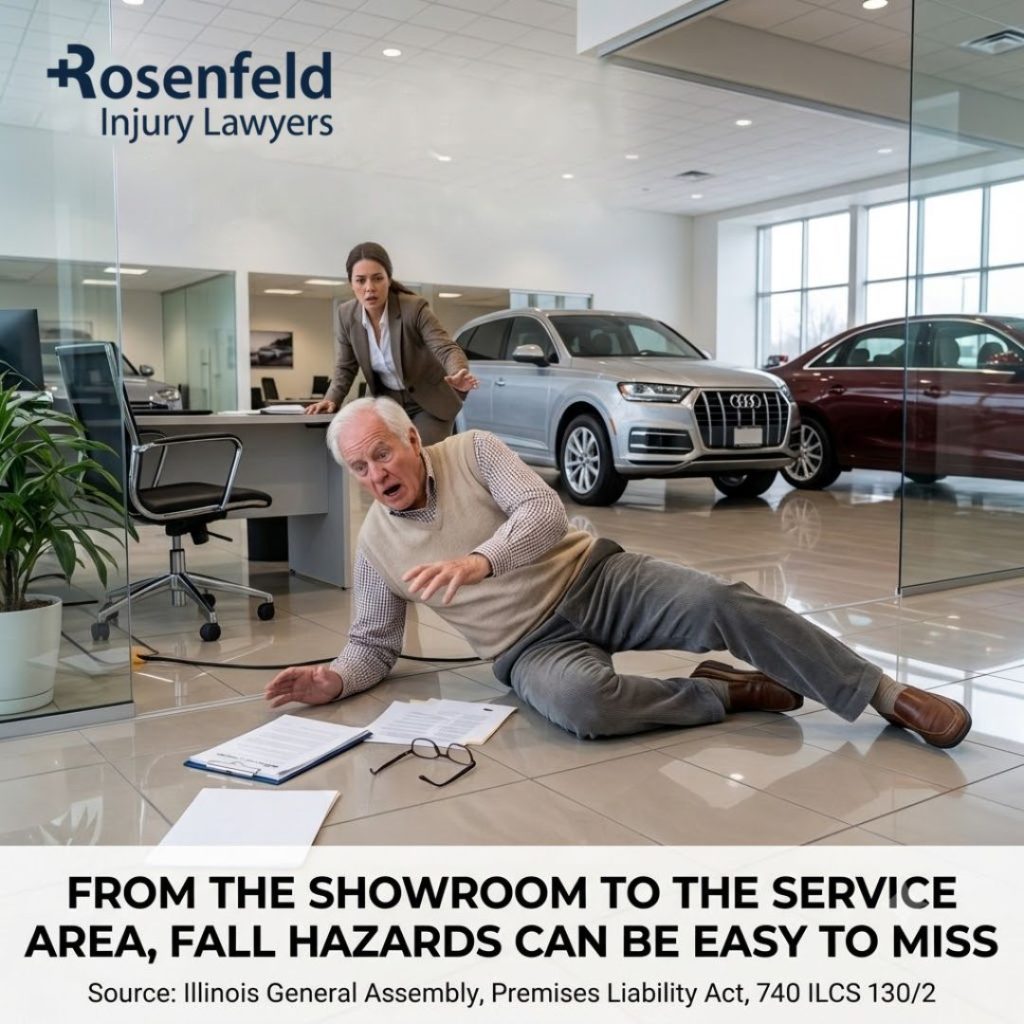
Service departments present different risks. Vehicles are lifted, drained, and repaired, creating potential oil and coolant spills, while loose tools and hoses may create additional walking hazards. When these conditions are left uncleaned or unmarked, they may raise questions about whether reasonable care was taken.
OSHA standards address workplace safety, including certain conditions in service departments. They do not create a private right of action for customers, but applicable safety standards may provide context when evaluating whether reasonable precautions were followed in an auto dealership premises liability claim.
If you were injured in a service bay, call 312-800-1534 for a free review of your claim and circumstances.
This is often an important issue in dealership fall cases. Service departments are not designed for regular public foot traffic, yet staff may direct customers into these areas to view vehicles or reach a waiting area. When a fall occurs, the dealership may argue the customer should not have been there.
Under Illinois law, a visitor’s status and the duty owed can depend on whether the person was lawfully present. If staff invited or directed a customer into the service bay, that fact may support an expectation of reasonable care. The customer-versus-employee area distinction does not automatically eliminate potential liability. A car dealership slip and fall lawyer in Chicago can assess your circumstances.
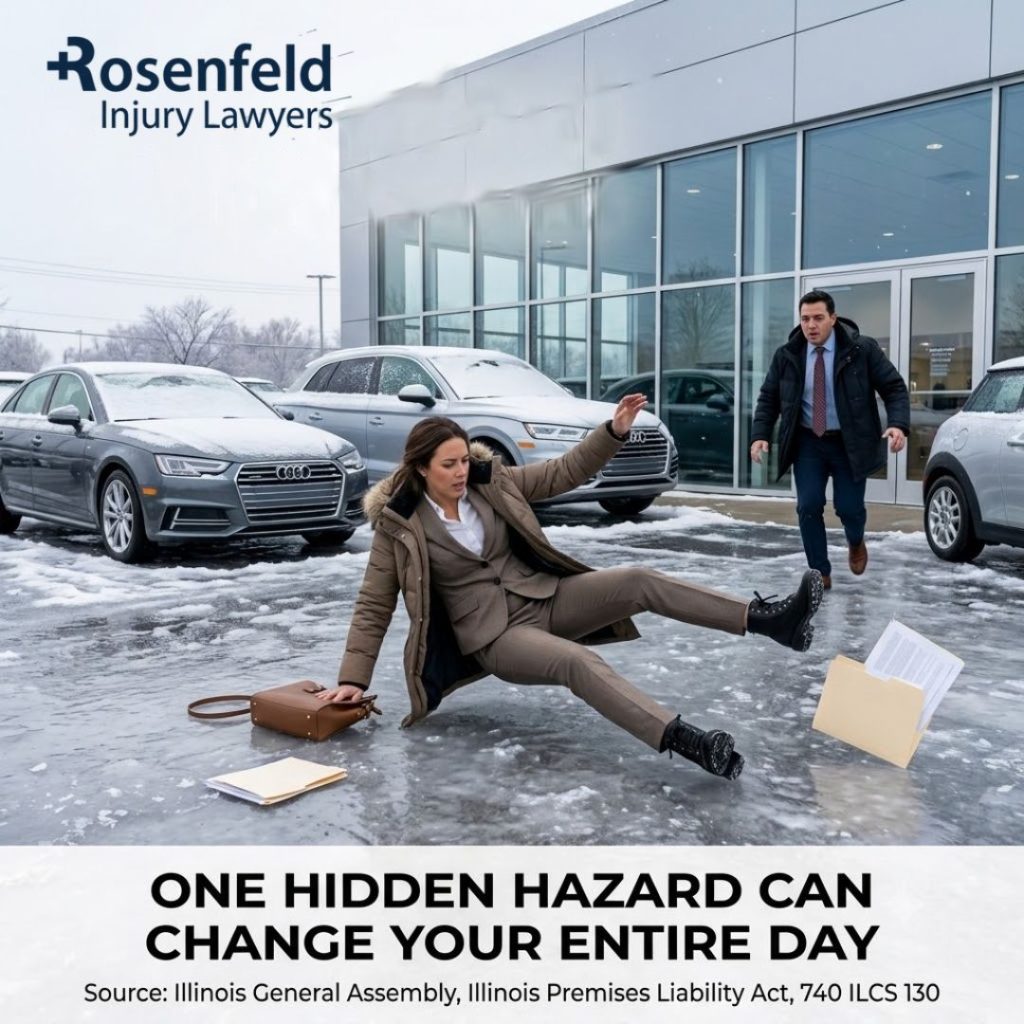
Dealership lots are unusually large, often stretching a full block along a busy Chicago corridor. That size creates its own problem: dealership lot ice removal is often uneven, with lanes near the showroom cleared first, while rows farther back are gritted selectively or skipped.
Illinois law distinguishes natural accumulation of snow and ice, which generally does not create liability on its own, from unnatural accumulation caused by how the property was designed or maintained, which can. A lot that channels melting snow into a walking path where it refreezes may present an unnatural accumulation argument. These lots also develop potholes and cracked asphalt from vehicle weight, raising concerns closer to a standard concrete surface fall. See our overview of snow and ice slip and fall claims and how outdoor surfaces are valued in parking lot slip and fall settlements.
Test-drive staging areas and delivery bays are located between the lot and the service department. Customers wait here while paperwork finishes or a vehicle is pulled around, often on uneven pavement near curb cuts. Poor lighting and unmarked curbs are common factors in falls during what should be a routine handoff, and the same unnatural accumulation and inspection principles that apply to the lot generally apply here too.
Determining who is responsible for a dealership fall can be complicated. Many Chicago dealerships operate under a franchise dealer agreement with a manufacturer, but day-to-day maintenance is usually the franchise owner’s job, not the manufacturer’s. Snow removal and lot repairs are often outsourced to a third-party maintenance contractor, adding another potentially liable party.
Commercial general liability insurance typically covers the dealership itself, but responsibility can shift depending on the lease and vendor contracts involved. Sorting out who owed what duty is core to investigating an auto dealership premises liability case, and it usually requires maintenance records not available to the public.
A fall at a dealership can raise questions about the property owner’s duties, your role as a visitor, and who may be responsible for the condition that caused your injury. Illinois’ Premises Liability Act, 740 ILCS 130, generally governs these claims. If a lawsuit becomes necessary, the Circuit Court of Cook County may be the relevant venue for a Chicago dealership injury claim.
Illinois also applies modified comparative fault under 735 ILCS 5/2-1116. If you were no more than 50% at fault, you may still recover damages, although your percentage of fault can reduce recovery. Illinois generally allows two years to file a personal injury claim under 735 ILCS 5/13-202.
Yes, if the dealership knew or should have known about a hazard on the showroom floor, service bay, or lot and failed to fix or warn about it.
It can, but being waved in by staff generally still carries an expectation of reasonable safety. The specific facts of how you entered matter.
Liability depends on whether the ice was a natural accumulation or made worse by the lot’s design or maintenance, and on who was responsible for clearing it.
Not automatically. Illinois generally limits how far a waiver can go in excusing negligence, and the specific wording matters. A free review can clarify where you stand.
Most premises liability claims must be filed within two years of the fall under 735 ILCS 5/13-202, though some situations involve shorter deadlines.
 Legally Reviewed By
Attorney Jonathan Rosenfeld
The information on this page has been legally reviewed by Attorney Jonathan Rosenfeld, founder and managing partner of Rosenfeld Injury Lawyers LLC, a Chicago-based personal injury law firm. With decades of experience representing individuals injured in slip and fall accidents and other premises liability cases throughout Chicago, Mr. Rosenfeld is dedicated to protecting the rights of injury victims and helping them pursue the maximum compensation available under the law. His extensive legal knowledge and commitment to client advocacy ensure that the information provided is accurate, reliable, and aligned with current legal standards.