
Experienced Attorneys. Proven Results.
Hire the Team That Knows How To Win and Maximize the Value of Your Case



When you fall in a Chicago shopping mall, determining who may be responsible can feel harder than the fall itself. A shopping mall slip and fall lawyer in Chicago can help identify whether the store, mall owner, property manager, or cleaning contractor owed you a duty of care and may be responsible for the hazard.
Malls can involve multiple leases and maintenance agreements that divide responsibilities between different parties. Choosing the wrong defendant or accepting an early denial could affect your claim. If you fell in a Chicago mall, several parties may potentially share responsibility. Call 312-800-1534 for a free case review.
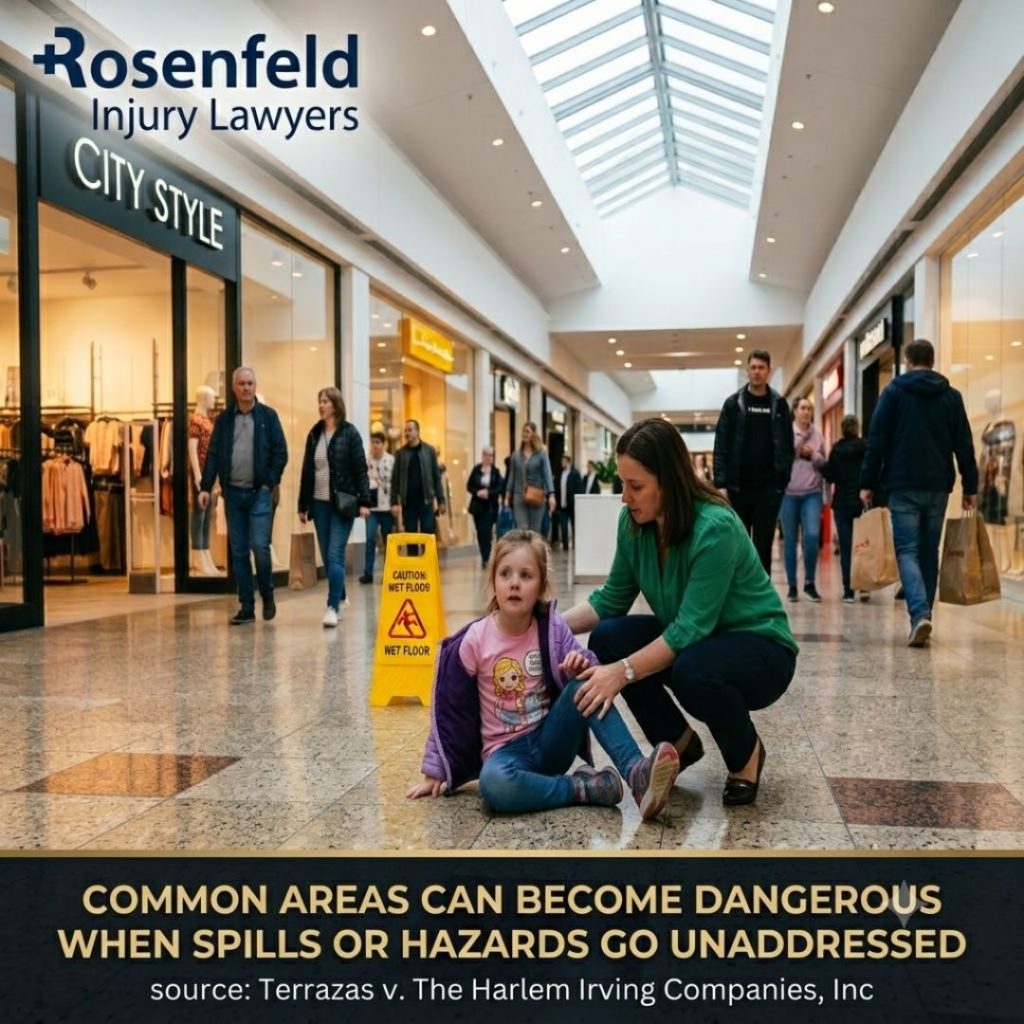
A mall fall may involve several potentially responsible parties, including the store where you were shopping, the mall owner, the property management company, or a janitorial and maintenance contractor. Determining liability often depends on exactly where the fall occurred and which party controlled or maintained that area. Identifying the responsible parties early can help preserve evidence and clarify how the claim should proceed.
Leases and service contracts often divide maintenance duties between tenants, landlords, managers, and contractors. A store may maintain its interior space, while shared walkways, seating areas, and common spaces may fall under the landlord or property manager. A shopping mall slip and fall lawyer in Chicago can review these agreements to help identify the parties responsible.
The line between common areas and leased premises is usually the starting point for determining liability. If you fell on a walkway, near seating, or at a mall entrance, the mall owner or its management company likely had a duty to inspect and maintain that area. If you fell inside a shop, past the storefront, responsibility typically shifts to that retail store slip and fall claims framework and the tenant’s own maintenance obligations.
That distinction is not always as clean as it sounds. A spill that starts inside a store and spreads into the corridor, or a wet floor sign placed by mall staff just outside a shop entrance, can put both the tenant and the landlord in the picture at once.
Food courts are among the harder liability puzzles in malls. Multiple restaurant vendors serve food in one shared seating area that the mall itself typically maintains, which means a dropped drink, melted ice, or grease near a fryer station can implicate the vendor, the mall’s cleaning staff, or both. High foot traffic and constant spill risk make these areas a common source of falls.
Restrooms present a similar pattern. Mall-maintained restrooms should be checked and cleaned on a regular schedule, and a puddle near a sink or a wet entryway left unaddressed for an unreasonable length of time can support a wet-floor claim against whoever was responsible for upkeep in that space.
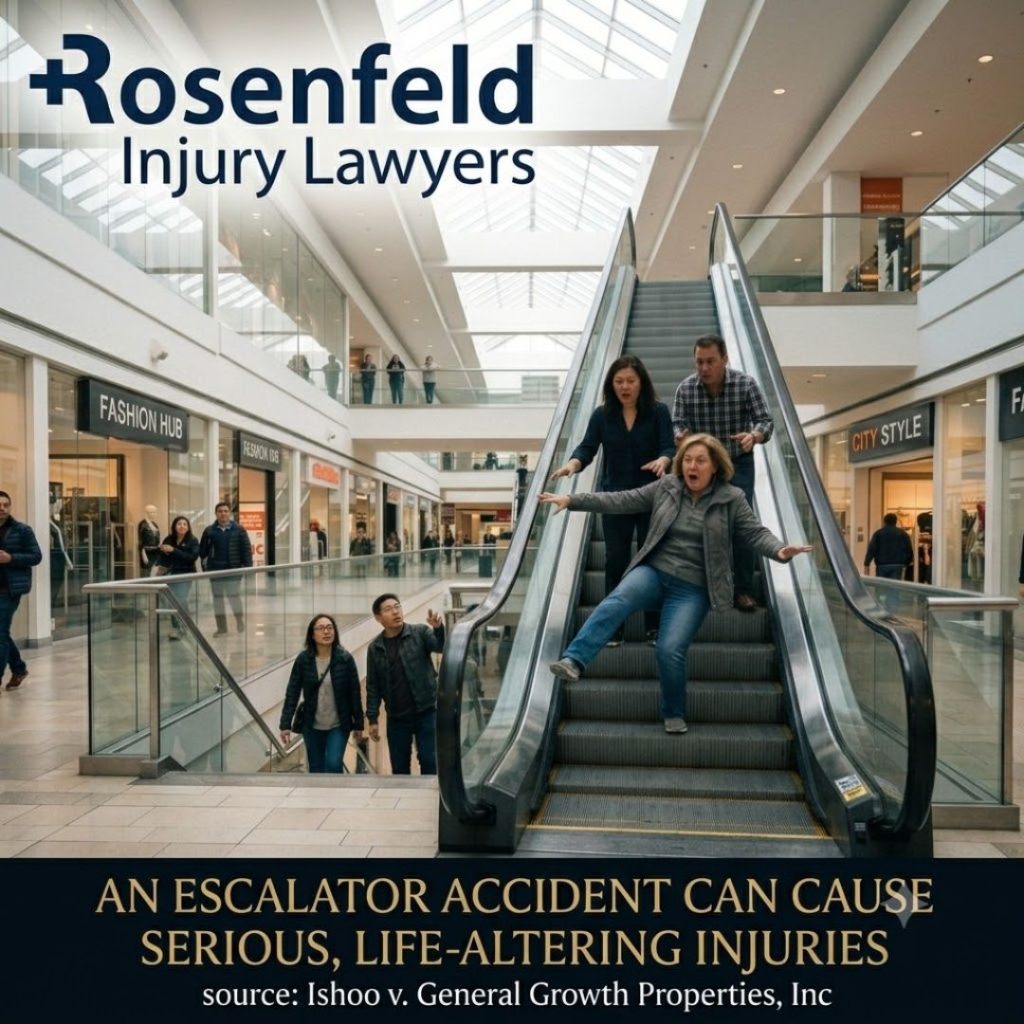
Vertical movement between floors is part of daily life at Chicago’s multilevel shopping destinations, including Water Tower Place and 900 North Michigan Shops along the Magnificent Mile. In these vertical retail properties, mechanical failures, missing steps, or poorly maintained handrails can contribute to escalator accidents, elevator accidents, or stairwell falls. Responsibility usually depends on who controlled and maintained the affected area, which may include the mall owner, property manager, or maintenance contractor.
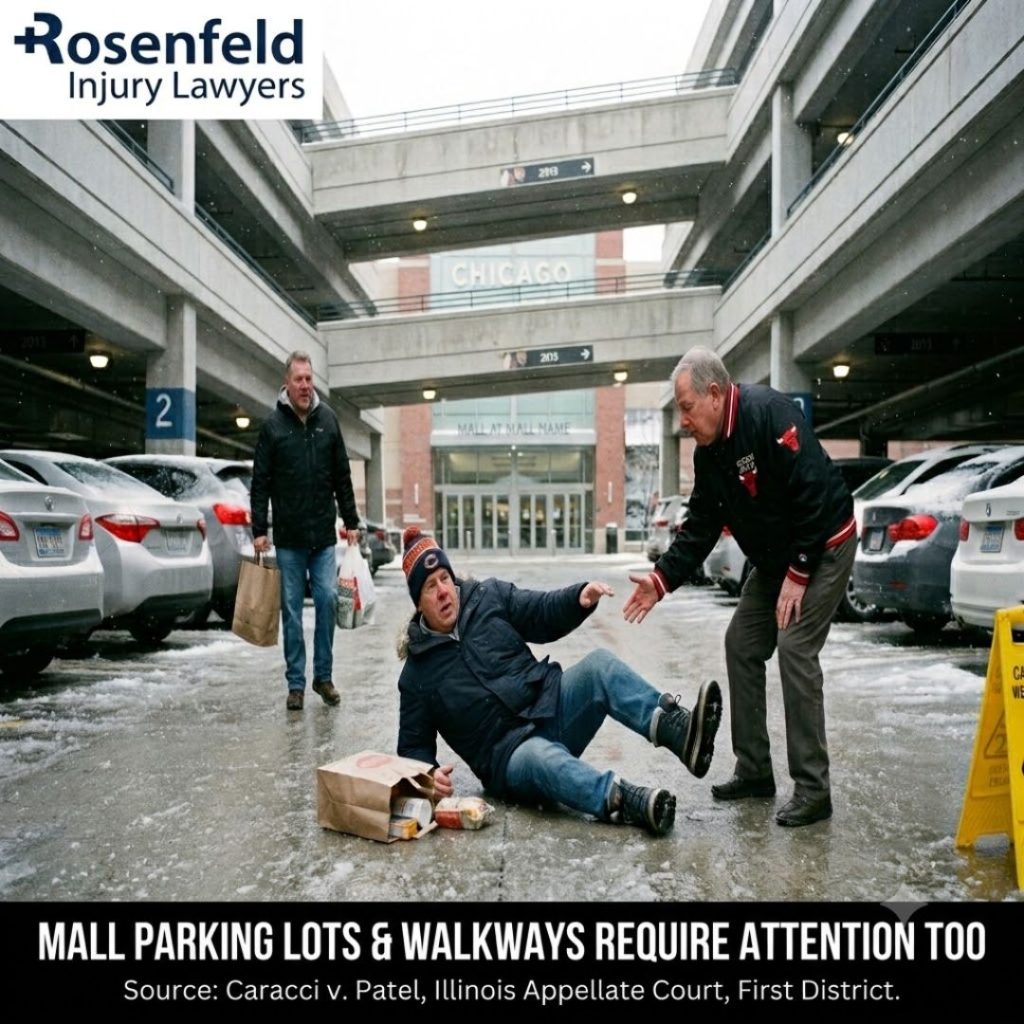
Chicago winters can create added hazards around mall properties. Slush tracked through entrances, ice near parking structure stairwells, and poorly cleared walkways between garages and mall doors can contribute to falls from November through March. Illinois property owners may have a duty to address hazards they knew about or reasonably should have discovered through inspection. That duty can extend to entrances, walkways, and connected parking areas.
Multilevel parking structures attached to Chicago malls can present maintenance issues distinct from those in open-air lots. If you fell in a parking area, our page on parking lot slip and fall settlements explains how these claims are typically evaluated.
If a store, mall representative, or insurance adjuster says the fall was your fault, that does not necessarily end your claim. Under 735 ILCS 5/2-1116, Illinois generally permits recovery when you are not more than 50% responsible, with damages reduced according to your assigned share of fault.
The circumstances matter, including whether the hazard was visible, properly marked, or reasonably discoverable before the fall. A shopping mall slip and fall lawyer in Chicago can examine evidence and respond to a fault-based denial. If parties point to each other, getting legal advice can help clarify your options. Call 312-800-1534 for a free review.
Every mall fall is different, and the value of a claim depends on your injuries, the strength of the liability evidence, and which party or parties are ultimately responsible. Rather than guess at a number, our settlement amounts page and settlement calculator walk through the factors that shape a claim’s value based on similar Illinois cases, so you can get a realistic starting point.
Under Illinois’s premises liability law, you generally have two years from the date of the fall to file a lawsuit, so it helps to start gathering evidence and legal advice well before that deadline approaches. For a Chicago mall injury that proceeds to litigation, the Circuit Court of Cook County is the local trial court serving Chicago and Cook County, although the appropriate venue depends on the circumstances of the case.
If you were hurt in a Chicago-area shopping mall, determining who was responsible for the area where you fell can be challenging. Slip & Fall Injury Lawyers can review lease and maintenance arrangements to identify who owed you a duty of care. We can explain your options and next steps. Free consultation, no fee unless we win.
Responsibility for common areas like walkways and seating usually falls to the mall owner or its property manager, though the specific lease terms for that property determine the exact answer.
Being partly at fault does not automatically end a claim under Illinois law. An attorney can review the circumstances and evidence to see what options remain available to you.
Falls inside a leased storefront are typically evaluated under the store’s own maintenance obligations, which may differ from those that apply to the mall’s shared spaces.
It depends on the maintenance contract for that property. A cleaning contractor can share liability alongside the mall owner or tenant, depending on who was assigned that duty.
Most Illinois premises liability claims must be filed within two years, though certain circumstances can affect that timeline, so it is worth speaking with an attorney promptly.
 Legally Reviewed By
Attorney Jonathan Rosenfeld
The information on this page has been legally reviewed by Attorney Jonathan Rosenfeld, founder and managing partner of Rosenfeld Injury Lawyers LLC, a Chicago-based personal injury law firm. With decades of experience representing individuals injured in slip and fall accidents and other premises liability cases throughout Chicago, Mr. Rosenfeld is dedicated to protecting the rights of injury victims and helping them pursue the maximum compensation available under the law. His extensive legal knowledge and commitment to client advocacy ensure that the information provided is accurate, reliable, and aligned with current legal standards.