
Experienced Attorneys. Proven Results.
Hire the Team That Knows How To Win and Maximize the Value of Your Case



Injured in a fall at a Chicago Target? Before you give a recorded statement, talk to a lawyer. Free case review: 312-800-1534.
If you were hurt inside a Target store or in its parking lot in Chicago, the biggest mistake you can make is waiting to act. Target may maintain floor-sweep and inspection records for its stores, and those records can provide important evidence when determining whether a hazardous condition was present long enough to be discovered.
Target Corporation is a large retailer with standardized safety procedures, so your case will not be handled the way a small local shop would. Corporate claims administrators and third-party maintenance contractors come into play. A Target mall slip and fall lawyer in Chicago who understands this process can request the right records before they disappear.
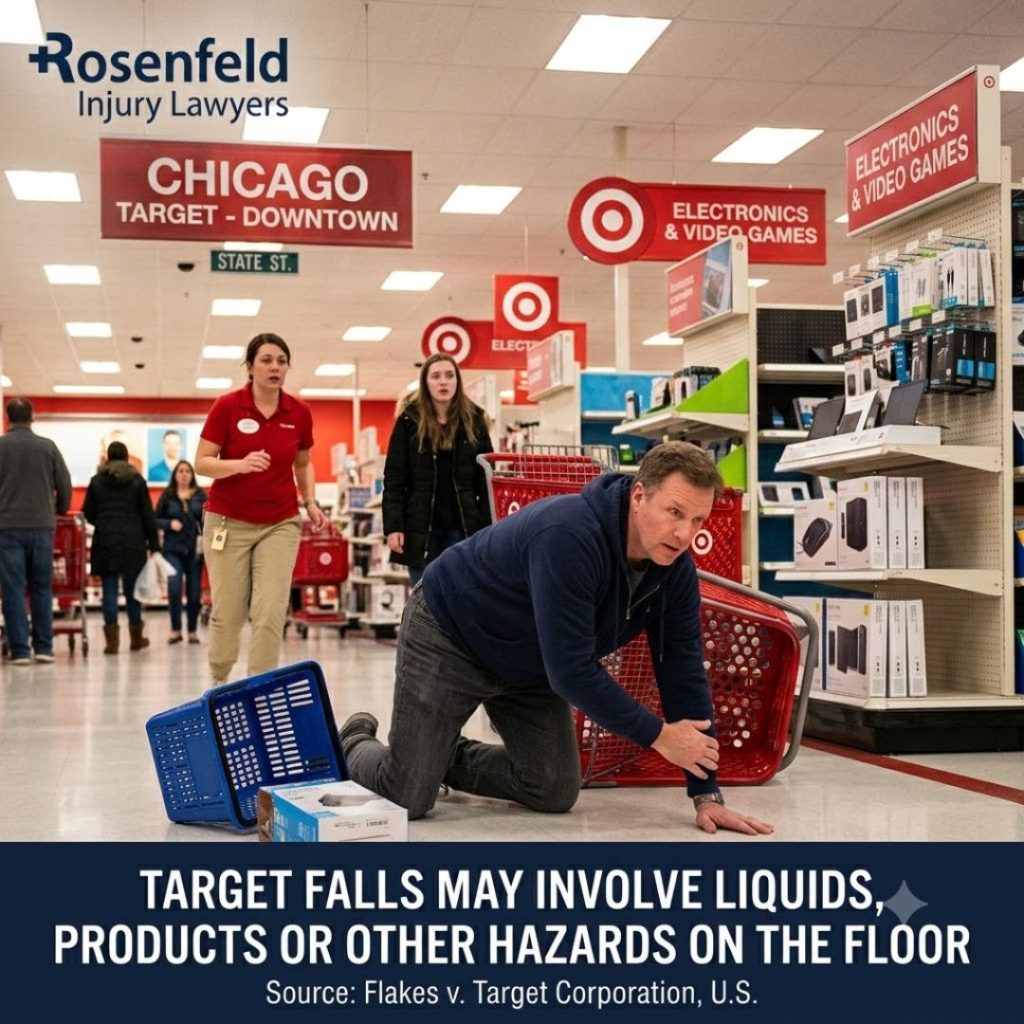
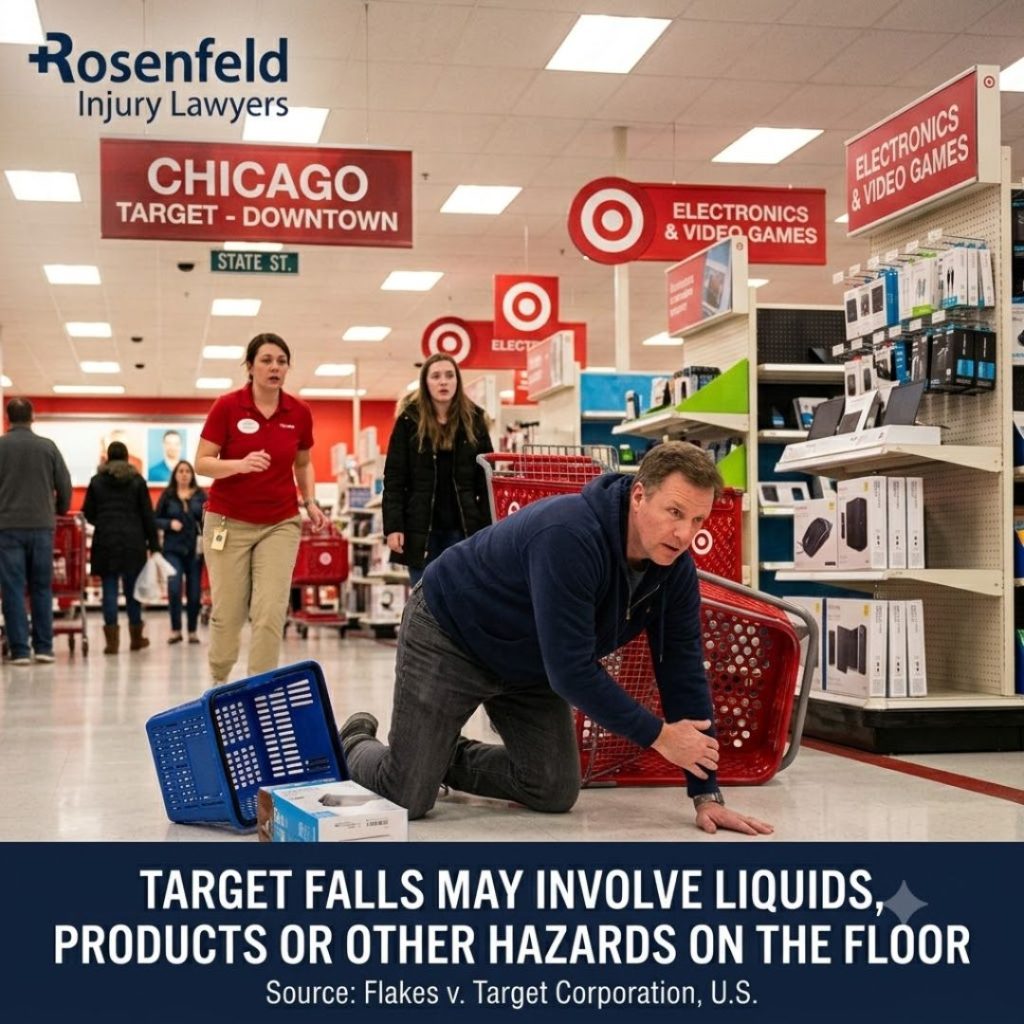
Falls in Target stores tend to stem from gaps in routine maintenance rather than one-time accidents. Spilled beverages near the café or checkout lanes, tracked-in rainwater near entrances, and unaddressed liquid spills are among the most frequent hazards. Cluttered aisles from returned merchandise, cords or pallets left in walkways during restocking, and bunched flooring near high-traffic zones also contribute to shopper injuries.
Illinois premises liability law, including the 740 ILCS 130 Premises Liability Act, governs how a property owner’s duty may apply to hazardous conditions. Whether that duty was met can depend on what Target knew or reasonably should have known about the condition and how it responded. Documentation can be important in establishing those facts.
Inspection records and surveillance footage can provide important evidence in a Target slip and fall claim. Retailers may maintain floor-sweep and inspection schedules showing when an area was checked. If Target maintained such a log for the location where you fell, it may help establish when the area was last inspected.
If the log shows the aisle was checked ninety minutes before your accident, that timing may support a constructive notice argument by showing how long the hazard may have existed.
Inspection records and surveillance footage may not be retained indefinitely. Requesting preservation early can help protect potentially relevant evidence. Call 312-800-1534 for a free case review.
Falling merchandise injuries involve a different legal theory than a slip and fall. Merchandise may be stored on overhead shelving, and stocking may continue while customers are shopping. When merchandise falls from a high shelf and strikes a customer, the claim usually centers on improper stacking, unsecured shelving, or stocking done without adequate warning to nearby shoppers.
These cases may involve whether the store followed applicable merchandising and safety procedures, making early evidence preservation important.
Chicago winters can bring tracked-in slush, refreezing meltwater, and wet or poorly positioned entrance mats that may contribute to falls. Snow and ice removal schedules, mat placement, and drainage near entrances are documented and can be requested as part of a claim. A fall in a Target parking lot follows the same general premises liability framework as a fall inside the store, though a separate contractor may be responsible for maintaining the lot.
A Target injury report or claim may be handled by Target or a third-party claims administrator, depending on the circumstances. The administrator may ask questions about the incident, your injuries, and your medical treatment, making it important to understand what you are being asked before providing a recorded statement.
A target mall slip and fall lawyer in Chicago can manage communication with the administrator, request the inspection log and surveillance footage before they are lost, and make sure nothing you say is used against you later.
Target may also argue that your own actions contributed to the fall. Under 735 ILCS 5/2-1116, Illinois generally permits recovery when a claimant is not more than 50% responsible, with damages reduced according to the claimant’s share of fault. Evidence about the hazard, inspection history, warnings, and circumstances of the fall can all matter when fault is disputed.
Every Target claim depends on the specific facts involved, including the strength of the inspection log, the severity of your injuries, and available insurance coverage. We do not publish settlement figures for this practice area, since every case turns on its own evidence. For a general sense of how similar Illinois injury claims have been valued, our settlement calculator offers a helpful starting point.
These steps apply broadly across retail settings. For related guidance, see our pages on Walmart slip and fall claims, general retail store slip and fall claims, and wet floor claims.
Falling at a Target store or in its parking lot can leave you facing medical bills, missed work, and calls from an adjuster who wants a recorded statement. Before you say anything further, talk with a Target slip and fall lawyer in Chicago who understands how Target’s inspection records, surveillance systems, and claims process work. Under Illinois premises liability law, Illinois generally gives you two years from the date of the injury to file a personal injury lawsuit, but evidence that may help prove your claim can disappear much sooner. If a Chicago Target injury claim proceeds to litigation, the Circuit Court of Cook County may be the relevant trial court, depending on the circumstances and proper venue.
If you were injured in a Target store or its parking lot, we will review what happened and honestly tell you whether you have a claim worth pursuing. Free consultation, no fee unless we win. Contact us for a free case review or call 312-800-1534.
You may have a claim if Target knew or should have known about a hazard and failed to address it, causing your injury under Illinois law.
It can do either. The report documents the fall, but its wording may favor Target, so review it closely before it is finalized.
Falling merchandise claims involve stocking and shelving practices rather than floor hazards, and often require different evidence than a fall.
You generally do not have to provide a recorded statement simply because Target or its insurer requests one, and speaking with an attorney first may help protect your interests.
Illinois generally allows two years from the injury date, though the strongest evidence is often lost long before that deadline.
 Legally Reviewed By
Attorney Jonathan Rosenfeld
The information on this page has been legally reviewed by Attorney Jonathan Rosenfeld, founder and managing partner of Rosenfeld Injury Lawyers LLC, a Chicago-based personal injury law firm. With decades of experience representing individuals injured in slip and fall accidents and other premises liability cases throughout Chicago, Mr. Rosenfeld is dedicated to protecting the rights of injury victims and helping them pursue the maximum compensation available under the law. His extensive legal knowledge and commitment to client advocacy ensure that the information provided is accurate, reliable, and aligned with current legal standards.