
Experienced Attorneys. Proven Results.
Hire the Team That Knows How To Win and Maximize the Value of Your Case



If you get hurt on someone else’s property in Illinois, it is possible to seek compensation for legal damages suffered. You will need to prove that the property owner is responsible for your accident based on numerous elements of a premises liability claim.
Slip & Fall Injury Lawyers can help you navigate a premises liability case in Illinois, including claims arising from injuries in Chicago stores, apartment buildings, restaurants, private residences, and government buildings. Let’s discuss some of the elements of a premises liability case.
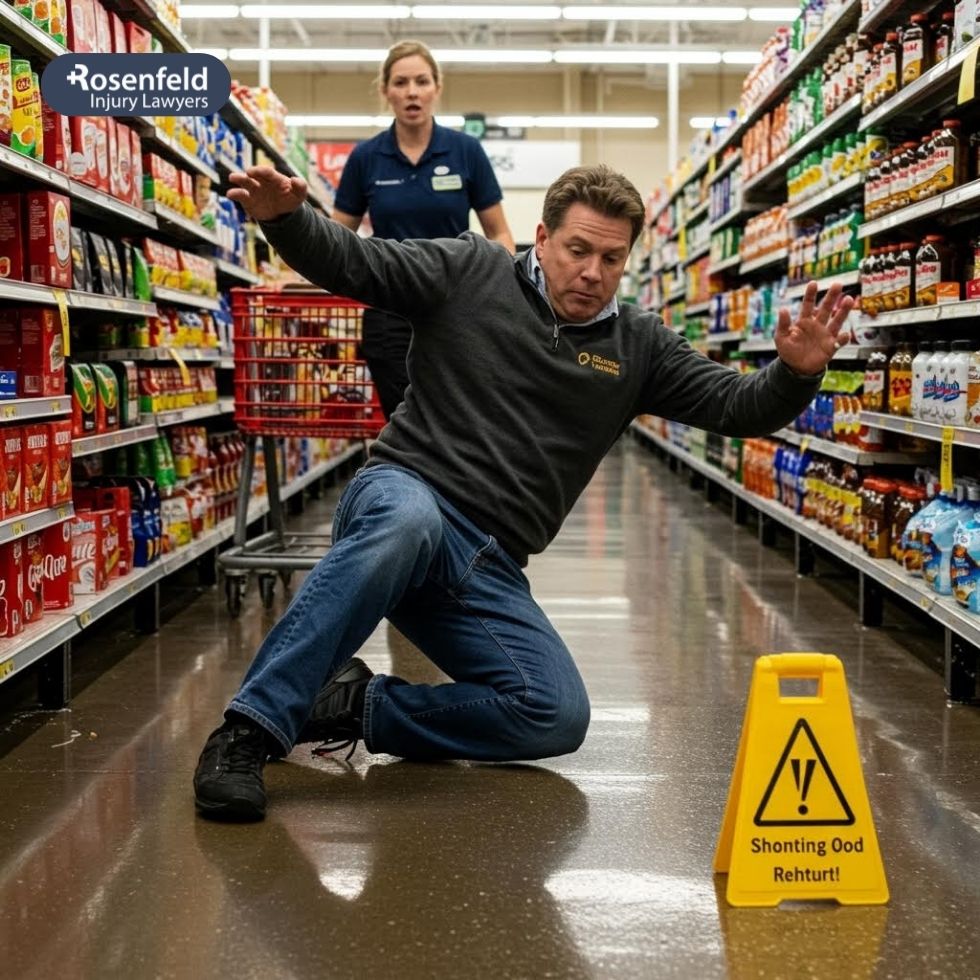
One of the primary factors that affects a premises liability case is the injured person’s legal status. The three classifications of visitors are invitees, licensees, and trespassers.
Under the Illinois Premises Liability Act, the distinction between invitees and licensees has been abolished, and property owners and occupiers generally owe lawful entrants a duty of reasonable care under the circumstances.
An adult trespasser generally receives more limited protection, with the law addressing willful and wanton conduct toward a known trespasser while preserving special rules concerning child trespassers under 740 ILCS 130/3.
Property owners must use reasonable care to prevent injury to lawful visitors and to warn them of hazards.
Intentional harm rarely arises in premises liability cases. Most claims arise because the property owner owed a duty of care to the injured party and failed to take appropriate action. However, some situations may be categorized as deliberate harm, which can lead to more compensation due to the potential for punitive damages.
Here are some scenarios that may qualify:
Illinois courts may treat these situations differently from traditional slip-and-fall cases. The availability of defenses and immunities can depend on the type of conduct and defendant involved. Additionally, battery and assault can be brought alongside a premises liability suit, especially for cases involving negligent security.
The elements of a premises liability claim generally involve establishing a duty of reasonable care, a dangerous condition or unreasonable risk of harm, the property owner’s actual or constructive notice of the condition, a failure to exercise reasonable care, and injuries and damages proximately caused by that condition or failure.
To prove a property owner’s negligence, you must establish that they had a legal duty to take reasonable steps to maintain safe conditions. They must also warn legal visitors of potential hazards and inspect the premises. The scope of that responsibility depends on the circumstances and the condition of the property.
Courts may consider the following elements to analyze duty of care:
A property owner’s negligence may be to blame for hazardous conditions on stairs, sidewalks, shopping mall aisles, or common areas in apartments. For example, a hazardous condition in a Loop office lobby or a River North restaurant may raise questions about the property owner’s duty to maintain reasonably safe premises.
A breach of duty occurs when a property owner fails to fulfill their duty of care. In other words, they did not act reasonably, under the circumstances, to prevent the harm. You must prove that the owner knew or should have known about the hazard and can be held liable. This may involve actual notice, meaning the owner knew about the condition, or constructive notice, meaning the condition existed long enough or under circumstances where the owner reasonably should have discovered it. The open and obvious nature of a hazard may also affect whether a duty existed or was breached.
Some examples of breaches of duty include:
Next, you must demonstrate a causal link between the defendant’s actions and the injuries you suffered because of their negligence. The actual cause is the unsafe condition. Proximate cause means that the harm was a foreseeable result of the dangerous condition.
For example, if a restaurant has an unmarked wet floor, a customer may slip and fracture their wrist.
Lastly, you must prove that your injuries caused actual legal damages. Economic damages may include lost wages, medical bills, future medical expenses, and property damage. Non-economic damages may include emotional distress, pain and suffering, long-term disability, and loss of normal life.
Even where liability is clear, poorly documented damages can sink an otherwise strong claim. Keeping medical records, wage documentation, photographs, and other proof can help establish the value of your losses. See what your claim may be worth.
State law 735 ILCS 5/2-1116 allows injured victims to claim damages as long as they are no more than 50% at fault for the incident. However, if you are partially at fault, your recoverable compensation will be reduced by a similar factor.
For example, if you were not wearing proper footwear on a slippery surface, you may be considered 40% at fault for your fall. Your potential compensation would then be reduced by 40%.
Evidence will be the key to winning your premises liability case. The more data you have to support your claim, the better your chances of proving that the property owner owed you a duty of care and failed to maintain safe premises. Evidence should be collected to support the elements of a premises liability claim, including proof of the dangerous condition, notice, causation, and damages.
Here are some examples of evidence that can establish your premises liability case:
After your accident, be sure to preserve all physical proof, such as shoes or clothing that you wore.
Under the Local Governmental and Governmental Employees Tort Immunity Act (745 ILCS 10/), special rules and notice requirements may apply when a premises liability claim involves a state or local government entity. Because the applicable deadlines can vary by claim and defendant, the specific notice and filing requirements should be reviewed promptly.
For premises liability that involves a federal building, your case may fall under the Federal Tort Claims Act.
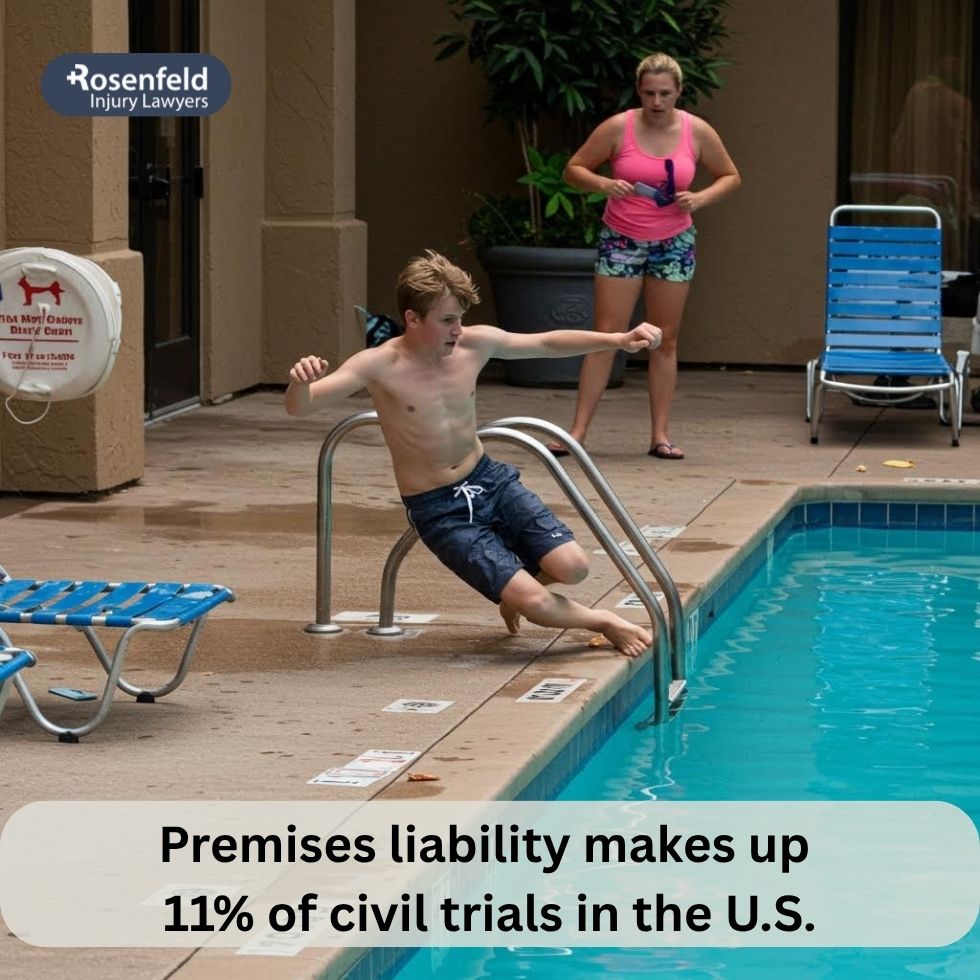
Navigating a premises liability claim on your own can be daunting. An experienced law firm can help you overcome some of the following obstacles you may face:
For most premises liability lawsuits, plaintiffs have two years from the date of their injury to file a claim for fair compensation (735 ILCS 5/13-202). For a Chicago injury claim, the Circuit Court of Cook County may be involved depending on the circumstances and procedural requirements. For more information, see the statute of limitations.
Slip & Fall Injury Lawyers works on a contingency fee basis, which means you owe nothing unless we win. Our team is prepared to handle your premises liability claim, whether the property owner failed to maintain a stairwell or secure a loose carpet. When evaluating the elements of a premises liability claim, an attorney can review the circumstances of your Chicago injury, identify potential evidence, and explain the legal options that may apply. Contact our law office today to schedule a free consultation.

Legally Reviewed By
Attorney Jonathan Rosenfeld
The information on this page has been legally reviewed by Attorney Jonathan Rosenfeld, founder and managing partner of Rosenfeld Injury Lawyers LLC, a Chicago-based personal injury law firm. With decades of experience representing individuals injured in slip and fall accidents and other premises liability cases throughout Chicago, Mr. Rosenfeld is dedicated to protecting the rights of injury victims and helping them pursue the maximum compensation available under the law. His extensive legal knowledge and commitment to client advocacy ensure that the information provided is accurate, reliable, and aligned with current legal standards.