
Experienced Attorneys. Proven Results.
Hire the Team That Knows How To Win and Maximize the Value of Your Case



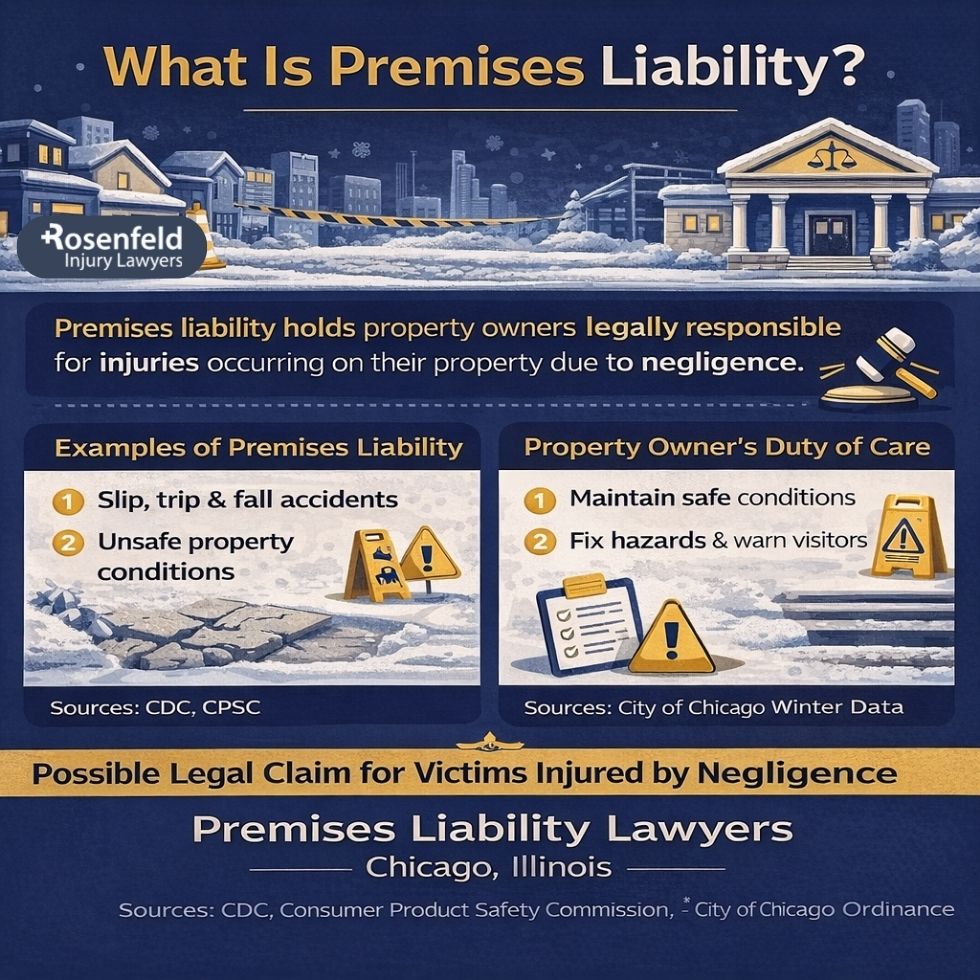
What is premises liability? It’s a legal concept that holds property owners responsible when someone is hurt due to dangerous conditions on their property. If a property owner failed to maintain safe premises or didn’t warn visitors about known hazards, they may be held liable under Illinois premises liability law.
At Slip & Fall Injury Lawyers, we focus exclusively on holding negligent property owners accountable in Chicago. Whether you slipped on icy stairs, tripped over broken pavement, or were injured due to unsafe conditions, we know how to build a strong personal injury claim involving dangerous property conditions.
Premises liability insurance coverage is different from the legal concept of premises liability. Insurance coverage is a policy provision that may help protect a property or business owner from financial losses arising from covered injury claims, while an injured person’s claim focuses on negligence, liability, and available compensation.
In Chicago, for example, a customer injured by an unmarked wet floor in a store may have a claim if the owner failed to use reasonable care.
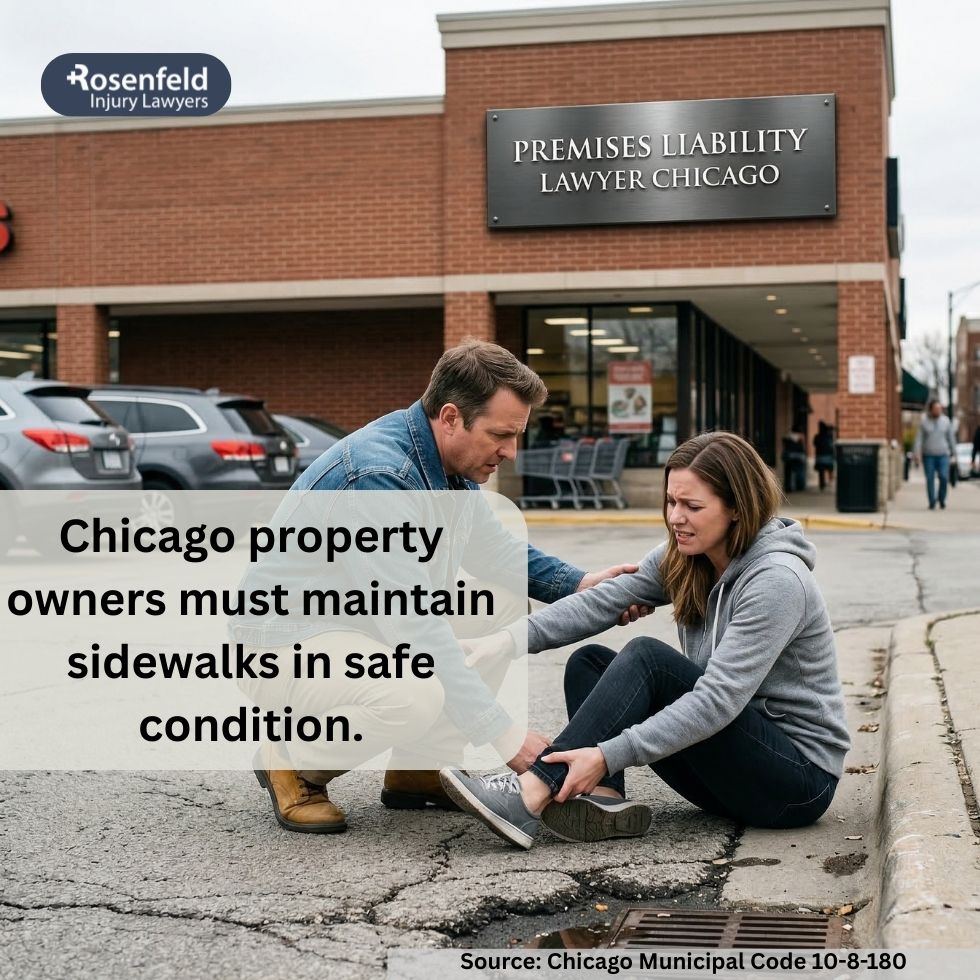
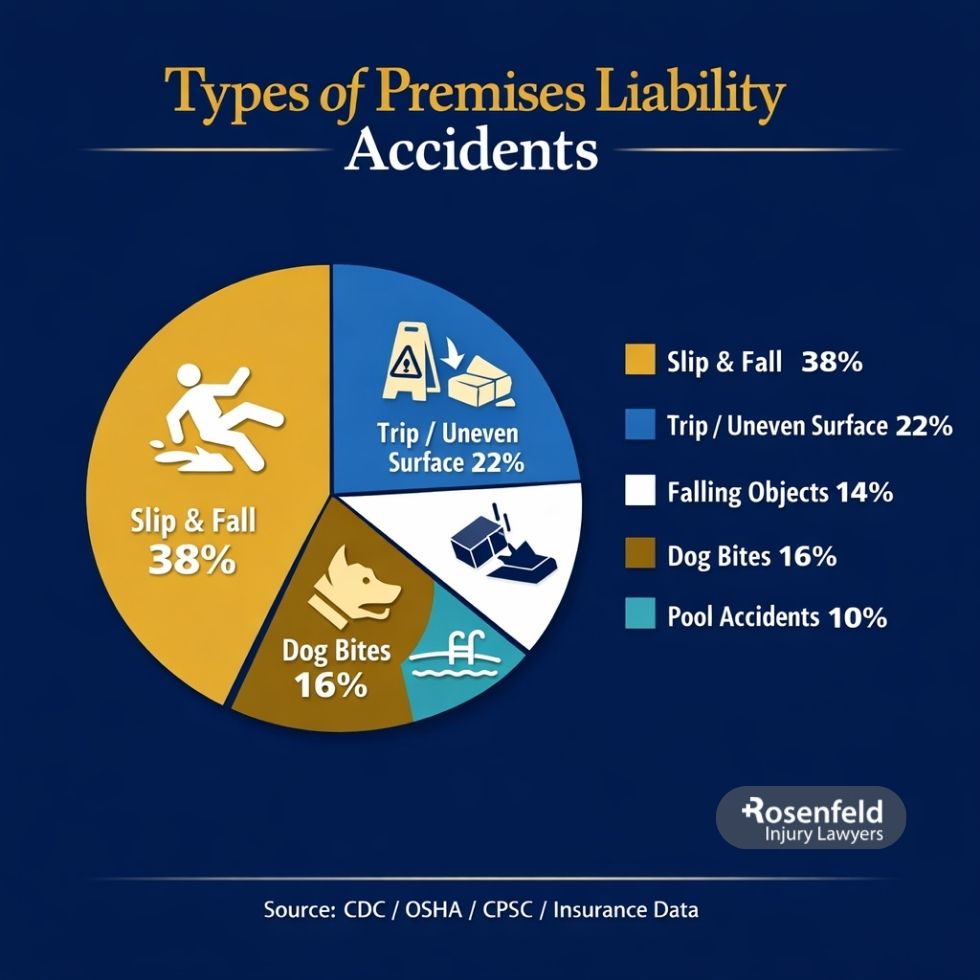
These claims cover a wide range of situations where someone suffers injuries on someone else’s property due to dangerous conditions.
Slip and fall cases are among the most common types of premises liability claims. These incidents often happen in parking lots, stairwells, sidewalks, or store aisles due to wet floors, ice, uneven surfaces, or poor lighting. If a property owner failed to address these hazards, they may be held liable for resulting injuries and losses.
Negligent security claims involve injuries caused by criminal acts that could have been prevented with reasonable security measures. A business owner or property owner may be responsible if they fail to install locks, cameras, or lighting in high-risk areas. These claims often arise in apartment buildings, hotels, and parking areas.
Dog bite injuries may fall under property-owner liability rules if the attack occurred on someone’s property and the property owner knew the animal was aggressive. These cases often involve high medical bills and permanent scarring. Property owners generally owe visitors a duty of care, especially when pets pose a threat to safety.
Other common types of property injury claims include swimming pool accidents, elevator and escalator malfunctions, toxic exposure, and injuries from falling objects. Cases involving attractive nuisance, such as unsecured pools or construction sites that lure children, may also qualify. In each scenario, the property owner’s negligence plays a key role.
Under Illinois premises liability law, every property owner has a legal obligation to keep their property safe for lawful visitors. This duty of care includes fixing hazards, performing regular maintenance, and providing clear warnings about any known dangerous conditions. Property owners generally owe this duty to customers, tenants, guests, and anyone lawfully on the premises.
If a property owner failed to address a known risk or didn’t act as a reasonable person would under similar circumstances, they may be held liable. To build a valid claim, the four elements of a claim must be shown:
Without all four, the claim may not succeed. A lawyer can evaluate whether your case meets these legal standards.
To avoid liability for unsafe property conditions, a property owner must take steps a reasonable person would take to prevent harm. This includes clearing ice, fixing broken handrails, replacing faulty lighting, securing swimming pool areas, and cleaning up spills that could lead to a fall.
Business managers and owners should regularly inspect their property and train staff to report or fix dangerous conditions promptly. Posting warning signs near wet floors or construction zones is also part of exercising due care. Failing to take these precautions could lead to a personal injury claim if someone is injured on the property.
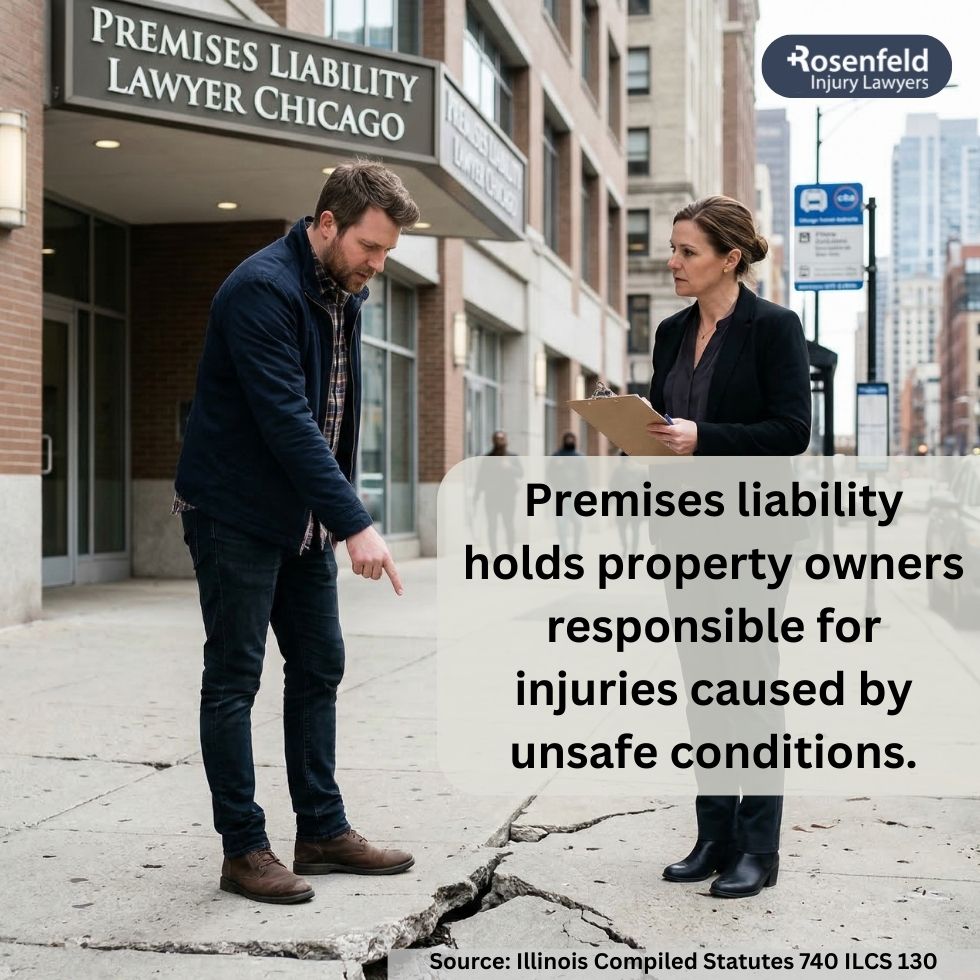
Several Illinois laws and legal principles affect how a property injury claim is evaluated. These rules determine whether a property owner can be held liable and what compensation may be available.
The Illinois Premises Liability Act abolishes the common-law distinction between invitees and licensees and generally requires reasonable care under the circumstances for entrants who are not trespassers. The duty owed to an adult trespasser is generally different, although Illinois law recognizes specific rules and exceptions, including protections involving child trespassers.
These distinctions can affect whether a claim can move forward and what duty of care applies to the circumstances.
While property owners have the right to protect their premises, they can’t intentionally harm trespassers unless it’s in justifiable self-defense.
For instance, setting traps or using excessive force is not allowed. However, using justifiable force to stop an immediate threat may be defensible. In liability cases, if the property owner acted with intent to harm and the force was unjustified, the injured party may have grounds for a personal injury lawsuit.
Illinois law recognizes the attractive nuisance doctrine, which protects children who trespass because they’re drawn to dangerous features like swimming pools, construction sites, or abandoned appliances.
Since young children don’t always understand risks, property owners may have additional legal responsibilities when dangerous conditions attract children. If a child is injured due to an unreasonable risk that the owner failed to secure, the family may have a strong claim.
Illinois uses a modified comparative fault rule in personal injury cases. If the victim is partly responsible, say, they ignored warning signs or were distracted, they can still recover compensation if they are no more than 50% at fault. However, their damages will be reduced by their percentage of fault. This directly affects the settlement value and outcome of a personal injury claim.
To bring a successful claim, the victim must show real, measurable damages. These include what damages you can claim, such as medical expenses, lost wages, pain and suffering, emotional distress, and long-term disability.
The more severe the injuries and impact on daily life, the higher the potential value of the claim. Evidence such as medical records, witness statements, and accident reports all help support the claim and can influence the outcome of settlement negotiations or court decisions.
If a worker is injured on an entity’s property, their claim may fall under both a property injury claim and workers’ compensation. In some cases, a third party, like a property management company, may be held liable if proper maintenance or safety standards were ignored.
These personal injury claims can become complicated when more than one party shares responsibility. An attorney can help identify all liable parties and pursue appropriate compensation.
Liability waivers, like those signed at gyms or recreational facilities, don’t always prevent a personal injury claim. Courts often examine whether the waiver clearly stated the risks and whether the property owner acted with gross negligence.
If a victim can show that the owner failed to adhere to the standard of care or created a dangerous condition, the waiver may not hold up. Each case depends on how the waiver was written and the facts of the incident.
In Illinois, the statute of limitations for filing a personal injury claim is generally two years from the date of the injury (735 ILCS 5/13-202). If the claim is not filed within that time, it’s likely barred forever, regardless of the facts.
Prompt legal action is essential, especially in personal injury cases involving serious harm or multiple parties. A delay can also make it harder to gather evidence, locate witnesses, and deal with the insurance company.
Injuries in these types of property accidents can range from minor to life-altering. Victims often suffer broken bones, concussions, back and neck injuries, or sprains from slip-and-fall accidents. More severe outcomes may include spinal cord damage, traumatic brain injuries, or internal bleeding, especially if the fall involved stairs or elevated surfaces.
In negligent security claims, injuries may result from assaults, including fractures or lacerations. Burns, electric shocks, and drownings are also seen in cases involving unsafe conditions or attractive nuisances like unsecured swimming pools. These injuries often lead to lasting pain, costly medical expenses, and reduced quality of life.
If you’ve been hurt on someone else’s property, your actions immediately after the incident can significantly affect your personal injury claim.
First, seek medical attention, even if your injuries seem minor. A medical record helps link the injury to the accident. Next, report the incident to the property owner, manager, or business owner, and request a written report if possible. Take photos of the dangerous property condition, your injuries, and anything that shows the responsible party failed to maintain safe premises. If there were witnesses, get their contact information.
Avoid making statements to the insurance adjuster before speaking with a personal injury lawyer. Preserve clothing or shoes involved in the accident, as they may serve as evidence. Lastly, consult a Chicago premises liability lawyer who can assess your case, deal with insurance coverage and liability issues, and guide you through the legal process of pursuing compensation through a settlement or lawsuit.
Bringing a property injury claim isn’t always straightforward. One major hurdle is proving that the property owner knew or should have known about the dangerous condition and failed to fix it in a reasonable amount of time. Without clear evidence, such as witness statements, surveillance footage, or maintenance records, the case can be hard to prove.
Another common challenge is the insurer arguing that the hazard was open and obvious or that the victim was partly liable. Under Illinois’s comparative fault rules, if you’re found more than 50% at fault, you can’t recover any compensation. If you are no more than 50% at fault, however, your recovery may be reduced in proportion to your percentage of fault.
At Slip & Fall Injury Lawyers, we take a hands-on approach to every case. We investigate the scene, secure surveillance footage, identify code violations, and prove the property owner failed to exercise due care. Our team handles all paperwork, negotiates with the insurance company, and, if needed, pursues a lawsuit to seek compensation for your medical costs and other losses.
Our attorneys have received honors, including Super Lawyers, and listings in The Million Dollar Advocates Forum. These awards reflect our consistent success in complex premises liability claims. These professional recognitions provide information about our attorneys’ credentials and experience handling personal injury matters. With a Chicago premises liability lawyer guiding your case, you have an advocate committed to protecting your rights and pursuing available compensation.
If you were injured due to dangerous conditions on someone else’s property, don’t wait to take action. The sooner you speak with a premises liability attorney, the sooner you can understand your legal options. At Slip & Fall Injury Lawyers, we offer free consultations and work on a contingency fee basis, so you don’t pay unless we recover compensation. Call today or fill out our contact form to start your path toward recovery.

Legally Reviewed By
Attorney Jonathan Rosenfeld
The information on this page has been legally reviewed by Attorney Jonathan Rosenfeld, founder and managing partner of Rosenfeld Injury Lawyers LLC, a Chicago-based personal injury law firm. With decades of experience representing individuals injured in slip and fall accidents and other premises liability cases throughout Chicago, Mr. Rosenfeld is dedicated to protecting the rights of injury victims and helping them pursue the maximum compensation available under the law. His extensive legal knowledge and commitment to client advocacy ensure that the information provided is accurate, reliable, and aligned with current legal standards.